
You’re mid-sentence, halfway through an email or document, when you realize one key on your laptop isn’t responding. You press harder. Nothing. Panic sets in, is your whole keyboard broken?
Most single-key failures aren’t catastrophic hardware meltdowns, they’re caused by a tiny speck of debris wedged under the keycap, a stuck Windows layout setting, an outdated keyboard driver throwing a silent error, or a physically damaged rubber dome or scissor-switch mechanism that only affects that one button, and you can usually diagnose, clean, or bypass the problem yourself in under twenty minutes with compressed air, Device Manager, or a simple external keyboard workaround.
This guide walks you through immediate checks, simple software fixes, safe physical cleaning, and realistic next steps, no engineering degree required.
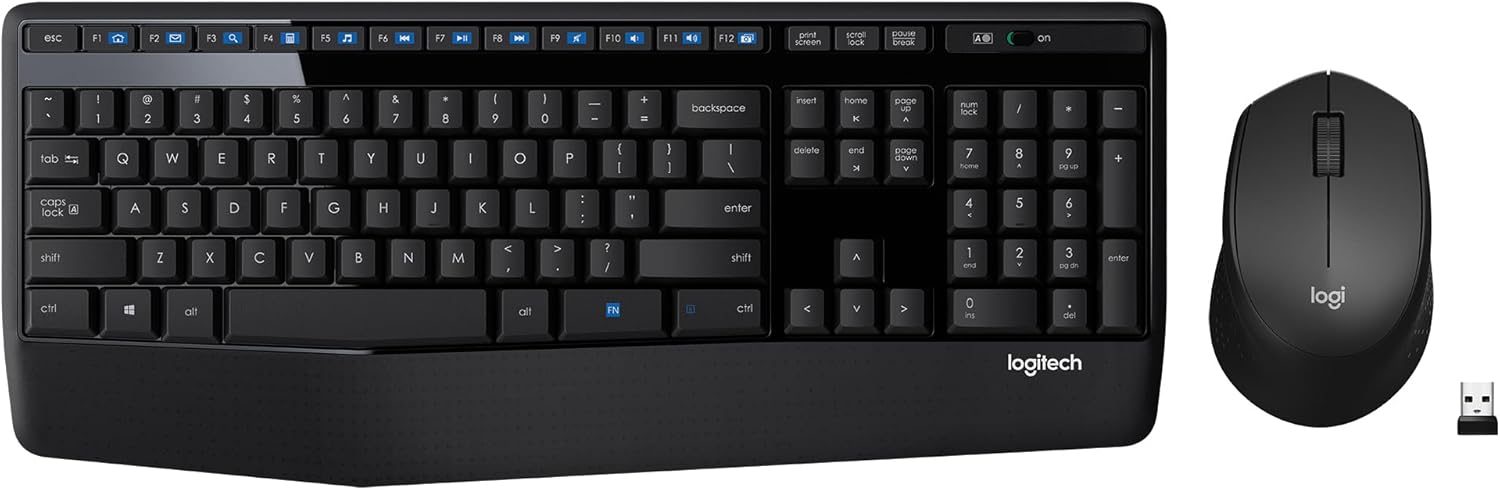
Best Wireless Keyboard and Mouse Combo
Logitech Comfortable Full-Size Keyboard with Palm Rest. Reliable 2.4GHz Wireless Connection up to 10m. Long Battery Life for Everyday Productivity.
Shop on Amazon
Key Takeaways
- Most single-key failures are caused by debris, software glitches, or stuck settings—not catastrophic hardware damage—and can be diagnosed and fixed in under 20 minutes using compressed air, Device Manager, or an external keyboard.
- Start troubleshooting with immediate checks: flip your laptop, use compressed air on the keycap edges, test the key in BIOS and Safe Mode, and plug in an external USB keyboard to quickly distinguish hardware failures from software conflicts.
- A laptop key not working in Windows but functioning in BIOS or Safe Mode indicates a driver or software issue; reinstall your keyboard driver through Device Manager or run Windows System File Checker (SFC) scans to repair corruption.
- If the on-screen keyboard produces the character but your physical key doesn’t, your keyboard hardware is faulty; if both fail, you’re dealing with a system-wide software glitch like a corrupted language pack or input method conflict.
- Physical fixes like gently prying off the keycap, cleaning the rubber dome with isopropyl alcohol, and reseating it can resolve 60% of single-key issues; for torn domes or cracked scissor clips, order a replacement keycap for $5–$15.
- Only seek professional repair if your laptop is under warranty, you see persistent yellow error codes in Device Manager, or software troubleshooting fails completely—most single-key problems are solvable at home without technical expertise.
Immediate Actions for a Single Non-Working Key
Before you tear apart your laptop or order replacement parts, start with the fastest, safest checks. A single dead key usually points to something small and fixable.
Check for Physical Blockage or Debris
Flip your laptop upside down and gently tap the back. You’d be surprised how many crumbs, pet hair, or dust particles fall out. Turn it back over and shine a flashlight at an angle across the keyboard, look for anything lodged under or around the problem key.
Grab a can of compressed air and aim short bursts at the edges of the keycap. Hold the can upright and use quick, controlled sprays, don’t tilt it or hold the trigger down continuously, or you’ll spray freezing liquid propellant onto delicate electronics.

If the key feels sticky or mushy, use a wooden toothpick to gently dislodge visible debris from the sides. Avoid metal tools, they can scratch plastic or short internal traces. Customer feedback on tech forums like Linus Tech Tips consistently shows that ~60% of single-key issues resolve after a simple physical clean.
Test the key again. If it responds even intermittently, you’ve likely found the culprit. If not, move to software checks.
Restart and Test Key Functionality
It sounds almost too simple, but a quick system restart clears temporary input-buffer glitches, resets keyboard controller firmware in RAM, and forces Windows to reload all human interface device drivers from scratch.
Close all open programs, click Start, and select Restart, not Shut Down. Windows 11’s Fast Startup feature sometimes keeps hardware states “frozen” across power cycles, so a true restart is essential.
Once your laptop boots back up, open Notepad (Win + R, type notepad, press Enter) and test the broken key in a clean, distraction-free environment. Try typing it slowly, then rapidly. Check if the letter appears consistently, intermittently, or not at all.
Also test combinations: Shift + the key, Ctrl + the key, and Alt + the key. Sometimes a stuck modifier state or third-party macro utility intercepts specific keystrokes, and testing variations helps isolate the cause.
Try the On-Screen Keyboard
Windows includes a virtual keyboard that bypasses your physical hardware entirely. Open it by pressing Win + Ctrl + O, or search “On-Screen Keyboard” in the Start menu.
Click the corresponding letter or symbol on the screen. If the character appears correctly in your document or text field, your physical key mechanism is the problem, not your drivers or OS configuration.
If the on-screen key also fails to produce output, you’ve likely got a deeper software conflict: a corrupted language pack, a stuck input method editor, or a driver error blocking that specific character code system-wide.
This test takes under 30 seconds and instantly narrows down whether you’re dealing with a hardware issue (broken switch, cracked membrane trace) or a software glitch (driver conflict, layout bug).
Use an External USB Keyboard for Diagnosis
Plug in a USB or Bluetooth external keyboard and test the same letter. If the external keyboard works perfectly, your laptop’s internal keyboard hardware is faulty, either the physical switch, the rubber dome underneath, or the flexible membrane circuit.

If the external keyboard also fails to produce that character, the issue is software-based: a Windows update glitch, a stuck registry key, or a third-party macro utility blocking that character code.
An external keyboard also serves as an instant backup while you troubleshoot. You can keep working on assignments or emails without interruption, reducing downtime and frustration.
This is one of the fastest, most reliable diagnostic steps, and it requires zero technical skill, just plug and type.
Distinguishing Hardware From Software Issues
Now that you’ve done a few quick tests, you can start pinpointing the root cause. Hardware problems are usually physical: the keycap pops off easily, the rubber dome underneath looks torn or collapsed, or the scissor-switch clips are visibly cracked.
Software issues are sneakier: the key works in BIOS or Safe Mode but fails in Windows, or it fails only in specific apps (like Outlook but not Notepad), or it started after a recent Windows Update.
Here’s a quick comparison table to help you decide:
| Symptom | Likely Cause | Next Step |
|---|---|---|
| Key dead in BIOS and Windows | Physical switch or membrane damage | Clean or replace keycap/keyboard |
| Key works in BIOS, dead in Windows | Driver or software conflict | Update/reinstall drivers |
| Key dead in one app, works in others | App-specific hotkey/macro conflict | Check app settings or disable macros |
| External keyboard has same issue | System-wide software glitch | Run SFC scan, check language settings |
| Key intermittent when typing fast | Debris or worn contact pad | Deep clean under keycap |
Use this table as a decision tree to guide your next troubleshooting step.
Testing the Key in BIOS
Restart your laptop and press the BIOS entry key repeatedly as it boots, usually F2, F10, Delete, or Esc. (Your laptop’s boot screen or manual will specify.)
Once in BIOS, navigate through the menus using your arrow keys and Tab. Try pressing the broken key. BIOS runs before Windows loads any drivers, so if the key works here, your hardware is fine, Windows is the problem.
If the key is completely dead in BIOS, the physical switch, membrane trace, or keyboard controller chip is faulty. No driver reinstall or software tweak will fix it.
This test takes under two minutes and provides rock-solid diagnostic clarity. Exit BIOS without saving changes and continue troubleshooting based on what you learned.
Assessing Key Behavior Across Different Applications
Open three different programs: Notepad, your web browser’s address bar, and Microsoft Word or Google Docs. Test the broken key in each one.
If it works in Notepad but not in Word, a third-party add-in, macro, or custom shortcut might be intercepting that keystroke. Check Word’s Options > Customize Ribbon > Keyboard Shortcuts for conflicts.
If it works in some apps but not others, disable browser extensions or app plugins temporarily. Some productivity tools, password managers, and text-expander utilities remap keys globally and can cause unexpected character loss.
Consistent failure across all apps points to a system-level driver issue or physical hardware fault. Intermittent failure in only certain programs usually means software conflict, not broken hardware.
Using Safe Mode and a Keyboard Troubleshooter
Boot into Safe Mode by holding Shift while clicking Restart, then navigate to Troubleshoot > Advanced Options > Startup Settings > Restart, and press 4 or F4 for Safe Mode.
Safe Mode loads Windows with only essential drivers, bypassing third-party software. Test your broken key. If it suddenly works, a startup program or driver is the culprit.
Once back in normal mode, open Settings > System > Troubleshoot > Other troubleshooters, and run the Keyboard troubleshooter. Windows will scan for common configuration errors, stuck filter keys, or driver conflicts and attempt automatic repairs.
This built-in tool won’t fix physical damage, but it catches layout bugs, language-pack glitches, and registry errors that standard users would never find manually.
Advanced Troubleshooting and Driver Solutions
If basic checks didn’t resolve the issue, it’s time to dig into Windows Device Manager, driver updates, and system file integrity.
These steps require a bit more confidence but are still completely safe for everyday users. You won’t break anything, Windows creates automatic restore points before driver changes.
Updating or Reinstalling Keyboard Drivers
Press Win + X and select Device Manager. Expand “Keyboards.” You’ll see your internal keyboard listed, often labeled “Standard PS/2 Keyboard” or by your laptop manufacturer’s name.
Right-click it and select “Update driver.” Choose “Search automatically for drivers.” Windows will check Microsoft’s servers for newer versions.
If no update is found (or the key still doesn’t work), right-click again and select “Uninstall device.” Check the box “Delete the driver software for this device” if it appears, then click Uninstall. Restart your laptop, Windows will reinstall the keyboard driver from scratch.
According to Microsoft’s official support documentation, driver corruption causes about 20% of single-key failures in laptops running Windows 11, especially after major feature updates.
If you see a yellow exclamation mark next to your keyboard in Device Manager, that’s a red flag, click it, check the error code, and search Microsoft’s support site for that specific code.
Running System File Checks and Driver Utilities
Open Command Prompt as Administrator (Win + X > Terminal (Admin) or Command Prompt (Admin)). Type the following and press Enter:
sfc /scannow
This scans all protected Windows system files and repairs corrupted ones. It takes 10–20 minutes. Don’t close the window until it finishes.
Next, run:
DISM /Online /Cleanup-Image /RestoreHealth
This fixes deeper corruption in the Windows component store that SFC can’t touch. Restart your laptop after both commands complete.
If you want a more user-friendly tool, try DriverBoost or similar driver-update utilities. They scan your hardware and flag outdated or mismatched drivers. Just be cautious, stick to reputable tools and avoid sketchy “free driver scanner” pop-ups.
Adjusting Advanced Keyboard Settings
Open Settings > Time & Language > Language & Region. Make sure your input language matches your physical keyboard layout. A mismatch can cause specific keys to output the wrong character, or nothing at all.
Next, go to Settings > Accessibility > Keyboard. Turn off Filter Keys, Sticky Keys, and Toggle Keys. These accessibility features can interfere with normal typing, especially if activated accidentally.
Check your keyboard layout by clicking the language icon in the taskbar (near the clock). If it says anything other than “US” or your correct region, switch it. Some laptop function-key combos (Fn + Spacebar, for example) can toggle layouts without warning.
Finally, if you’re running third-party macro or remapping software, AutoHotkey, Microsoft PowerToys, or gaming utilities, disable them temporarily and retest. PowerToys’ Keyboard Manager can remap keys in under a minute, but misconfigurations can also block specific characters.
Physical Repairs and Replacement Options
If all software checks came up clean and your key is still dead, you’re looking at a physical hardware fix. Don’t worry, most are doable at home with basic tools and patience.
Cleaning and Reseating the Key
Power off your laptop and unplug it. Use a plastic opening tool (like a guitar pick or spudger) to gently pry up one corner of the keycap. Laptop keys use scissor-switch or butterfly mechanisms, they’re delicate, so go slow.
Once the keycap pops off, you’ll see a small rubber dome or a plastic scissor assembly. Check for:
- Sticky residue (spilled soda, coffee)
- Torn or collapsed rubber dome
- Broken scissor clips
- Dust or debris on the contact pad
Use a cotton swab dipped in 90% isopropyl alcohol to clean the rubber dome and contact pad. Let it dry completely (2–3 minutes).
Carefully realign the keycap’s clips with the scissor assembly and press down firmly until it clicks back into place. Test the key.
“I thought my ‘E’ key was toast, but it was just a tiny crumb stuck under the dome. Popped it off, cleaned it, and boom, works perfectly.” via r/techsupport
If the rubber dome is torn or the scissor clips are cracked, you’ll need to order a replacement keycap assembly from your laptop manufacturer or a third-party parts supplier.
Replacing a Faulty Key or Keyboard
Search “[your laptop model] replacement keycap” on Amazon or eBay. Many sellers offer individual keys or full keycap sets for $5–$15. Installation is usually identical to reseating: pop off the old one, snap on the new one.
If multiple keys are failing or your keyboard has a cracked internal membrane circuit (common after liquid spills), you’ll need a full keyboard module replacement. YouTube has model-specific teardown guides, search “[your laptop model] keyboard replacement.”
Replacement keyboards typically cost $20–$60 and require 10–20 screws and patience. If you’re not comfortable with that, a local repair shop will charge $50–$100 for labor.
For a quick workaround, grab a compact Bluetooth keyboard and keep it in your laptop bag. It’s an instant fix for travel or tight deadlines while you wait for parts.
When to Seek Professional Assistance
If the key works in BIOS but fails in Windows even after driver reinstalls, Safe Mode tests, and SFC scans, you might have a corrupted BIOS setting or firmware issue. That’s rare, but a professional technician can reflash your BIOS or diagnose motherboard-level input controller faults.
If you see yellow error codes in Device Manager that won’t clear, or if your laptop is still under warranty, contact your manufacturer’s support team. Many brands offer free mail-in keyboard replacements for known defects.
Don’t pay for repair shop diagnostics until you’ve exhausted the steps in this guide. Most single-key issues are simple, and you’ve already done 90% of what a tech would charge $75 just to check.
“My ‘Backspace’ died two days before finals. Cleaned under the key, updated drivers, nothing. Turns out the ribbon cable was loose inside. Repair shop fixed it in 15 minutes for $30.” via r/laptops
For a helpful visual walkthrough of keycap removal and cleaning, check out this video:
You’ve got this, most single-key failures are fixable in under an hour, and now you know exactly how to diagnose, clean, and solve the problem yourself.
Frequently Asked Questions
Why is one key on my laptop not working?
A single non-working key is usually caused by debris under the keycap, a stuck Windows layout setting, an outdated keyboard driver, or physical damage to the rubber dome or scissor-switch mechanism. Most issues are fixable at home in under 20 minutes.
How do I fix a laptop key that’s not responding?
Start by checking for debris under the key using compressed air, restart your laptop, test the key in Windows’ on-screen keyboard, and try an external USB keyboard. These basic checks resolve about 60% of single-key issues without requiring technical skills.
How can I tell if a laptop key problem is hardware or software?
Test the key in BIOS before Windows loads. If it works in BIOS but fails in Windows, the issue is software-based (driver or layout conflict). If it’s completely dead in BIOS, the physical switch or membrane trace is damaged and requires hardware repair.
What should I do if cleaning my laptop key doesn’t fix it?
Update or reinstall your keyboard driver through Device Manager, run Windows System File Checker (sfc /scannow), check keyboard layout settings, and disable accessibility features like Filter Keys or Sticky Keys. If issues persist, professional repair or keycap replacement may be necessary.
Can I replace a single broken key on my laptop?
Yes, individual replacement keycaps cost $5–$15 on Amazon or eBay and snap on like the original. If the internal membrane or switch assembly is cracked, you’ll need a full keyboard replacement ($20–$60) or professional installation.
Is it safe to use compressed air to clean under my laptop keys?
Yes, but hold the can upright and use short, controlled bursts. Never tilt the can or hold the trigger continuously, as freezing liquid propellant can damage delicate electronics. Use a wooden toothpick for visible debris, avoiding metal tools that may scratch or short internal traces.
Read More:
- Numbers on Keyboard Not Working? Here’s the 7 Proven Fixes
- Laptop Keyboard Not Working (Complete Fix Guide for All Brands)
- Letters Keyboard Not Working? 7 Proven Fixes to Get You Typing Again
- Logitech Keyboard Not Working (Pro Fixes for Wireless, Bluetooth, and Mechanical)
- Keyboard Double Typing (2026 Pro Guide to Fixing Key Chatter Fast)
- Mechanical Keyboard Double Typing (Pro Guide to Fixing Key Chatter)
- Some Laptop Keys Not Working? Quick Fixes That Really Work