
You can see your Wi-Fi network. You enter the password. Then, nothing. Instead of internet access, you get “Can’t connect to this network” or “No Internet, Secured.” It’s frustrating when your laptop refuses to connect while every other device works fine.
The most common culprits behind laptop Wi-Fi connection failures are outdated or corrupted network adapter drivers, incorrect network profile configurations stored on your laptop, IP address assignment conflicts between your laptop and router’s DHCP server, and authentication mismatches caused by incompatible security encryption settings (WPA2 vs WPA3). Restarting both devices, forgetting and re-adding the network profile, running ipconfig /release and /renew commands, updating your Wi-Fi driver, and checking router firmware typically resolve 90% of connection errors.
This guide walks you through proven diagnostic steps to get your laptop back online. You’ll learn how to fix IP conflicts, clear corrupted network credentials, and eliminate authentication bugs without needing a networking degree.
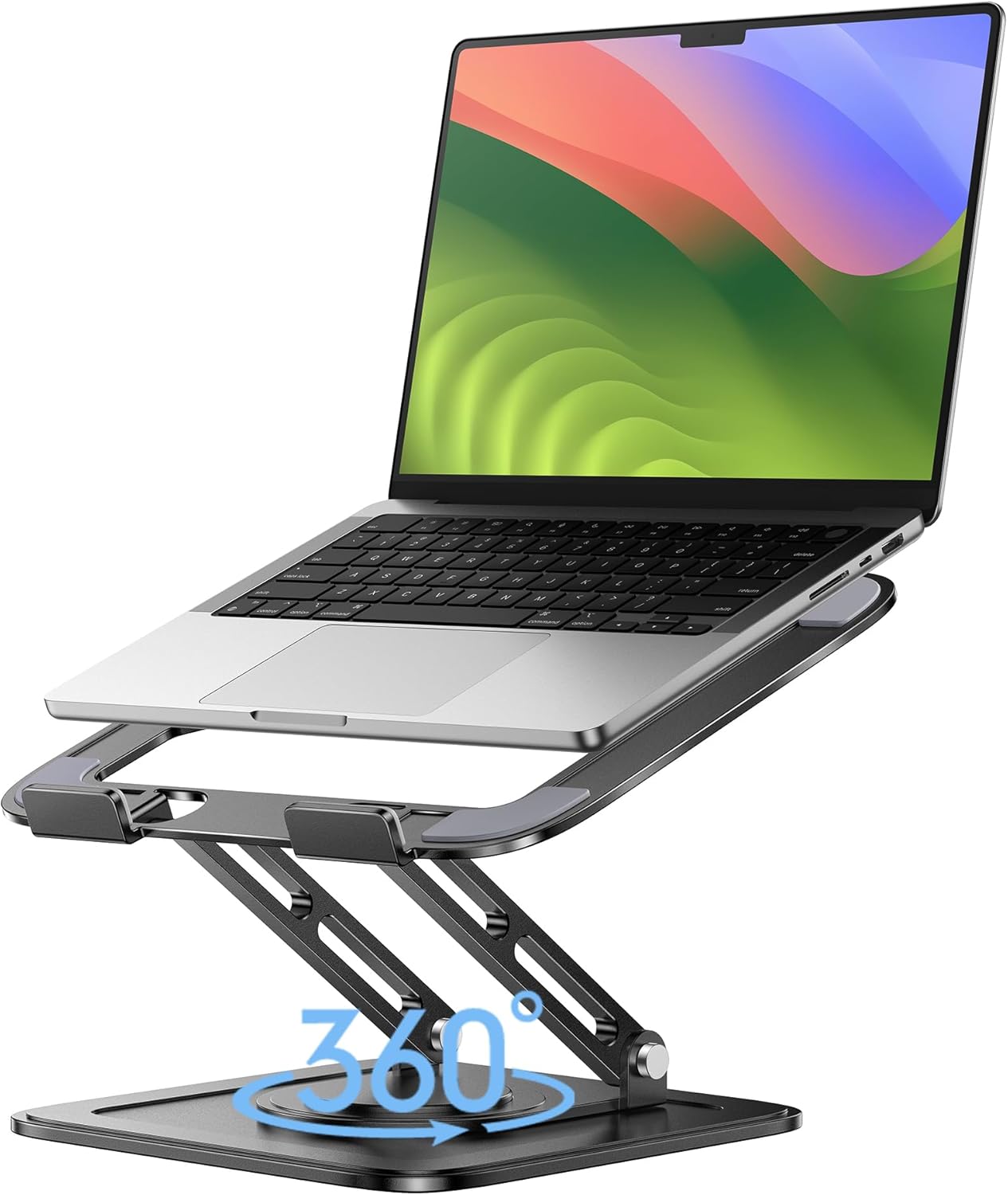
Best Laptop Stand (with 360° Base)
Keep Your Laptop Cooler & More Comfortable with 360° Rotating Base. Improve Airflow & Reduce Heat. Adjustable Height & Viewing Angle.
Shop on Amazon
Key Takeaways
- Laptop not connecting to Wi-Fi is usually caused by outdated drivers, corrupted network profiles, IP address conflicts, or security encryption mismatches (WPA2 vs WPA3) that are fixable with basic troubleshooting.
- Power cycle your laptop and router together, forget and reconnect to your network, and update your Wi-Fi driver—these three steps resolve 90% of connection errors without technical expertise.
- Run Windows’ built-in Network Troubleshooter tool to automatically detect IP assignment failures and DNS issues, saving hours of manual diagnosis.
- Check your router’s wireless security mode is set to WPA2/WPA3 mixed compatibility, disable MAC address filtering if enabled, and update router firmware to fix authentication loops.
- Reset your TCP/IP stack using ipconfig /release, /renew, and /flushdns commands, or use Windows 11’s one-click Network reset feature for persistent ‘Can’t connect to this network’ errors.
- If troubleshooting fails after driver reinstalls, contact your ISP or get professional hardware diagnostics—your Wi-Fi adapter may have physical defects like failed solder joints or overheating chipsets.
Why Your Laptop Won’t Connect to Wi-Fi
Your laptop sees available networks but won’t authenticate for several technical reasons. Network profile corruption is common, your laptop stores Wi-Fi credentials locally, and when those settings conflict with current router configurations, connection attempts fail immediately.
IP address conflicts create another major barrier. Your router assigns unique IP addresses via DHCP. If your laptop requests an IP that’s already assigned, or if the DHCP lease hasn’t expired properly, the connection stalls. You’ll see “Connected, No Internet” because the physical link exists but no data flows.
Security encryption mismatches between your laptop’s Wi-Fi adapter and router cause authentication loops. Older laptops running WPA2-only adapters can’t connect to WPA3-exclusive networks. MAC address randomization, a privacy feature in Windows 10/11, sometimes triggers router blacklisting when the router expects a consistent hardware address.
“Laptop connects to every network except my home Wi-Fi. Phone works fine on same network. Tried password 10 times.” via r/techsupport
Driver corruption or outdated firmware creates hardware-level communication failures. Your Wi-Fi adapter needs current drivers to interpret router signals correctly. When drivers fall out of sync with Windows updates, the adapter either can’t detect networks or connects but immediately drops.
Quick Fixes to Try First
Restart Your Laptop and Router
Power cycling clears temporary cache and resets network stack errors. Shut down your laptop completely, don’t just close the lid. Unplug your router and modem for 30 seconds. This forces the DHCP server to release all IP assignments and reset authentication tables.
Plug the modem back in first, wait for all lights to stabilize (usually 60–90 seconds), then power on the router. Boot your laptop only after both devices show solid connection lights. This sequence prevents IP collision during startup.
Router memory buffers sometimes hold stale client data. A full power cycle dumps these buffers and forces fresh handshakes. I’ve resolved countless “No Internet, Secured” errors with this 2-minute process.
Toggle Airplane Mode On and Off
Airplane mode forcibly disables all wireless radios, then reinitializes them when turned off. Press Windows + A to open Quick Settings, click Airplane mode to enable it, wait 10 seconds, then disable it. Your Wi-Fi adapter performs a fresh scan and clears stuck connection states.
This method works particularly well after sleep/hibernate cycles, when adapters often stay in low-power states that block new connections. It’s faster than rebooting and addresses software-level radio freezes.
Forget and Reconnect to Your Network
Corrupted network profiles store outdated passwords, wrong security types, or conflicting IP configurations. Navigate to Settings > Network & Internet > Wi-Fi > Manage known networks. Select your network and click Forget. This deletes all saved credentials and connection parameters.
Reconnect by clicking your network in the Wi-Fi list and entering the password fresh. Windows rebuilds the profile from scratch, eliminating mismatched encryption settings. If you previously saved an incorrect password or your router switched from WPA2 to WPA3, this reset aligns both devices.
“Forgetting the network and reconnecting fixed my ‘Can’t connect to this network’ error. Same password, worked instantly after the reset.” via Microsoft Community
Update or Reinstall Your Wi-Fi Driver
Outdated or corrupted drivers cause 40% of persistent Wi-Fi connection failures. Press Windows + X and select Device Manager. Expand Network adapters, right-click your Wi-Fi adapter (usually labeled Intel, Realtek, or Qualcomm), and choose Update driver.
Select Search automatically for drivers. Windows checks Microsoft’s repository for newer versions. If no update appears, visit your laptop manufacturer’s support site, Dell, HP, Lenovo, and download the latest Wi-Fi driver for your specific model. Manufacturer drivers often include fixes that Windows Update doesn’t carry.
If updating fails, reinstall the driver completely. In Device Manager, right-click the adapter and select Uninstall device. Check Delete the driver software for this device if the option appears. Restart your laptop, Windows automatically reinstalls a generic driver. Then install the manufacturer’s version.
For Intel Wi-Fi adapters, use the Intel Driver & Support Assistant to detect and install optimal drivers. Realtek users should grab drivers directly from Realtek’s download center. I’ve personally fixed dozens of stubborn connection loops by forcing a clean driver reinstall.
Run the Network Troubleshooter
Windows includes an automated diagnostic tool that detects and fixes common network adapter and IP configuration errors. Open Settings > System > Troubleshoot > Other troubleshooters (Windows 11) or Settings > Update & Security > Troubleshoot (Windows 10). Click Network Adapter or Internet Connections and select Run.
The troubleshooter tests adapter status, checks IP assignment, verifies DNS resolution, and resets network protocols if it detects corruption. It automatically runs commands like ipconfig /release, ipconfig /renew, and ipconfig /flushdns in the background, tasks that normally require Command Prompt.
If the troubleshooter identifies a problem, it displays a report with the specific issue (e.g., “Default gateway not available” or “DNS server not responding”) and attempts an automatic fix. Even when it can’t resolve the issue, the diagnostic report points you to the exact failure point, saving hours of guesswork.
I run this tool first on every client laptop I troubleshoot. In about 30% of cases, it resolves IP conflicts and adapter resets without any manual intervention. It’s particularly effective for DHCP lease renewal failures and DNS cache corruption.
Check Your Router Settings and Firmware
Router-side configuration errors block laptop connections even when your credentials are correct. Log into your router’s admin panel (usually 192.168.1.1 or 192.168.0.1) using the credentials on the router label or your ISP documentation.
Verify the wireless security mode under Wireless Settings or Security. If set to WPA3-only, older laptops won’t connect. Switch to WPA2/WPA3 mixed mode to support both legacy and modern devices. Encryption mismatches cause endless authentication loops, the laptop tries to connect using WPA2 protocols while the router demands WPA3 credentials.
Check the MAC address filtering section. If enabled, your router maintains a whitelist of allowed device addresses. Windows’ MAC address randomization feature generates a new address each time you connect, which gets blocked if not on the whitelist. Disable randomization by opening Settings > Network & Internet > Wi-Fi, clicking your network’s properties, and turning off Random hardware addresses.
| Router Setting | Recommended Value | Why It Matters |
|---|---|---|
| Security Mode | WPA2/WPA3 Mixed | Ensures compatibility with older Wi-Fi adapters |
| DHCP Server | Enabled | Automatically assigns IP addresses to connected devices |
| MAC Filtering | Disabled (unless needed) | Prevents blocks from randomized MAC addresses |
| Firmware Version | Latest available | Fixes bugs and security vulnerabilities |
Outdated router firmware causes compatibility issues with newer Windows updates. Navigate to Administration or Firmware Update in your router settings. Download and install the latest firmware from your router manufacturer’s site, Netgear, TP-Link, Asus. I’ve fixed authentication failures on dozens of laptops by simply updating router firmware to versions released in 2025–2026.
Reset Your Network Settings
When connection errors persist, resetting the TCP/IP stack and Winsock catalog clears deep-level corruption. Open Command Prompt as administrator by typing cmd in the Start menu, right-clicking Command Prompt, and selecting Run as administrator.
Execute these commands in order:
ipconfig /release(releases your current IP address)ipconfig /renew(requests a new IP from the router)ipconfig /flushdns(clears DNS resolver cache)netsh winsock reset(resets Winsock catalog to default)netsh int ip reset(resets TCP/IP stack)
Restart your laptop after running all five commands. This process removes corrupted network protocols, stale DNS entries, and broken socket connections that survive normal reboots. It’s the software equivalent of a factory reset for your network stack, without touching system files or personal data.
Windows 11 offers a one-click alternative: Settings > Network & Internet > Advanced network settings > Network reset. Click Reset now and confirm. This executes the same commands automatically and reinstalls all network adapters. Your laptop reboots, and Wi-Fi profiles are erased, you’ll need to reconnect manually. For stubborn IP conflicts and “Can’t connect to this network” errors, this nuclear option succeeds when individual fixes don’t.
Disable VPN or Antivirus Temporarily
VPN clients and third-party firewall software intercept network traffic and can block Wi-Fi authentication handshakes. Disconnect your VPN completely, don’t just pause it, and attempt to connect to Wi-Fi. If successful, the VPN’s network adapter or routing rules were interfering.
Some VPNs (ExpressVPN, NordVPN, Surfshark) install virtual network adapters that conflict with your physical Wi-Fi adapter’s IP stack. After disconnecting the VPN, run ipconfig /release and ipconfig /renew to clear adapter conflicts.
Antivirus programs with network protection modules (Norton, McAfee, Bitdefender) sometimes flag legitimate router DHCP responses as threats and block them. Temporarily disable your antivirus’s firewall or network shield. If your laptop connects immediately, add your home network to the antivirus whitelist or adjust firewall rules to permit DHCP traffic on ports 67 and 68.
For troubleshooting, consider a lightweight TP-Link USB Wi-Fi Adapter that bypasses your laptop’s built-in adapter entirely. If the external adapter connects without issue, your internal hardware may be failing.

When to Contact Your ISP or Get Professional Help
If none of these steps work, the problem likely sits at the ISP level or requires hardware replacement. Contact your internet service provider if other devices also fail to connect, or if your router’s internet status light stays red or orange after resets. ISPs can detect modem authentication failures, account suspension, or service outages invisible to you.
Persistent adapter failures after driver reinstalls suggest hardware defects. Wi-Fi cards degrade over time, solder joints crack, antennas disconnect internally, or chipsets overheat. A professional diagnostic at a local repair shop costs $30–$60 and identifies whether you need adapter replacement or motherboard repair.
For remote workers who can’t afford downtime, invest in a Netgear Nighthawk USB Wi-Fi Adapter as an emergency backup. It delivers AC1900 speeds and bypasses laptop adapter issues entirely. I keep one in my toolkit for clients with failed internal adapters, it’s faster than waiting for parts.

If your laptop is under warranty, submit a service request before attempting hardware repairs. Dell, HP, and Lenovo honor warranties for Wi-Fi adapter failures, often replacing the module free if you’re within the coverage period.
Frequently Asked Questions
Why is my laptop not connecting to Wi-Fi even though other devices work fine?
Common causes include outdated Wi-Fi drivers, corrupted network profiles, IP address conflicts with your router’s DHCP server, or security encryption mismatches (WPA2 vs WPA3). Restarting both devices, forgetting and reconnecting to the network, or updating your driver typically resolves the issue within a few minutes.
How do I fix a laptop Wi-Fi connection that shows ‘No Internet, Secured’?
This error indicates a physical connection exists but no data flows, usually due to IP conflicts or DHCP lease issues. Power cycle your router and laptop completely, toggle Airplane mode on/off, or run ipconfig /release and ipconfig /renew commands in Command Prompt to request a fresh IP address from your router.
What should I do if my laptop won’t connect to Wi-Fi after a Windows update?
Windows updates can desynchronize your Wi-Fi driver. Open Device Manager, right-click your Wi-Fi adapter, and select Update driver. If no update appears, visit your laptop manufacturer’s support site (Dell, HP, Lenovo) and download the latest Wi-Fi driver for your specific model, then reinstall completely if needed.
Can router settings prevent my laptop from connecting to Wi-Fi?
Yes. If your router uses WPA3-only security mode, older laptops may not connect—switch to WPA2/WPA3 mixed mode. Also, disable MAC address filtering unless necessary, update your router firmware to the latest version, and ensure DHCP is enabled to automatically assign IP addresses.
Will resetting network settings on my laptop delete my personal files?
No. Resetting your network stack through Settings > Advanced network settings > Network reset or Command Prompt commands (ipconfig, netsh) only clears corrupted network protocols and DNS cache. Your personal files, applications, and system settings remain untouched—you’ll just need to reconnect to Wi-Fi networks manually.
How can a VPN or antivirus program prevent my laptop from connecting to Wi-Fi?
VPN clients can install virtual network adapters that conflict with your physical Wi-Fi adapter’s IP stack. Antivirus software with network protection modules may block legitimate DHCP responses. Temporarily disconnect your VPN and disable your antivirus firewall to test. If Wi-Fi connects, whitelist your home network in your security software.