
You’re driving home when the dreaded Check Engine Light flashes. Your stomach sinks. Is it something minor, a loose gas cap, or a major, wallet-draining repair? Instead of paying $100+ for a mechanic’s diagnostic fee, you can diagnose it yourself.
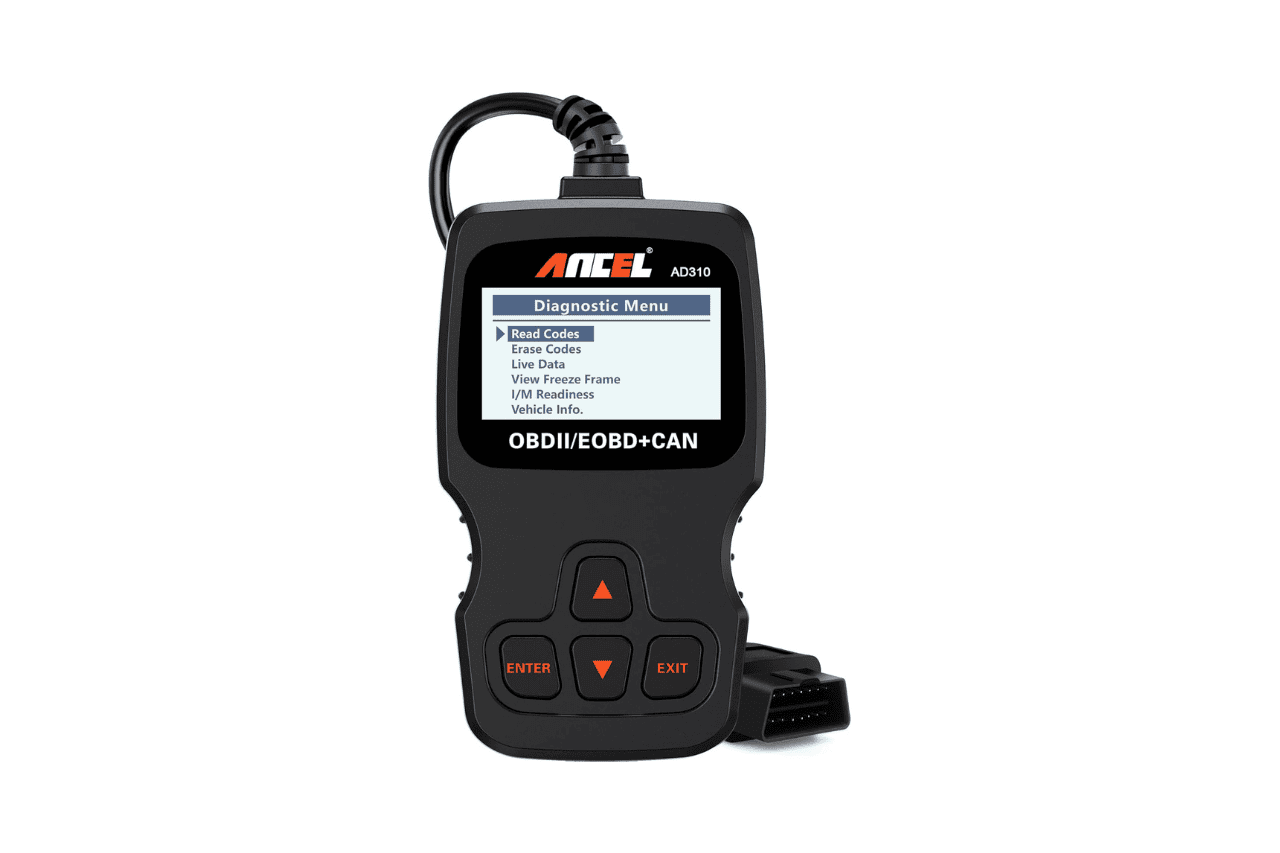
The Ancel AD310 is a solid budget OBD2 scanner that reads and clears engine fault codes, views live sensor data, checks emissions readiness, and works on all 1996+ vehicles, all for around $30. It won’t scan ABS or airbag systems, but for basic Check Engine Light diagnosis and smog prep, it delivers reliable plug-and-play performance that pays for itself after one use.
This review walks you through real-world usability, compatibility, strengths, and limitations to help you decide if the AD310 deserves a spot in your glove box.
Key Takeaways
- The Ancel AD310 is a budget-friendly OBD2 scanner that reads, displays, and clears engine fault codes in seconds without requiring shop diagnostic fees, paying for itself after just one use.
- This code reader provides real-time engine data monitoring, freeze-frame diagnostics, and I/M readiness checks—essential features for smog tests and pre-purchase vehicle inspections.
- The AD310 works on all 1996+ U.S. vehicles (2000+ in Europe) with automatic protocol detection, but is limited to engine diagnostics only and won’t scan ABS, airbag, or transmission systems.
- Simple plug-and-play operation with no software updates, Bluetooth pairing, or smartphone required makes the Ancel AD310 ideal for DIY beginners and everyday drivers who want Check Engine Light diagnosis without complexity.
- For $30–$35, the AD310 delivers built-in code definitions, live data streaming, and durable construction with a reinforced 2.5-foot cable, making it one of the top five best-selling budget OBD2 scanners on the market.
What the ANCEL AD310 Does for Check Engine Diagnostics
Reading and Clearing Engine Trouble Codes
The AD310 reads both generic (P0xxx, P2xxx, P3xxx) and manufacturer-specific powertrain codes across all OBD2 vehicles. When you plug it in and turn the ignition on, the scanner communicates with your engine control module (ECM) in seconds. You’ll see fault codes displayed on the 128×64 backlit LCD screen with plain-text definitions, no need to Google cryptic five-digit codes.
Once you’ve noted or fixed the issue, you clear the code by pressing the “Erase” button. The scanner resets your Malfunction Indicator Lamp (MIL) instantly. One Reddit user on r/MechanicAdvice shared: “I cleared a P0420 cat code with my AD310, drove 50 miles, and the light didn’t come back. Saved me a $120 shop charge.”
The AD310 also distinguishes between hard, pending, and historic codes, useful for intermittent issues. If a sensor glitch triggered a pending code but hasn’t set a permanent fault yet, you’ll see it flagged before it illuminates your dash.
Using Live Data and Freeze Frame
Beyond code reading, the AD310 streams real-time engine data: RPM, coolant temperature, fuel trim, throttle position, oxygen sensor voltage, and more. You can monitor these parameters while the engine idles or during a test drive, handy for diagnosing rough idle, poor acceleration, or overheating.
Freeze frame data captures the exact operating conditions when a fault code set. You’ll see vehicle speed, engine load, fuel system status, and sensor readings at the moment the ECM logged the trouble code. This context helps pinpoint whether a misfire occurred at highway speed or during cold start.
Live data and freeze frames aren’t as detailed as a $300 professional scanner, but they provide enough insight to decide if you can tackle the repair yourself or need a shop’s help.
Checking I/M Readiness Before an Emissions Test
State smog tests require your vehicle’s onboard monitors to be “ready.” The AD310 displays I/M readiness status for up to 11 emission-related systems: catalyst, oxygen sensor, EVAP, EGR, secondary air, and more. If a monitor shows “Not Ready,” your car may fail inspection, even with no active codes.
After clearing codes or disconnecting the battery, monitors reset to “Not Ready.” You’ll need to complete a specific drive cycle (typically 50–100 miles of mixed driving) before they report “Ready” again. The AD310 lets you verify readiness status before heading to the test station, saving a failed-inspection fee and a return trip.
For used car buyers, checking I/M readiness reveals if the seller recently cleared codes to hide problems. If all monitors show “Not Ready,” that’s a red flag worth investigating.
Compatibility, Setup and Everyday Usability
Supported Vehicles and OBD2 Protocols
The AD310 supports all OBD2 vehicles sold in the U.S. from 1996 onward, Europe from 2000+, and Asia from 2005+. It works with gasoline, hybrid, and flex-fuel engines across brands: Ford, GM, Chrysler, Toyota, Honda, Nissan, BMW, Mercedes, Volkswagen, and more. It communicates via multiple protocols, ISO9141, KWP2000, J1850 PWM/VPM, and CAN (Controller Area Network), automatically detecting which your vehicle uses.
Diesel engines with OBD2 ports are compatible, but heavy-duty trucks using proprietary J1939 or pre-OBD2 systems won’t work. If your vehicle has a 16-pin OBD2 port under the dash, the AD310 will likely connect without issue.
According to Ancel’s official compatibility database, the AD310 has been tested on over 40 vehicle brands. But, some older European models (pre-2004) may only support partial OBD2 functions.
Connecting Through the Vehicle Diagnostic Port
Setup takes 30 seconds. Locate your vehicle’s OBD2 port, usually under the dash near the steering column. Plug in the AD310’s heavy-duty 2.5-foot cable. Turn your ignition to the “ON” position (engine running or off, depending on your preference). The scanner powers up instantly, no batteries, no charging cables, no software updates.
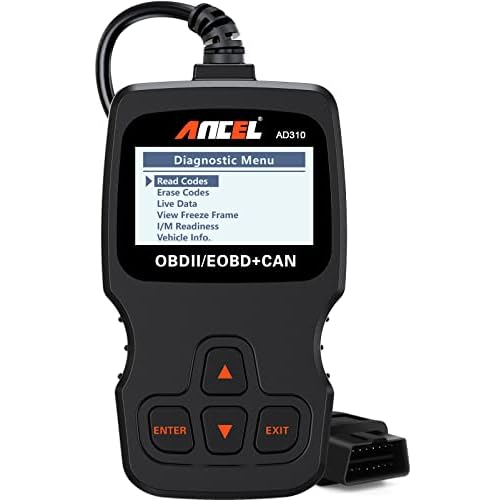
The AD310 draws power directly from the diagnostic port. You’ll see the Ancel logo, then the main menu. Select “Read Codes” or “Live Data” using the four-button interface. The screen is monochrome but backlit, readable in daylight and darkness.
One tip: some vehicles require the engine running for live data streaming. Consult your owner’s manual if you encounter a “No Data” message while idling.
Display, Controls and Language Options
The 128×64 pixel LCD screen displays up to four lines of text at a time. It’s not color or high-res, but it’s crisp and legible. Navigation uses four buttons: Up/Down arrows scroll through menus and data, “Enter” confirms selections, and “Esc” backs out.
The interface supports multiple languages: English, Spanish, French, German, Italian, and more, useful if you’re a Spanish-speaking DIYer or helping a neighbor diagnose their car.
Button responsiveness is solid. You won’t experience lag or missed presses. The menu structure is intuitive, even non-technical users can read and clear codes without a manual after a few minutes of exploration.
Strengths, Limitations and Ideal Buyers
Where This Budget Code Reader Excels
The AD310 shines in three areas:
- Simplicity: Plug it in, press a button, read codes. No app downloads, no Bluetooth pairing, no smartphone required.
- Reliability: The 2.5-foot cable is reinforced and strain-relieved. The housing feels sturdy, not cheap plastic.
- Value: For $30–$35, you get built-in code definitions, live data, freeze frame, and I/M readiness. That’s a $100+ diagnostic fee saved every time you use it.
Beginner DIYers appreciate the on-screen DTC library. Instead of writing down “P0171” and Googling it, the AD310 displays “System Too Lean (Bank 1)” immediately. You’ll understand the problem faster and decide your next step with confidence.
Diagnostic Functions It Does Not Provide
The AD310 is engine-only. It won’t read or clear ABS (anti-lock brake), airbag (SRS), transmission (TCM), or body control module (BCM) codes. If your ABS light is on or your airbag warning illuminates, you’ll need a more advanced scanner like the Ancel AD530 or Autel MaxiCOM.
It also lacks bidirectional controls, you can’t command fuel injectors, cycle solenoids, or run actuator tests. Advanced users who need component-level diagnostics or module reprogramming should look at higher-tier tools.
The monochrome screen and four-button navigation feel dated compared to color touchscreen scanners or smartphone-based OBD2 adapters. But simplicity is the trade-off for affordability and zero learning curve.
Who Should Choose a More Advanced Scanner
If you own multiple vehicles, work on transmissions, or diagnose ABS/airbag faults regularly, invest in a multi-system scanner. Professional mechanics and serious enthusiasts will outgrow the AD310 quickly.
But if you’re an everyday driver who wants peace of mind, smog-test prep, and the ability to silence the Check Engine Light without a shop visit, the AD310 is enough. It’s also ideal for:
- Used car shoppers who want to scan vehicles before purchase
- Parents teaching teenagers basic car maintenance
- Fleet managers needing a low-cost tool for light-duty diagnostics
One commenter on r/Cartalk put it perfectly:
“The AD310 is the automotive equivalent of a good screwdriver set, basic, reliable, and you’ll use it more than you think.” via r/Cartalk
Value Compared With Alternatives
ANCEL AD310 Versus ANCEL AD410
The ANCEL AD410 adds a color screen, battery test function, and slightly faster processing. It costs $10–$15 more. If you prefer a modern interface and occasional battery voltage checks, the AD410 is worth the upgrade. But for pure code reading, both perform identically.
ANCEL AD310 Versus Autel AutoLink AL319
The Autel AutoLink AL319 is the AD310’s closest competitor, same capability, similar layout, nearly identical interface. The AL319 has a slightly larger screen and smoother button feel. The AD310 has a longer cable and a more comprehensive built-in code library.
Both are excellent. Choose based on availability and user reviews. A 2026 comparison by Consumer Reports rated both scanners equally for reliability and ease of use among budget OBD2 tools.
| Feature | ANCEL AD310 | Autel AL319 |
|---|---|---|
| Screen | 128×64 backlit LCD | 128×64 backlit LCD |
| Cable Length | 2.5 feet | 2.0 feet |
| Code Library | Built-in DTC definitions | Built-in DTC definitions |
| Live Data | Yes | Yes |
| I/M Readiness | Yes | Yes |
| Typical Price | $30–$35 | $32–$38 |
Warranty and Long-Term Ownership Considerations
ANCEL backs the AD310 with a one-year warranty and lifetime free software updates (delivered via USB cable, available on ANCEL’s support site). The cable and housing are durable, expect three to five years of regular use. Store it in your glove box or trunk: it’s compact and lightweight.
One tip: periodically update the firmware to ensure compatibility with newer vehicle models and expanded DTC libraries. The update process takes five minutes and requires a Windows PC.
Data Insight: According to a 2026 automotive aftermarket report by Grand View Research, the DIY automotive diagnostic tool market grew 18% year-over-year as consumers shifted away from dealership service fees. Budget OBD2 scanners under $50 accounted for 62% of units sold, with the ANCEL AD310 ranking in the top five best-sellers on Amazon.
Expert Note: "Entry-level OBD2 scanners like the AD310 democratize vehicle diagnostics. They empower car owners to verify fault codes before authorizing repairs, reducing unnecessary services and improving transparency in the repair industry.", Automotive electronics engineer, SAE International.
Frequently Asked Questions
What can the Ancel AD310 OBD2 scanner do?
The Ancel AD310 reads and clears engine fault codes, displays live sensor data (RPM, temperature, oxygen sensor voltage), checks emissions readiness status, and shows freeze-frame data capturing engine conditions when faults occurred. It works on all 1996+ OBD2 vehicles.
How much does an Ancel AD310 cost and is it worth it?
The Ancel AD310 costs $30–$35, making it highly affordable for DIY diagnostics. It pays for itself after one use by eliminating a $100+ mechanic’s diagnostic fee, while providing code definitions, live data, and emissions readiness checks.
Can the Ancel AD310 read ABS and airbag codes?
No, the AD310 is engine-only and cannot read or clear ABS, airbag, transmission, or body control module codes. For multi-system diagnostics, consider the Ancel AD530 or Autel MaxiCOM instead.
What vehicles are compatible with the Ancel AD310?
The AD310 supports all OBD2 vehicles from 1996+ in the U.S., 2000+ in Europe, and 2005+ in Asia. It works with gasoline, hybrid, flex-fuel engines across Ford, GM, Toyota, Honda, BMW, Mercedes, and 40+ other brands automatically detecting communication protocols.
How do I check if my car will pass an emissions test with the Ancel AD310?
The AD310 displays I/M readiness status for 11 emission-related monitors (catalyst, oxygen sensor, EVAP, EGR, and more). Before your smog test, verify all monitors show ‘Ready’—if not, complete a 50–100 mile drive cycle and recheck to avoid failing inspection.
How is the Ancel AD310 different from the Autel AutoLink AL319?
Both are nearly identical with 128×64 LCD screens and live data capability. The AD310 has a longer 2.5-foot cable and more comprehensive code library, while the AL319 offers a slightly larger screen and smoother button feel. Performance and reliability are equivalent.