
You’re deep in an email or report, typing at full speed, when suddenly your cursor teleports three paragraphs up. Text overwrites itself, sentences vanish, and your entire paragraph becomes a jumbled mess.
The most common cause of a laptop keyboard jumps around when typing issue is accidental palm or thumb contact with your touchpad, triggering unintended clicks or cursor repositioning that interrupts your text flow. Other frequent culprits include overly sensitive “Tap to Click” settings, outdated or corrupted touchpad drivers, stuck navigation keys (Home, End, Arrow keys), and software conflicts with accessibility features like Filter Keys or third-party browser extensions.
You don’t need to replace your keyboard or motherboard. Most cursor-jumping problems stem from trackpad sensitivity and software settings you can adjust yourself. This guide walks you through high-yield diagnostic steps and proven fixes to stop the erratic cursor behavior once and for all.
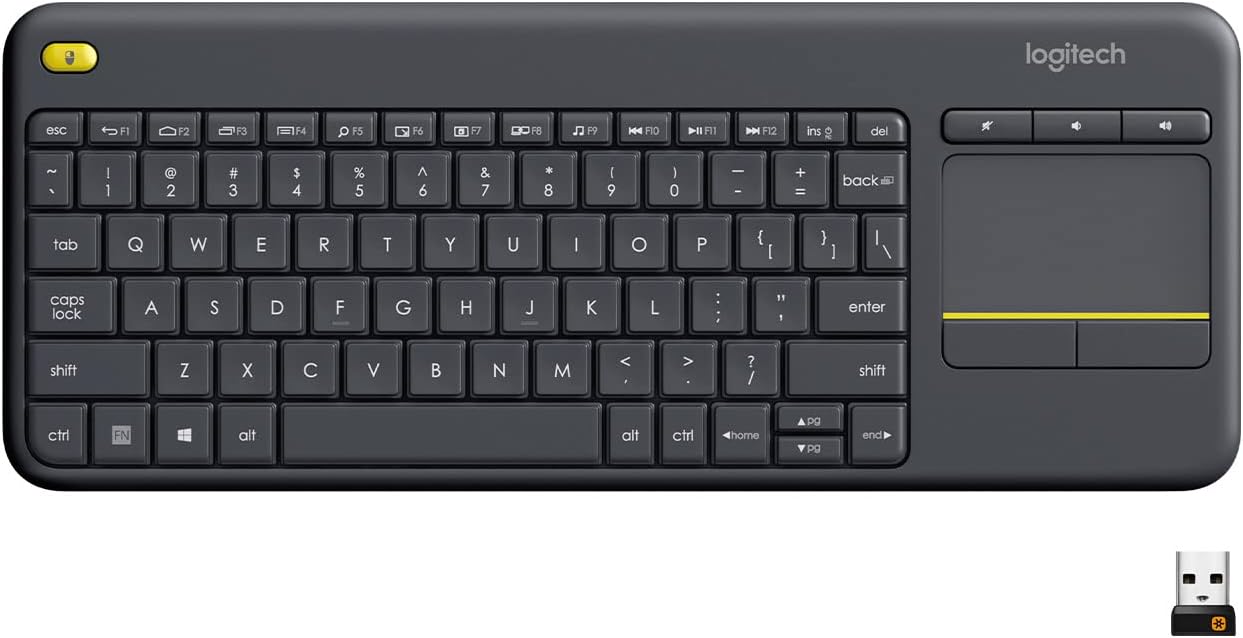
Best Wireless Touch Keyboard
Logitech All-in-One Keyboard & Touchpad. Perfect for Smart TVs & PCs. Reliable 10m Wireless Connection. Up to 18 Months Battery Life
Shop on Amazon
Key Takeaways
- Accidental touchpad contact from palm or thumb input is the most common cause of a laptop keyboard jumps around when typing issue, especially on edge-to-edge glass trackpads.
- Lowering touchpad sensitivity and enabling ‘Disable touchpad while typing’ settings can immediately eliminate cursor-jumping problems without hardware replacement.
- Outdated or corrupted touchpad drivers, third-party software conflicts, and accessibility features like Filter Keys frequently cause unintended cursor repositioning during typing.
- Stuck navigation keys (Home, End, arrow keys) and failing wireless mice can trigger continuous cursor movement; always rule out software and touchpad causes before suspecting motherboard faults.
- Adjust your typing posture to hover wrists above the palmrest, use an external keyboard, or try free utilities like TouchFreeze to prevent phantom touchpad clicks and improve typing accuracy.
- Update drivers through Device Manager or manufacturer support pages (Lenovo, Dell, HP, ASUS), and disable browser extensions and third-party utilities that inject unexpected pointer events into text fields.
Main Reasons for Unintended Cursor Movement
Accidental Touchpad Input
When you type quickly, the base of your palm or thumb often grazes the touchpad surface. Modern precision touchpads are designed to detect even light contact, so a brief brush registers as a legitimate tap or swipe. That split-second touch repositions the cursor mid-word, and the next keystrokes land wherever the pointer moved.
This happens most often on laptops with edge-to-edge glass trackpads positioned directly below the keyboard. Lenovo ThinkPads, Dell XPS models, HP Pavilions, and ASUS VivoBooks all suffer from this phenomenon when palm rejection algorithms fail or aren’t tuned properly. If you rest your wrists on the palmrest while typing, you’re almost guaranteed to trigger phantom clicks.
“Every time I type fast, my cursor jumps back to the beginning of the sentence. It’s driving me crazy. Happens on my Dell Inspiron constantly.” via r/techsupport
Software Glitches and Conflicts
Outdated or corrupted touchpad drivers, especially Synaptics, ELAN, or Windows Precision Touchpad drivers, can misinterpret input timing and fail to ignore palm contact during active keystrokes. Third-party software like mouse utilities, macro programs, and certain browser extensions (autofill, grammar checkers) can inject unexpected pointer events into your typing stream.
Accessibility features in Windows, such as Filter Keys, Sticky Keys, or Mouse Keys, can interfere with normal keyboard input timing. If Filter Keys is inadvertently enabled, it may interpret rapid keystrokes as errors and trigger unexpected cursor repositioning. Browser-based grammar tools like Grammarly sometimes inject real-time edits that shift the cursor position unexpectedly.
Hardware Issues and Physical Faults
A stuck or partially depressed navigation key, Home, End, Page Up, Page Down, or any arrow key, will continuously send signals that move the cursor while you type. Debris, spilled liquid residue, or worn key switches can cause keys to remain electrically closed even when they appear visually “up.”
In rare cases, a failing keyboard controller on the motherboard can send spurious scan codes that mimic cursor-movement commands. But, this is far less common than simple trackpad contact or driver issues. Always rule out software and touchpad causes before suspecting motherboard-level faults.
Touchpad Sensitivity and Input Device Factors
Adjusting Touchpad Sensitivity Settings
Windows 10 and 11 offer granular touchpad sensitivity controls under Settings > Bluetooth & devices > Touchpad (Windows 11) or Settings > Devices > Touchpad (Windows 10). Set Touchpad sensitivity to Low sensitivity to reduce false positives from light palm contact. Lower sensitivity requires firmer, more deliberate touches to register as clicks or movements.
If your laptop uses a Synaptics or ELAN touchpad, install the manufacturer’s dedicated driver suite from Lenovo Vantage, HP Support Assistant, Dell SupportAssist, or ASUS MyASUS. These utilities expose advanced palm-rejection thresholds, delay-before-tap timers, and edge-zone ignore settings not available in the generic Windows driver. Increasing the palm-rejection zone width by even 5–10 mm can eliminate most accidental contact.
Disabling the Touchpad When Typing
Most modern touchpad drivers include a “Disable touchpad while typing” or “Palm Check” toggle. In Windows Settings, navigate to Touchpad > Taps and ensure Leave touchpad on when a mouse is connected is off if you use an external mouse. Many laptops also support a hardware disable shortcut: Fn + F6, Fn + F9, or a dedicated touchpad toggle key (check your function row for a trackpad icon).
For Synaptics users, open the Synaptics Control Panel (search “Mouse” in Control Panel), go to Device Settings, and enable PalmCheck and TouchCheck. Set the delay to at least 0.5 seconds. ELAN users should look for Smart Sense or Palm Rejection in the ELAN Smart-Pad utility and enable maximum sensitivity.
“I disabled ‘Tap to Click’ and turned on ‘Disable touchpad while typing’, problem solved instantly. Wish I’d done this months ago.” via Microsoft Community
External Mouse Interference and Setup
If you use a wireless USB mouse, a failing battery or RF interference can cause the pointer to drift or jump randomly. Test by unplugging the mouse dongle and typing: if the problem vanishes, replace the mouse battery or switch to a wired USB mouse.
Some users report that leaving a Bluetooth mouse connected while typing causes intermittent cursor jumps, especially if the Bluetooth adapter shares the same USB controller as the keyboard. Disable Bluetooth mice during heavy typing sessions, or configure your system to fully disable the internal touchpad when an external mouse is detected.
Software and Driver Influences
Updating and Managing Keyboard and Touchpad Drivers
Press Win + X and select Device Manager. Expand Mice and other pointing devices and Keyboards. Right-click each touchpad and keyboard entry, then choose Update driver > Search automatically for drivers. Windows will query Microsoft’s server for the latest generic drivers.
For brand-specific drivers, visit Lenovo Support, HP Support, Dell Support, or ASUS Support and download the newest touchpad and keyboard drivers for your exact model. Manufacturer drivers often include firmware updates that improve palm rejection and reduce input lag.
Identifying Outdated or Corrupted Drivers
In Device Manager, if you see a yellow triangle next to HID-compliant mouse or Standard PS/2 Keyboard, the driver is either missing or corrupt. Right-click the flagged device and select Uninstall device (check “Delete the driver software for this device”). Restart your laptop: Windows will reinstall a clean driver automatically.
If a recent driver update introduced the jumping cursor, roll back: right-click the touchpad in Device Manager, choose Properties > Driver > Roll Back Driver. This restores the previous version and often resolves conflicts introduced by beta or pre-release driver builds.
Resolving Software Conflicts
Disable Filter Keys and Sticky Keys by pressing Win + I > Accessibility > Keyboard and toggling both features Off. Third-party utilities like AutoHotkey, Logitech Options, or Razer Synapse can remap keys and inject unexpected input events, temporarily exit these programs via the system tray to test.
Browser extensions, especially grammar checkers and autofill tools, can cause cursor repositioning in text fields. Open your browser in incognito or safe mode (which disables extensions) and type a few paragraphs. If the jumping stops, disable extensions one by one to identify the culprit. Grammarly and similar real-time editing tools are frequent offenders.
Practical Troubleshooting Tips
Cleaning and Inspecting Hardware
Shut down your laptop and turn it upside down. Gently tap the back to dislodge crumbs, dust, or debris trapped under keys. Use compressed air (Falcon Dust-Off Compressed Gas) to blow out particles from between keys, focusing on the navigation cluster (Home, End, arrow keys) and the space bar.

Inspect each navigation key by pressing it slowly and listening for abnormal resistance or sticky rebounds. If a key doesn’t spring back fully, remove the keycap (consult your laptop’s service manual or YouTube disassembly guides) and clean the scissor mechanism with isopropyl alcohol on a cotton swab. Let it dry completely before reassembling.
Using Utility Tools to Prevent Cursor Jumping
For advanced users, TouchFreeze is a free, lightweight utility that automatically disables the touchpad for a split second whenever you press a keyboard key, eliminating palm-contact glitches without complex driver configurations. It runs in the background and works across all laptop brands.
Run the built-in Windows keyboard troubleshooter: Win + I > System > Troubleshoot > Other troubleshooters > Keyboard > Run. This scans for common configuration issues and applies automatic fixes. For persistent problems, open an elevated Command Prompt (Win + X > Terminal (Admin)) and run sfc /scannow to repair corrupted system files that might affect input handling.
Fine-Tuning Typing Techniques
Adjust your typing posture so your wrists hover slightly above the palmrest rather than resting flat. Use a mechanical or external USB keyboard (Logitech K380 Multi-Device Bluetooth Keyboard) as the ultimate hardware workaround, it eliminates touchpad interference entirely and often improves typing speed and comfort.

If you’re a heavy typist or writer, consider a compact laptop stand that tilts the keyboard at a steeper angle, naturally lifting your palms away from the trackpad zone. Pair it with an external mouse to disable the touchpad completely during work sessions.
Frequently Asked Questions
Why does my laptop keyboard cursor jump around when I’m typing fast?
The most common cause is accidental palm or thumb contact with your touchpad while typing quickly. Modern precision touchpads detect even light contact, repositioning your cursor mid-word. Other causes include outdated drivers, overly sensitive tap-to-click settings, stuck navigation keys, or software conflicts with accessibility features or browser extensions.
How can I stop my cursor from jumping on my laptop keyboard?
First, disable “Tap to Click” and enable “Disable touchpad while typing” in Settings > Bluetooth & devices > Touchpad. Lower touchpad sensitivity, update drivers from your laptop manufacturer’s website, and disable conflicting software like Grammaly or browser extensions. Consider using an external mouse or utility like TouchFreeze to prevent accidental touchpad input.
Can a stuck key cause cursor jumping on my laptop?
Yes, a stuck or partially depressed navigation key (Home, End, arrow keys, Page Up/Down) sends continuous signals that move the cursor while you type. Debris, liquid residue, or worn switches can trap keys electrically closed. Inspect these keys, clean them with compressed air, and consider removing keycaps to clean scissor mechanisms with isopropyl alcohol.
What should I do if my laptop touchpad drivers are outdated or corrupted?
Open Device Manager (Win + X), right-click your touchpad under “Mice and other pointing devices,” and select “Update driver.” For manufacturer-specific drivers, visit your laptop’s support site (Dell, HP, Lenovo, ASUS). If a recent update caused the issue, roll back the driver via Properties > Driver tab > Roll Back Driver.
Does disabling the touchpad while typing really solve cursor jumping issues?
Yes, enabling “Disable touchpad while typing” or “Palm Check” is one of the most effective solutions. Most modern touchpad drivers include this feature. For Synaptics users, enable “PalmCheck” and “TouchCheck” in the Synaptics Control Panel with at least 0.5-second delay. Many laptops also have hardware shortcuts like Fn + F6 or Fn + F9 to toggle the touchpad.
Could my wireless mouse be causing the cursor to jump while typing?
Yes, a wireless USB mouse with a failing battery or RF interference can cause random pointer jumps. Test by unplugging the mouse dongle and typing—if the issue disappears, replace the battery or switch to a wired USB mouse. Bluetooth mice can also interfere; disable them during typing or configure your system to fully disable the touchpad when an external mouse is detected.
Read More:
- Laptop Keyboard Not Working (Complete Fix Guide for All Brands)
- Letters Keyboard Not Working? 7 Proven Fixes to Get You Typing Again
- Some Laptop Keys Not Working? Quick Fixes That Really Work
- Laptop Keyboard Issue (Here’s the Complete Guide to Fixing)
- Laptop Keyboard Jammed (Root Cause and How to Fix It in Minutes)