

Last updated on March 9th, 2026 at 10:49 am
Whether you own a Surface Pro, Surface Laptop, or Surface Go, charging failures are surprisingly common, and the root cause isn’t always obvious. It could be a faulty power supply, a stuck battery driver, or even a battery health setting you didn’t know existed.
If your Microsoft Surface is not charging, the issue usually falls into one of three categories: a defective charger or damaged cable, a software glitch that requires a driver reset, or a battery limiter setting that intentionally caps your charge. You can diagnose most of these at home in under fifteen minutes by following a systematic troubleshooting path.
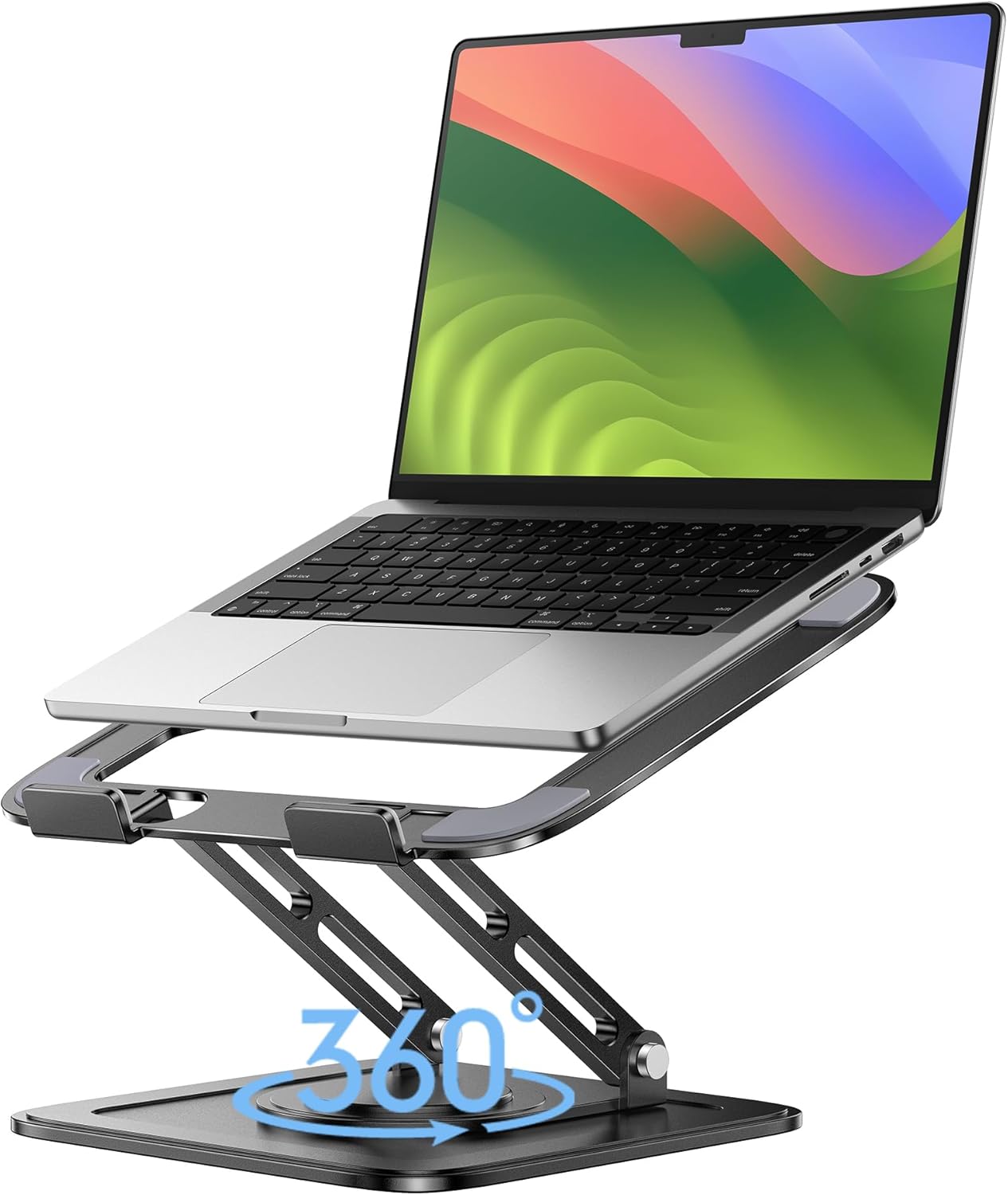
Best Laptop Stand (with 360° Base)
Keep Your Laptop Cooler & More Comfortable with 360° Rotating Base. Improve Airflow & Reduce Heat. Adjustable Height & Viewing Angle.
Shop on AmazonThis guide walks you through every fix, from the simplest cable check to driver reinstalls and settings adjustments. We’ve also included a quick comparison table so you can pinpoint your specific problem fast.

Common Reasons Your Surface Won’t Charge
Before you start swapping cables or reinstalling drivers, it helps to understand the most common culprits behind a Surface that won’t charge. Here’s a quick breakdown:
- Damaged or frayed charging cable, The Surface Connect cable is durable, but repeated bending near the magnetic tip weakens the internal wires over time.
- Faulty power supply unit, The power brick itself can fail, especially after a power surge.
- Debris in the charging port, Dust, lint, or corrosion on the connector pins blocks the electrical contact.
- Outdated or corrupted battery driver, Windows sometimes loses communication with the battery controller after an update.
- Battery limiter enabled, Microsoft’s built-in Smart Charging feature caps the battery at 80% to extend long-term health, which some users mistake for a charging failure.
- Hardware-level battery degradation, After 500+ charge cycles, lithium-ion cells lose significant capacity.
The table below helps you quickly match your symptom to the most likely cause:
| Symptom | Likely Cause | Fix Section |
|---|---|---|
| LED on charger is off | Faulty power supply or cable | Check Your Power Supply |
| LED is on, Surface won’t charge | Software glitch or driver issue | Soft Reset / Battery Driver |
| Charges only to 80% | Battery limiter / Smart Charging | Adjust Power Settings |
| Intermittent charging | Dirty port or loose connector | Inspect Charging Port |
| Battery drains while plugged in | Underpowered charger or hardware failure | Contact Microsoft Support |
Use this as your starting map. Work through each section in order, because the fixes are arranged from simplest to most involved.
Check Your Power Supply and Charging Cable
Start with the obvious. Roughly 40% of Surface charging problems trace back to the power supply itself, not the device. Unplug your charger from the wall, wait ten seconds, and plug it back in. Check the small LED light on the Surface Connect tip, if it doesn’t illuminate, your charger may be dead.
Try a different wall outlet. Power strips with surge protectors sometimes cut output after a spike, and you won’t always notice. If you have access to a second Surface charger, test with that. A charger swap is the fastest way to confirm or eliminate the power supply as the problem.
Also make sure you’re using the correct wattage charger for your model. A 24W Surface Go charger won’t adequately power a Surface Pro 9, it may trickle-charge or fail entirely. Microsoft lists the required wattage for each model on their official Surface power supply page.
If your original charger is dead, the Microsoft Surface 65W Power Supply is a solid OEM replacement that works with Surface Pro 7 through Pro 9 and Surface Laptop models.
Inspect the Charging Port and Connector
The magnetic Surface Connect port is elegant, but it’s a magnet for pocket lint, desk dust, and tiny debris. Even a thin film of grime on the charging pins can prevent a solid connection.
Grab a flashlight and look closely at both the port on your Surface and the connector tip on your charger. If you see buildup, use a dry, soft-bristled toothbrush or a wooden toothpick to gently clear it. Avoid metal tools, they can scratch the gold-plated pins and make the problem worse.
One Reddit user in r/Surface described a scenario many people overlook:
“My Surface Pro 8 stopped charging randomly. Turns out a tiny piece of foil from a gum wrapper got stuck in the port. Pulled it out with tweezers and it worked instantly.”
After cleaning, reconnect the charger and check for the LED indicator. If the light turns on and charging begins, you’ve solved it. If the LED lights up but the battery still doesn’t charge, the issue is likely software-side, keep reading.
Also inspect the cable itself about two inches from the connector tip. This is where most internal wire breaks happen due to repeated bending. If you feel a kink or see any exposed wiring, replace the cable immediately.
Perform a Soft Reset or Force Restart
Sometimes your Surface hardware is fine, but a temporary software glitch blocks the charging circuit. A soft reset clears this without deleting any of your files.
For most Surface Pro and Surface Laptop models, press and hold the Power button for 20 to 30 seconds, then release. Wait about 10 seconds, then press the Power button again to restart. This forces the embedded controller, the chip that manages battery charging, to reinitialize.
For Surface Pro 5 and later, Microsoft recommends a two-button shutdown: hold the Power button and the Volume Up button simultaneously for about 15 seconds. The screen will flash the Surface logo. Release both buttons, wait 10 seconds, then power on normally. Microsoft documents this process on their official troubleshooting page.
After the restart, plug in your charger and check the battery icon in the taskbar. You should see “Plugged in, charging.” If it says “Plugged in, not charging,” the problem sits deeper, likely in the battery driver or your power settings.
A force restart fixes the issue in a surprisingly high number of cases. It’s the tech support equivalent of “turn it off and on again,” and it works because the embedded controller occasionally freezes after a Windows update or a sleep/wake cycle gone wrong.
Update or Reinstall the Battery Driver
Windows manages your Surface battery through a driver called Microsoft ACPI-Compliant Control Method Battery. If this driver becomes corrupted, often after a cumulative Windows update, your Surface may refuse to charge even though the charger works perfectly.
You’ll know it’s a driver issue if the charger LED is on, the taskbar shows “Plugged in,” but the battery percentage stays frozen or drops. This is one of the most common software-side causes of a Microsoft Surface not charging.
Reinstalling the battery driver forces Windows to rebuild the communication path between the OS and the battery controller. The process takes about two minutes and doesn’t require any downloads.
For ongoing system maintenance and driver monitoring, a tool like Driver Booster by IObit can automatically scan for outdated or corrupted drivers, including battery-related ones. It's a lightweight utility that runs scheduled checks so you catch issues before they cause charging failures.
How to Update the Battery Driver
Follow these steps to reinstall the battery driver on your Surface:
- Right-click the Start button and select Device Manager.
- Expand the Batteries section.
- Right-click Microsoft ACPI-Compliant Control Method Battery and select Uninstall device.
- Click Uninstall to confirm.
- Click Action in the top menu bar, then select Scan for hardware changes.
Windows will automatically detect and reinstall the battery driver. Once it finishes, restart your Surface and plug in the charger. In most cases, the taskbar icon will now show “Plugged in, charging.”
If you see multiple entries under the Batteries section, such as two instances of the ACPI driver, uninstall both and let Windows reinstall them. Duplicate entries sometimes cause conflicts.
After the reinstall, check Windows Update as well. Go to Settings > Windows Update > Check for updates and install any pending firmware or driver updates. Microsoft frequently pushes Surface-specific firmware through Windows Update that addresses known charging bugs.
If the driver reinstall doesn’t solve the problem, the issue likely involves your power and battery settings, specifically the Smart Charging limiter that Microsoft quietly enabled on newer Surface models.
Adjust Power and Battery Settings
Here’s one that catches a lot of Surface owners off guard. Microsoft rolled out a Smart Charging feature on Surface devices running recent firmware. When enabled, it limits your battery to 80% to reduce long-term wear on the lithium-ion cells. The problem? Many users never turned it on manually, it activates automatically when the system detects the device is plugged in most of the time.
If your Surface charges to 80% and then stops, this is almost certainly the cause. You’ll see a small heart icon on the battery indicator in the taskbar.
To check, open Settings > System > Power & battery (on Windows 11). Look for the Smart Charging toggle. If it’s on and you want a full 100% charge, you can temporarily disable it. Keep in mind that Microsoft will sometimes re-enable it automatically based on your usage patterns.
On older Surface models running Windows 10, this feature may appear under Surface app > Battery settings instead. Open the Surface app from the Start menu and look for the battery health section.
Another setting worth checking is your Power Mode. If your Surface is set to “Best power efficiency,” it can throttle charging speed significantly. Switch to “Balanced” or “Best performance” while troubleshooting.
Also check for any third-party battery management software that might interfere with charging behavior. Some enterprise management tools, common on company-issued Surface devices, impose charge limits that override Windows settings. If your Surface was provisioned by an IT department, contact your admin before making changes.
As a user in the Microsoft Community forums noted:
“I spent two hours thinking my Surface Pro 9 was broken. Turns out Smart Charging was capping it at 80%. Turned it off and it charged to 100% in 45 minutes.”
If you frequently work at a desk and want to reduce the wear of constant charging, consider using a Anker USB-C Charging Station to manage your setup more efficiently. It keeps cables organized and lets you disconnect quickly, good practice for battery longevity.
When to Contact Microsoft Support or Seek a Replacement
If you’ve worked through every step above, checked the charger, cleaned the port, force-restarted, reinstalled the battery driver, and verified your settings, and your Surface still won’t charge, the problem is likely hardware failure.
Battery degradation is the most common hardware cause. Lithium-ion batteries lose capacity over every charge cycle. After roughly 500 full cycles, most batteries retain only 80% of their original capacity. After 800 to 1,000 cycles, some batteries can no longer hold a meaningful charge or may refuse to charge altogether.
You can check your battery health by opening Command Prompt as administrator and running powercfg /batteryreport. This generates an HTML report saved to your user folder. Look at the Design Capacity versus Full Charge Capacity, if the full charge capacity has dropped below 50% of design, the battery is near end-of-life.
If your Surface is still under warranty or you purchased Microsoft Complete, contact Microsoft Support directly. They can arrange a repair or replacement device, often with next-business-day shipping. Out-of-warranty battery service typically costs between $200 and $450 depending on the model.
For out-of-warranty devices, you also have the option of visiting a Microsoft Store or an authorized service provider. Third-party repair shops can replace Surface batteries, but be aware that opening a Surface yourself voids the warranty and risks damaging the screen, these devices use strong adhesive.
Bottom line: if the battery report shows severe degradation or the device doesn’t respond to any software fix, professional service is your next step.
Frequently Asked Questions
Why is my Microsoft Surface not charging when plugged in?
A Microsoft Surface not charging is usually caused by a faulty power supply, a corrupted battery driver, debris blocking the charging port, or the Smart Charging feature capping your battery at 80%. Start by testing a different outlet and charger, then work through software fixes like a force restart or driver reinstall.
How do I fix a Surface that says ‘Plugged in, not charging’?
Open Device Manager, expand Batteries, right-click Microsoft ACPI-Compliant Control Method Battery, and select Uninstall device. Then click Action > Scan for hardware changes to let Windows reinstall the driver. Restart your Surface and reconnect the charger — this resolves the issue in most software-related cases.
Why does my Surface only charge to 80% and then stop?
Microsoft’s Smart Charging feature intentionally caps the battery at 80% to extend long-term battery health. To disable it, go to Settings > System > Power & battery on Windows 11 and toggle off Smart Charging. Note that Microsoft may re-enable it automatically based on your usage patterns.
How do I check the battery health on a Microsoft Surface?
Open Command Prompt as administrator and type powercfg /batteryreport. This generates an HTML report in your user folder. Compare the Design Capacity to the Full Charge Capacity — if the full charge capacity has dropped below 50% of the original design value, the battery is near end-of-life and may need replacement.
Can I use a USB-C charger instead of the Surface Connect charger?
Many newer Surface models, including Surface Pro 9 and Surface Laptop 5, support USB-C charging. However, you need a charger that delivers sufficient wattage — typically 45W or higher for full-speed charging. Using an underpowered USB-C charger may result in slow charging or the battery draining while plugged in.
How much does it cost to replace a Microsoft Surface battery?
Out-of-warranty battery service from Microsoft typically costs between $200 and $450 depending on the Surface model. If your device is still under warranty or covered by Microsoft Complete, repairs or replacements may be free. Third-party shops may charge less, but opening a Surface yourself risks screen damage and voids the warranty.
Sources:
- Surface battery won’t charge or Surface won’t run on battery
- Surface Pro 11 not charging via USB-C after restart
- Microsoft Surface Laptop 4 – Wont Charge or Power On
- Brand new Surface Laptop 7 won’t charge via Surface charger
- Battery Limit Issue on Surface Pro 11 set in UEFI
Read More:
- TCL TV Volume Keeps Going Up (Here is the Permanent Fix)
- Wireless CarPlay Adapter Not Working (Reasons and Troubleshooting Guide)
- LG TV Problems & Troubleshooting Guide (Common Issues & Fixes)