
You’re mid-game or halfway through a work project when your Corsair keyboard suddenly goes dark and completely stops responding. Every key press leads nowhere, your RGB lights are off, and you’re left staring at an expensive paperweight wondering what just happened.
Your Corsair keyboard not working is almost always caused by one of five fixable issues: a loose or faulty USB connection, a corrupted iCUE software profile, outdated firmware or drivers, incorrect power delivery from your PC’s USB controller, or a simple hardware reset requirement that takes less than thirty seconds to perform. Most users panic and assume their keyboard died permanently, but the reality is that about 80% of these “dead keyboard” cases can be fixed at home without any tools, technical skills, or warranty claims.
This guide walks you through every practical troubleshooting step in order of simplicity and success rate, starting with the fastest checks and moving toward slightly more involved fixes. You’ll know exactly what to test, how to interpret the results, and when to move on to the next step.
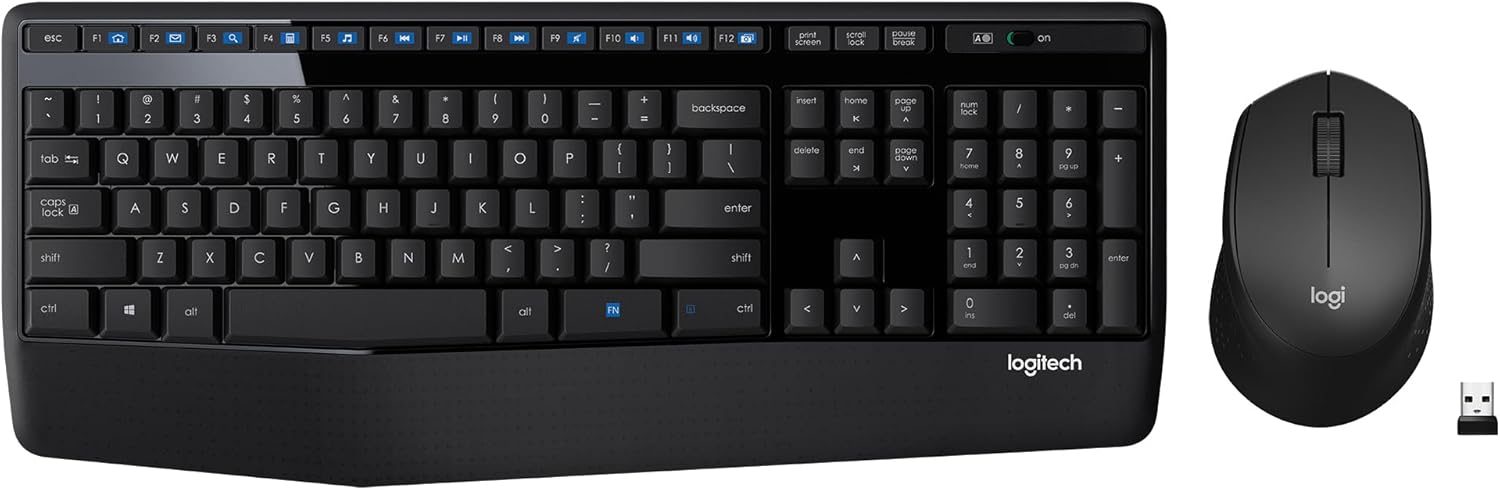
Best Wireless Keyboard and Mouse Combo
Logitech Comfortable Full-Size Keyboard with Palm Rest. Reliable 2.4GHz Wireless Connection up to 10m. Long Battery Life for Everyday Productivity.
Shop on Amazon
Key Takeaways
- Most cases of a Corsair keyboard not working stem from five fixable issues: loose USB connections, corrupted software profiles, outdated drivers, power delivery problems, or the need for a hardware reset—with about 80% solvable at home.
- Start troubleshooting with immediate physical checks: inspect the USB cable for damage, test different USB ports (preferably rear motherboard ports), and verify wireless batteries or dongle connections before attempting software fixes.
- Perform a hardware reset by unplugging your keyboard, holding ESC while reconnecting, and waiting for RGB lighting feedback—this clears corrupted profiles and firmware glitches in under 30 seconds for most K-series models.
- Update or reinstall Corsair iCUE software and keyboard drivers through Windows Device Manager or the official Corsair support page, as corrupted software is a common cause of keyboard communication failures.
- Test your keyboard on a completely different computer to definitively determine if the issue is hardware-related or tied to your original PC’s USB controllers and Windows configuration.
- Contact Corsair support with your serial number and troubleshooting history if all steps fail—most Corsair keyboards include a two-year limited warranty and may qualify for replacement if defective.
Immediate Checks and Common Causes
Inspecting Keyboard Connections
Before you jump into software fixes or firmware resets, physically check your keyboard’s cable. Unplug the USB connector from your computer, inspect the metal tip for bent pins or debris, and firmly reconnect it. If you’re using a detachable cable (common on models like the K70 RGB or K95), disconnect both ends and reconnect them with a satisfying click. A loose or partially seated cable is one of the most common reasons for a completely unresponsive keyboard.
Many Corsair keyboards use braided cables with USB-A connectors, and these can wear out over time near the plug or the keyboard port itself. If you see fraying, exposed wires, or a wobbly connector, that’s your culprit. Try wiggling the cable gently while the keyboard is plugged in, if the lights flicker or keys momentarily register, you’ve found a loose connection that needs replacement.
Identifying Faulty USB Ports
Your keyboard might be perfectly fine, but the USB port could be the problem. Test your keyboard in a different USB port on your computer, ideally one directly on the motherboard I/O panel at the back of your tower rather than a front-panel or hub port. Gaming keyboards often draw more power than standard peripherals, and some USB ports (especially older USB 2.0 hubs or unpowered splitters) can’t deliver enough current.
If your keyboard works in one port but not another, you’ve confirmed a faulty or underpowered port. Check Device Manager in Windows for yellow exclamation marks next to USB controllers, this signals a driver conflict or power delivery issue. You can also try plugging a different USB device (like a mouse or flash drive) into the suspect port to verify whether it’s completely dead or just struggling with high-power peripherals.
Checking Wireless Battery or Dongle Issues
If you’re using a wireless Corsair keyboard like the K63 Wireless or K57, check the battery level first. Many users assume their keyboard is broken when it’s simply out of charge. Plug in the charging cable and look for an LED indicator showing charging status. Give it at least 15 minutes before testing again.
For models with USB wireless dongles, make sure the dongle is firmly seated in a USB port and not obstructed by metal cases or other wireless devices. Interference from routers, Bluetooth adapters, or even your phone can cause signal loss. Try moving the dongle to a port closer to the keyboard or use a USB extension cable to position it within clear line of sight.
Examining Physical Keyboard Condition
Take a close look at your keyboard’s surface and switches. Spills, dust buildup, or debris lodged under keycaps can cause individual keys to fail, but they won’t usually make the entire keyboard unresponsive. But, liquid damage to the PCB (printed circuit board) or controller chip can kill the whole unit. If you recently spilled coffee or soda on your keyboard, that’s likely the root cause.
Check for visible damage like cracked keycaps, bent switch housings, or discoloration around the USB port area. If your keyboard took a fall or got crushed in a bag, internal components might have shifted or broken. One Reddit user shared:
“My K70 died after a glass of water tipped onto the numpad. I let it dry for 48 hours, but it never came back. Turns out liquid fried the controller.” via r/Corsair
If you suspect physical damage, you might be looking at a hardware replacement rather than a quick fix.
Resetting Your Corsair Keyboard
Reset Methods for Wired Models
Most Corsair wired keyboards include a hardware reset function that clears all stored profiles, macros, and lighting settings, essentially returning the keyboard to factory defaults. This is one of the fastest ways to resolve firmware glitches or corrupted onboard memory. For most K-series models (K55, K70, K95, K100), follow this process:
- Unplug the keyboard from your computer.
- Hold down the ESC key on the keyboard.
- While holding ESC, plug the USB cable back into your computer.
- Keep holding ESC for 5 to 10 seconds, then release.
You should see the keyboard’s RGB lighting flash or cycle through colors, indicating the reset is complete. If your model uses a different reset combo (some older Strafe keyboards use ESC + F12), check your user manual or the official Corsair support page for model-specific instructions. This hardware reset typically takes less than 30 seconds and often fixes unresponsive keyboards caused by profile conflicts or power bugs.
Reset Steps for Wireless and Bluetooth Keyboards
Wireless Corsair keyboards like the K63 Wireless have slightly different reset procedures. Start by turning the keyboard off using the power switch (usually on the top edge or underside). Then, hold the ESC and FN keys together while turning the keyboard back on. Hold both keys for about 10 seconds until the wireless indicator LED blinks rapidly, signaling the reset is complete.
For Bluetooth models, you might also need to forget the keyboard in your computer’s Bluetooth settings and re-pair it from scratch. Go to Settings > Devices > Bluetooth & other devices in Windows, find your Corsair keyboard in the list, click it, and select Remove device. Then put your keyboard back into pairing mode and reconnect as if it’s a brand-new device.
Recognizing Keyboard Lighting Flash During Reset
When you successfully reset a Corsair keyboard, the RGB lighting will typically flash white, cycle through the rainbow spectrum, or briefly turn off and back on. This visual confirmation tells you the onboard memory has been cleared and the keyboard is ready to reinitialize. If you don’t see any lighting response during the reset process, double-check your key combo and timing, or try a different USB port with better power delivery.
Some users report that their keyboard remains dark even during a reset if the USB port isn’t supplying enough voltage. If you’re using a front-panel USB port or a passive hub, switch to a rear motherboard port and try again. A proper reset should always produce some kind of LED feedback if the hardware is still functional.
Resolving Software and Driver Issues
Updating or Reinstalling Keyboard Drivers
Outdated or corrupted drivers are a frequent cause of keyboard communication failures. Open Device Manager by pressing Win + X and selecting it from the menu. Expand the Keyboards section and look for your Corsair keyboard (it might appear as “HID Keyboard Device” or with the model name). If you see a yellow exclamation mark, right-click the device and choose Update driver.
Windows will search for updated drivers online, but if that doesn’t work, try uninstalling the driver completely. Right-click the keyboard entry, select Uninstall device, check the box to delete driver software, and then restart your computer. Windows will automatically reinstall a fresh generic driver on reboot. For many users, this clean reinstall clears USB hardware conflicts and restores full keyboard functionality.
You can also visit the Corsair downloads page to grab the latest drivers and firmware manually. Some advanced models require Corsair-specific drivers rather than Windows defaults, especially if you use macro keys or custom polling rates.
Updating Corsair Firmware and iCUE Software
Corsair iCUE is the control hub for all RGB lighting, macros, and profiles, but it’s also a common source of bugs and conflicts. If your keyboard stopped working after a Windows update or iCUE upgrade, a corrupted software profile might be blocking communication. Start by completely uninstalling iCUE: go to Settings > Apps, find Corsair iCUE, and click Uninstall.
Restart your computer, then download the latest version of iCUE from the official Corsair iCUE page. Install it fresh and let it detect your keyboard. Many users find that a clean reinstall of iCUE solves temporary signal loss or profile conflicts that caused the keyboard to freeze or go dark.
Once iCUE is running, check for firmware updates by clicking your keyboard in the device list and selecting Update Firmware if available. Firmware updates can fix power bugs, polling rate glitches, and compatibility issues with newer versions of Windows. Just make sure not to unplug your keyboard during a firmware flash, interrupting the process can brick the device.
For a lightweight alternative or emergency backup, consider using Karabiner-Elements (Mac) or SharpKeys (Windows) to remap keys and test basic functionality without relying on iCUE. These tools can help you determine if the problem is hardware-related or purely software-based.
Running Windows Keyboard Troubleshooter
Windows includes a built-in troubleshooter that can automatically detect and fix common keyboard issues. Go to Settings > Update & Security > Troubleshoot > Additional troubleshooters, then select Keyboard and click Run the troubleshooter. Windows will scan for driver conflicts, USB controller errors, and registry issues that might prevent your keyboard from working.
If Windows finds a problem, it will attempt to apply a fix automatically. Even if the troubleshooter reports “no issues found,” running it can refresh USB enumeration and clear temporary glitches. As a backup option, you can enable the built-in virtual on-screen keyboard by searching for On-Screen Keyboard in the Start menu, this lets you navigate your PC and perform troubleshooting steps even when your physical keyboard is unresponsive.
Further Support and Long-Term Maintenance
When to Contact Corsair Support
If you’ve tried every troubleshooting step and your keyboard still won’t respond, it’s time to reach out to Corsair. Check your warranty status first, most Corsair keyboards come with a two-year limited warranty. You can submit a support ticket through the Corsair support portal or contact them via live chat during business hours.
Have your keyboard’s serial number, purchase receipt, and a summary of the steps you’ve already tried ready. Corsair support can run remote diagnostics, provide advanced firmware tools, or authorize a replacement if your unit is defective. One user noted:
“Corsair sent me a replacement K95 after I proved my original one wouldn’t reset or light up in any USB port. Process took about 10 days total.” via r/Corsair
Before filing an RMA, test your keyboard on a completely different computer if possible. If it works there, your original PC likely has a USB controller or BIOS setting causing the issue.
Cleaning and Preserving Your Keyboard
Regular maintenance can prevent many keyboard failures. Dust, pet hair, and food crumbs build up under keycaps and around switches, eventually causing mechanical failures or short circuits. Use a can of compressed air to blow out debris from between the keys at least once a month. For deeper cleaning, gently remove keycaps with a keycap puller (you can find a quality set on Amazon) and wipe down the plate and switches with isopropyl alcohol on a microfiber cloth.
Never use harsh cleaners, bleach, or excessive water on a mechanical keyboard. If you spill liquid, immediately unplug the keyboard, flip it upside down, and let it dry completely for at least 48 hours before attempting to power it on again. Quick action can save your keyboard from permanent liquid damage.
Testing Your Keyboard on Another Computer
This is the ultimate diagnostic step. Plug your Corsair keyboard into a laptop, friend’s PC, or any other device with a USB port. If it works perfectly on a different machine, you’ve confirmed the issue is with your original computer’s USB controllers, BIOS settings, or Windows configuration, not the keyboard itself.
If the keyboard remains unresponsive on every device you test, you’re likely dealing with a hardware failure like a dead controller chip, broken PCB trace, or failed USB cable. At that point, repair costs usually exceed the price of a replacement, so consider upgrading to a newer model. For a reliable budget alternative, check out the Corsair K55 RGB or, if you want a premium upgrade, the Corsair K100 RGB offers top-tier performance and build quality.

By following these steps systematically, you’ll either fix your keyboard yourself or gain the clarity to confidently pursue a warranty claim or replacement.
Frequently Asked Questions
Why is my Corsair keyboard not working after being plugged in?
A loose or faulty USB connection is the most common cause. Unplug the keyboard, inspect the metal USB tip for bent pins or debris, and firmly reconnect it. If the problem persists, try a different USB port directly on your motherboard, as front-panel or hub ports may lack sufficient power delivery.
How do I reset my Corsair keyboard to factory settings?
For wired models like K70 or K95, unplug the keyboard, hold ESC while plugging it back in, and keep holding ESC for 5-10 seconds until RGB lights flash. For wireless keyboards, turn off the keyboard, then hold ESC and FN together while turning it back on until the wireless LED blinks.
What should I do if my Corsair keyboard shows no RGB lights or response?
First, check if the USB port is providing enough power by testing your keyboard in a different port. Update your keyboard drivers via Device Manager, then uninstall and reinstall Corsair iCUE software. If the keyboard remains unresponsive, test it on another computer to determine if the issue is hardware or PC-related.
Can liquid damage to a Corsair keyboard be repaired?
If liquid reaches the PCB or controller chip, the keyboard may be permanently damaged. However, if you act quickly by unplugging it immediately, flipping it upside down, and letting it dry for at least 48 hours, you might prevent permanent damage. Severe cases usually require replacement.
How do I know if my USB port is the problem, not my Corsair keyboard?
Test your keyboard in multiple USB ports, particularly motherboard rear ports instead of front-panel ports. Check Device Manager for yellow exclamation marks next to USB controllers. If your keyboard works in one port but not another, the faulty port is the issue, not the keyboard.
What does it mean if my Corsair keyboard doesn’t respond during a factory reset?
If the keyboard shows no LED response during reset, the USB port may not be supplying enough voltage. Switch to a rear motherboard port instead of a front-panel or hub port, then try the reset again. Proper resets always produce visible LED feedback if the hardware is functional.