
You’re 30 seconds away from a crucial video call, and your laptop camera just won’t turn on. The screen stays black, your colleagues can’t see you, and panic sets in.
Don’t worry, in most cases, a laptop camera that refuses to work is caused by a simple privacy setting lockout, a disabled driver in Device Manager, a physical privacy shutter stuck in the “closed” position, or a permission conflict introduced by a recent Windows update. You won’t need to disassemble your screen bezel or ship your laptop off for repair. You can fix the overwhelming majority of webcam freeze glitches yourself in less than 10 minutes using straightforward software checks, privacy toggles, and safe driver updates.
This guide walks you through every practical troubleshooting step, from checking that tiny physical slider switch you might’ve forgotten about, to enabling camera permissions in Windows Settings, testing with the default Camera app, and reinstalling your integrated webcam drivers. You’ll know exactly when it’s a quick software fix, and when it’s time to consider an external USB backup.
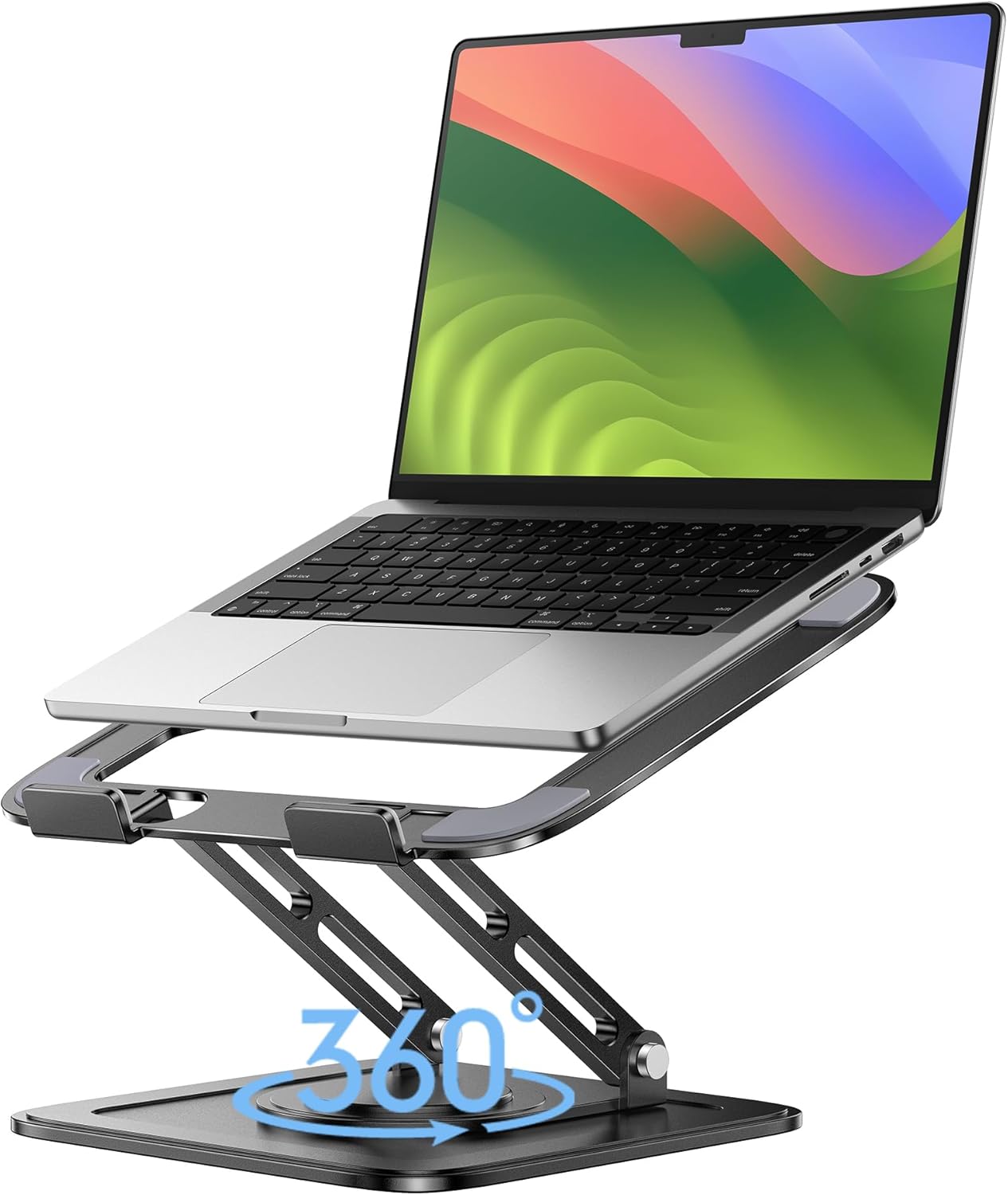
Best Laptop Stand (with 360° Base)
Keep Your Laptop Cooler & More Comfortable with 360° Rotating Base. Improve Airflow & Reduce Heat. Adjustable Height & Viewing Angle.
Shop on Amazon
Key Takeaways
- Most laptop camera not working issues stem from privacy settings, disabled drivers, physical shutters, or Windows permissions—fixable in under 10 minutes without professional repair.
- Check physical privacy sliders and function keys first, then test your camera in the Windows Camera app to isolate whether the problem is hardware or software.
- Enable camera access in Windows Settings > Privacy & Security > Camera and toggle on both Microsoft Store apps and desktop app permissions to resolve permission conflicts.
- Run the Windows Camera Troubleshooter or scan for hardware changes in Device Manager to detect missing drivers and automatically fix common misconfigurations.
- If your laptop camera still fails after all software fixes, roll back or reinstall drivers from your manufacturer’s support site, or switch to an external USB webcam as a reliable workaround.
Diagnosing Why Your Laptop Camera Is Not Working
Identifying Common Symptoms and Error Codes
Start by figuring out what you’re seeing. Is the camera feed completely black? Does your video conferencing app throw an error message like “Camera not found” or “No camera detected”? Or do you see a grainy, flickering image that freezes after a few seconds?
A totally black screen usually points to a privacy lockout, disabled driver, or physical shutter. Grainy or stuttering feeds often suggest bandwidth issues, outdated drivers, or conflicting apps trying to access the camera simultaneously. If you spot a yellow exclamation mark next to “Integrated Camera” in Device Manager, that’s a clear driver or hardware recognition error.
Take note of any error codes, Windows sometimes displays codes like 0xA00F4244 (camera permission denied) or 0xA00F4289 (driver issue). Jot them down: they’ll guide your next steps and help you search Microsoft’s support documentation for targeted fixes.
Checking Physical Switches, Shutters, and Connections
Before you jump into software troubleshooting, check the obvious culprits. Many modern laptops, especially Dell, Lenovo, and HP models, ship with a physical privacy slider next to the webcam lens. Slide it open: if it’s closed, your camera feed will stay black no matter what you do in Windows.
Some machines also have a dedicated function key combo (often Fn + F8 or Fn + F10) that toggles the camera on and off. Press it a few times and watch for an on-screen notification confirming the camera is enabled.
If you’ve recently dropped your laptop or opened the screen roughly, the internal ribbon cable connecting the webcam module to the motherboard might’ve wiggled loose. You won’t be able to see this without removing the bezel, but if you notice the camera worked fine until a physical jolt, that’s a clue.
“I spent an hour reinstalling drivers and resetting privacy settings, only to discover I’d accidentally nudged the tiny privacy slider closed when I cleaned my screen with a microfiber cloth. Lesson learned.” via r/techsupport
Testing Camera Functionality Across Apps
Open the Windows Camera app (search for “Camera” in the Start menu). This default utility connects directly to your webcam driver without third-party interference. If the camera works here but fails in Zoom, Teams, or Skype, you’ve isolated the problem to a software or app-specific permission conflict.
Test across multiple platforms, try your browser-based video chat, a desktop app, and the Camera app. If the feed appears in one but not the others, the issue isn’t hardware: it’s a permission or app configuration glitch.
Some users report that leaving a video conferencing app running in the background prevents other apps from accessing the camera. Close all video apps completely (check the system tray for hidden processes), then retest.
Recognizing Device Model-Specific Issues
Certain laptop brands and webcam chipsets are notorious for quirks. HP Pavilion and Envy models often ship with Realtek or SunPlus camera drivers that conflict with Windows 11’s automatic updates. Lenovo ThinkPads occasionally need a firmware update via Lenovo Vantage to restore camera functionality after a BIOS change.
Dell XPS users sometimes encounter a mysterious “Camera privacy mode is on” lockout that persists even after toggling settings, usually fixed by a full system restart or a BIOS reset.
If you’re working with a Surface device, check the Surface support site for model-specific camera troubleshooting guides. Microsoft publishes detailed walkthroughs for each generation.
Configuring Camera Permissions and Privacy Settings
Allowing Apps to Access Your Camera
Windows 10 and 11 introduced strict privacy controls that block camera access by default for many apps. Head to Settings > Privacy & Security > Camera. At the top, confirm that “Camera access” is toggled On for your device.
Scroll down to the “Let apps access your camera” section. Make sure it’s enabled. Below that, you’ll see a list of Microsoft Store apps, toggle on any app you want to grant camera access to (like Camera, Teams, or Skype).
If an app isn’t listed here, it’s probably a desktop application, which requires a separate setting.
Managing Let Desktop Apps Access Your Camera
Just below the Microsoft Store apps list, you’ll find “Let desktop apps access your camera.” This controls classic Win32 programs like Zoom, OBS Studio, or Google Chrome.
Toggle it On. Unfortunately, Windows doesn’t let you grant or deny camera access to individual desktop apps, it’s all or nothing. If you’re privacy-conscious, you’ll need to rely on each app’s internal permission prompts.
After enabling desktop app access, restart your computer. This simple step forces Windows to refresh all permission states and often clears lingering access conflicts.
Adjusting Camera Privacy Settings
Sometimes a recent Windows Update resets your privacy preferences to default (which is usually “deny all”). After any major feature update, revisit Settings > Privacy & Security > Camera to confirm your toggles haven’t flipped off.
If you use third-party antivirus software like Norton, Bitdefender, or Avast, check its webcam protection or privacy guard feature. These tools can block camera access independently of Windows settings. Temporarily disable the feature, test your camera, then re-enable it if needed.
Resolving Camera Permission Conflicts
Conflicts arise when multiple apps compete for exclusive camera access. If you’ve opened Zoom, left it minimized, then tried to launch Teams, Teams might report “Camera unavailable” because Zoom still holds the resource.
Solution: Open Task Manager (Ctrl + Shift + Esc), click the Processes tab, and look for any video conferencing apps running in the background. Right-click and choose End task. Then relaunch the app you actually want to use.
Some browser-based video tools (like Google Meet in Chrome) also lock the camera. Close all browser tabs with active video sessions, restart the browser, and try again.
Resolving Software, Driver, and Hardware Conflicts
Checking for Windows and Driver Updates
Outdated or corrupted drivers are the most common cause of persistent camera failures. Open Settings > Windows Update and click Check for updates. Install any pending updates, especially those labeled “driver” or “firmware.”
After updating, reboot your machine. Windows often installs generic camera drivers that work well enough, but your laptop manufacturer may offer a more stable, feature-rich driver on their support site.
Visit your laptop brand’s driver download page (Dell, HP, Lenovo, Acer, etc.), enter your model number, and download the latest Integrated Webcam or Camera driver. Install it manually, then restart.
Running the Windows Camera Troubleshooter
Windows includes a built-in diagnostic tool that can automatically detect and fix common camera issues. Go to Settings > System > Troubleshoot > Other troubleshooters. Scroll down and click Run next to Camera.
The troubleshooter scans for disabled services, missing drivers, and permission conflicts. It typically takes 2–3 minutes to complete. If it finds a problem, it’ll either fix it automatically or provide specific instructions.
This tool won’t solve hardware failures or deep driver corruption, but it’s a fast, zero-risk first step that catches simple misconfigurations.
Using Scan for Hardware Changes
If your camera vanished from Device Manager entirely, Windows might not recognize the hardware. Open Device Manager (right-click Start > Device Manager), click Action in the menu bar, then select Scan for hardware changes.
Windows will rescan all internal devices and attempt to reinstall any missing drivers. If the camera reappears under Cameras or Imaging devices, right-click it and choose Enable device if it’s disabled.
If you see a yellow exclamation mark, right-click the device, select Properties, and check the Device status box for error details. Common codes include:
- Code 10: Driver failed to start (try reinstalling)
- Code 19: Registry corruption (use driver rollback or system restore)
- Code 28: Driver not installed (download from manufacturer)
Switching or Reinstalling Camera Drivers
If your camera still won’t cooperate, try a driver rollback or clean reinstall. In Device Manager, right-click your camera, choose Properties, then go to the Driver tab.
- Roll Back Driver: If the option is available (not greyed out), click it. This restores the previous driver version, which can fix issues introduced by a bad automatic update.
- Uninstall Device: Check the box “Delete the driver software for this device,” then click Uninstall. Restart your PC. Windows will automatically reinstall a fresh driver on boot.
For stubborn driver conflicts, download the official driver from your laptop manufacturer’s site and install it manually after uninstalling the old one.
“After a Windows 11 update, my HP laptop camera showed error code 0xA00F4289. Rolling back the driver in Device Manager fixed it instantly, no reinstall needed.” via Microsoft Community
Special Considerations for External and Integrated Cameras
Troubleshooting External USB Cameras
If you’ve switched to an external USB webcam like the Logitech C920 or NexiGo N60, start by testing it in a different USB port, preferably a USB 3.0 port (usually blue). Faulty ports or insufficient power delivery can prevent proper camera initialization.

Unplug the camera, wait 10 seconds, then plug it back in. Open Device Manager and watch for the “USB Video Device” or your camera’s name to appear under Cameras. If Windows doesn’t recognize it, try a different USB cable: cheap or damaged cables often cause intermittent connection drops.
Some external webcams require proprietary software or firmware updates. Check the manufacturer’s website and install any companion apps (like Logitech Capture or Razer Synapse). These utilities often unlock advanced settings and ensure the latest firmware is loaded.
Pro tip: If your built-in camera is completely dead and you need a reliable video feed today, an external USB webcam is the fastest workaround. The Anker PowerConf C200 offers 2K resolution and plug-and-play compatibility with zero driver hassles.
Dealing With Integrated Camera Issues
Integrated laptop cameras are soldered or ribbon-connected to the motherboard, making hardware repairs trickier. If you’ve exhausted all software fixes, privacy settings, driver reinstalls, Windows updates, and the camera still shows “No camera detected,” you might have a loose or damaged ribbon cable.
This typically happens after:
- Dropping the laptop or slamming the screen shut hard
- Disassembling the screen bezel for a DIY repair
- Physical impacts that flex the display hinge
Opening the bezel requires patience, proper tools (a plastic spudger, not a screwdriver), and steady hands. If you’re not comfortable with this, take it to a local repair shop. Expect to pay $50–$100 for a ribbon cable reseating or replacement.
Before committing to a repair, test with an external USB camera to confirm your system can still handle video input. If the external camera works flawlessly, the issue is definitely hardware-specific to the built-in module.
Addressing Device-Specific Anomalies
Some laptops have BIOS-level camera toggles. Restart your computer, press F2, F10, or Del (depending on your brand) during boot to enter BIOS/UEFI settings, and look for a “Camera” or “Integrated Camera” option under Security or Devices. Make sure it’s set to Enabled.
Lenovo ThinkPads, in particular, have a “Camera Privacy Mode” in the BIOS that overrides Windows settings. If it’s enabled, the camera will stay off no matter what you do in the OS.
For Surface devices, run the Surface Diagnostic Toolkit to automatically check for firmware and driver issues specific to your model.
External camera desk upgrade: If you want a hassle-free, high-quality video experience with zero internal troubleshooting, consider the Elgato Facecam as a permanent external solution. It’s a USB webcam designed for professionals who need consistent, crisp video without relying on fragile built-in hardware.
Frequently Asked Questions
Why is my laptop camera not working and showing a black screen?
A black camera feed is typically caused by a disabled privacy setting, a closed physical privacy shutter, an outdated driver, or a permission conflict in Windows. Check the physical slider next to your webcam, verify camera access in Settings > Privacy & Security > Camera, and ensure your driver is up-to-date.
How do I enable camera permissions in Windows 11 for my laptop?
Go to Settings > Privacy & Security > Camera. Toggle on ‘Camera access’ at the top, then enable ‘Let apps access your camera.’ For desktop apps like Zoom or Teams, turn on ‘Let desktop apps access your camera.’ Restart your computer to apply the changes.
What should I do if my camera works in one app but not another?
This indicates an app-specific permission issue, not a hardware problem. Check that the specific app has camera permission enabled in Settings. Also, close all other video conferencing apps running in the background using Task Manager, as they may be holding exclusive camera access.
How do I fix my laptop camera if Device Manager shows an error code?
Note the error code (like 0xA00F4289 or Code 10) and try these steps: run Windows Update, use the built-in Camera Troubleshooter in Settings > System > Troubleshoot, scan for hardware changes in Device Manager, or roll back your camera driver to the previous version.
Can a physical privacy shutter cause my laptop camera to stop working?
Yes, many modern laptops (Dell, HP, Lenovo) have a physical privacy slider next to the webcam lens. If it’s closed, your camera will stay black. Slide it open to re-enable the camera feed. Also check for function key combos like Fn + F8 that toggle camera on/off.
What’s the best fix if my built-in laptop camera is permanently broken?
If software troubleshooting and driver updates fail, switch to an external USB webcam like the Logitech C920 or Anker PowerConf C200. These offer plug-and-play compatibility, better video quality, and eliminate reliance on fragile internal hardware. Test with an external camera to confirm your system can still handle video input.
Read More:
- Trackpad Laptop Not Working? Here’s the 7 Simple and Quick DIY Fixes
- Audio on Laptop Not Working (Causes and Quick Fixes Explained)
- Brightness on HP Laptop Not Working (Most Users Fix It With This Method)
- Audio Jack on Laptop Not Working (Symptoms and Quick DIY Fixes that Works)
- Backlight on Laptop Not Working (Start With These Quick Fixes that Really Work)
- Laptop Keyboard Not Working (Complete Fix Guide for All Brands)