
You press the letter “A” and see “@” appear on your screen. Your keyboard suddenly behaves like it speaks a foreign language, transforming simple keystrokes into symbols, accented letters, or completely random characters.
When your keyboard types wrong characters, the culprit is almost always a mismatched regional input language setting (Windows defaulted to UK or Canadian French layout), accidentally enabled Sticky Keys or Filter Keys, a corrupt HID keyboard driver in Device Manager, or physical switch damage from liquid spills. Less common causes include third-party key-remapping software conflicts, toggled Fn Lock or Alt Gr stuck states, and broken solder joints on mechanical keyboards.
This guide walks you through eight proven troubleshooting methods, from verifying input language to cleaning stuck switches, so you can restore accurate typing and get back to work without replacing your hardware.
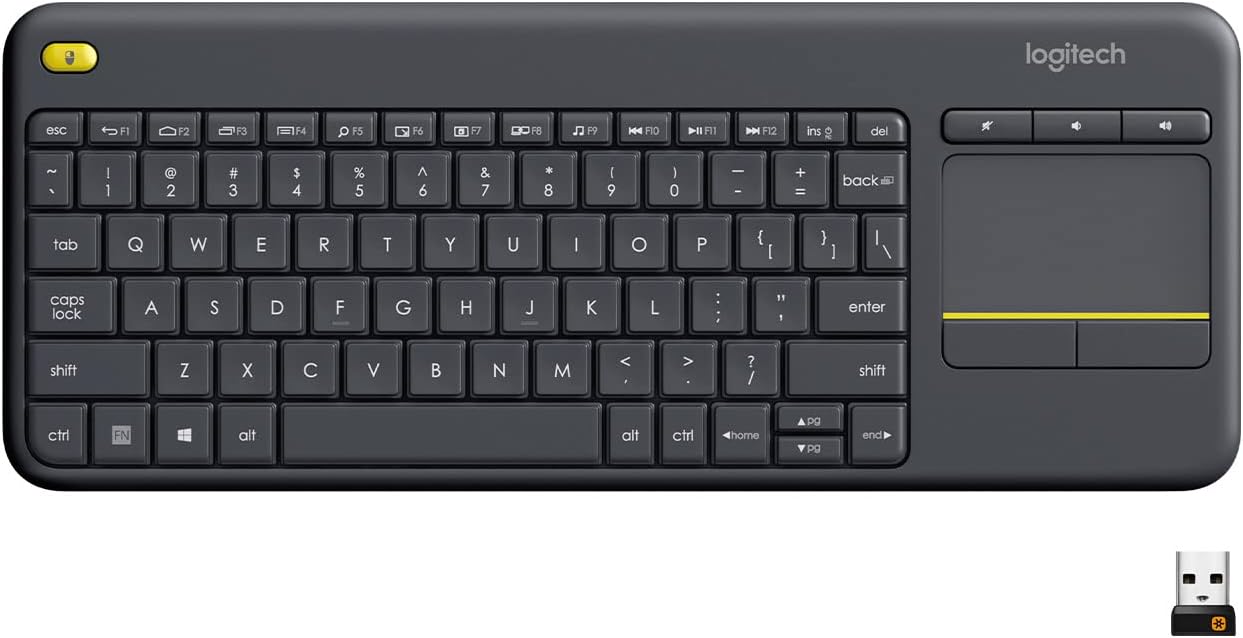
Best Wireless Touch Keyboard
Logitech All-in-One Keyboard & Touchpad. Perfect for Smart TVs & PCs. Reliable 10m Wireless Connection. Up to 18 Months Battery Life
Shop on Amazon
Key Takeaways
- Keyboard typing wrong characters is caused most often by mismatched input language settings, Sticky Keys, corrupt drivers, or physical hardware damage—identify the root cause by testing with an onscreen keyboard.
- Check your keyboard language settings in Windows (Win + I > Time & Language > Language & Region) and macOS (System Settings > Keyboard > Text Input) to eliminate regional layout mismatches.
- Disable Sticky Keys and Filter Keys in Accessibility settings if accidentally activated, as these assistive features can produce unexpected character output during normal typing.
- Update or reinstall your HID keyboard driver through Device Manager to resolve software-level scan-code translation errors that scramble character output even when language settings appear correct.
- Clean physical debris, spills, and stuck keys with compressed air and isopropyl alcohol; if cleaning and software fixes fail, test hardware with online keyboard testers or BIOS to confirm controller failure before replacing your keyboard.
Why Is My Keyboard Typing the Wrong Characters?
The symptoms are unmistakable: quotation marks become @ symbols, number keys produce unexpected brackets, or Shift combinations output accented vowels. Before you jump into fixes, understand that keyboards rarely fail randomly, there’s usually a logical trigger.
Software vs. Hardware Issues: Identifying the Root Cause
Software misconfigurations cause about 80% of wrong-character complaints. Your operating system maintains an input language profile that maps each physical key to a specific Unicode character. If Windows switches from US English to UK English layout, the quotation and @ keys swap positions. If macOS enables ABC Extended or Canadian French, dead keys activate for accents.
Hardware failures leave different fingerprints. Liquid spills short adjacent traces, making one keypress trigger multiple characters. Failed membrane domes or broken Cherry MX switches cause missed strokes or ghost inputs. A quick test separates software from hardware: open the onscreen keyboard (Windows Search: “On-Screen Keyboard”), click each virtual key, and compare output. If the onscreen version types correctly but the physical keyboard doesn’t, you’ve confirmed a hardware fault.
Driver corruption sits between software and hardware. The HID keyboard class driver translates scan codes from your USB or Bluetooth controller into Windows input events. A corrupt .sys file or failed Windows Update can scramble this translation layer, producing bizarre character substitutions even when language settings look correct.
Check Your Keyboard Language and Input Settings
Regional layout mismatches top every troubleshooting checklist. Windows 11 ships with predictive language switching: if you type a French phrase in an email, the OS may auto-toggle to Canadian French. macOS allows multiple input sources and accepts accidental Command+Space toggles.
How to Change Keyboard Language on Windows
Press Win + I to open Settings, navigate to Time & Language > Language & Region, and inspect the list under Preferred Languages. Click the three-dot menu next to your primary language, select Language Options, then review Keyboards. Remove any layout you don’t recognize, common culprits include United States-International, Canadian Multilingual Standard, or United Kingdom.
For faster access, right-click the language indicator in the system tray (near the clock) and select Language Preferences. You can also press Win + Spacebar to cycle through installed layouts and see which one is active. Lock your selection by keeping only one layout installed.
If Settings won’t open or you’re on Windows 10, use Control Panel > Clock and Region > Change Input Methods. The legacy interface provides identical layout management with fewer clicks.
How to Change Keyboard Language on Mac
Open System Settings > Keyboard > Text Input, then click Edit next to Input Sources. Remove duplicates like ABC Extended, Australian, or U.S. Extended. Leave only your default layout (typically ABC for U.S. English).
The menu bar icon (flag or input-method symbol) shows your active layout. Click it to verify the selection. Uncheck “Show Input menu in menu bar” if you want to prevent accidental Command+Space toggles. For older macOS versions, navigate to System Preferences > Keyboard > Input Sources and follow the same cleanup steps.
Turn Off or Disable Sticky Keys and Filter Keys
Ease of Access features help users with mobility challenges, but they hijack normal typing when activated by accident. Sticky Keys lets you press Shift, Ctrl, Alt, or Win one at a time instead of holding them. Filter Keys ignores brief or repeated keystrokes. Both produce unexpected character output or missed inputs.
Windows plays a confirmation beep when you tap Shift five times rapidly, that sound means Sticky Keys just turned on. Press Win + I, go to Accessibility > Keyboard, and toggle off Sticky Keys, Filter Keys, and Toggle Keys. Scroll down and disable the keyboard shortcut for each feature to prevent future accidental triggers.
On macOS, open System Settings > Accessibility > Keyboard and turn off Sticky Keys and Slow Keys (the Mac equivalent of Filter Keys). Uncheck “Enable Sticky Keys using Shift key five times” to block the shortcut.
If you rely on these features intentionally, adjust their sensitivity settings instead of disabling them. Windows lets you configure whether modifier keys lock after one press or require a double-tap, and Filter Keys can ignore only very brief strokes.
Update or Reinstall Your Keyboard Drivers
Corrupt HID keyboard class drivers scramble scan-code translation even when your layout is correct. Windows Update occasionally pushes incompatible firmware for third-party controllers, and malware can inject rogue filter drivers into the input stack.
Right-click Start > Device Manager, expand Keyboards, and locate your device (often listed as “HID Keyboard Device” or “Standard PS/2 Keyboard”). Right-click it, select Update Driver, then choose “Search automatically for drivers.” Windows will query Microsoft’s server for the latest signed driver package.
If that doesn’t resolve strange characters, right-click the keyboard entry again, select Uninstall Device, check “Attempt to remove the driver for this device,” and click Uninstall. Restart your PC, Windows will reinstall the default HID driver on boot. This reset clears leftover registry keys and corrupt .sys files.
For advanced users, Driver Booster scans your entire system for outdated peripheral drivers and pushes manufacturer updates automatically. Pair it with NordVPN to secure your connection during driver downloads, malicious sites often disguise malware as “keyboard driver updates,” and a VPN shields you from phishing redirects.
Stay Private. Stay Secure.
Browse the internet with greater privacy and security with NordVPN. Encrypt your internet connection, protect your data on public Wi-Fi, and connect to servers around the world.
Get NordVPN“Rolled back my HID driver in Device Manager and the phantom @ symbols disappeared instantly” via r/techsupport
Clean Your Keyboard to Remove Debris and Stuck Keys
Crumbs, hair, and dried coffee short membrane contacts and cause double-strokes or stuck modifiers. Mechanical keyboards suffer from dust accumulation between the switch housing and stem, while laptop scissor-switches jam when adhesive residue coats the hinge.
Power off your device and unplug the keyboard (or shut down your laptop). Hold the keyboard upside down and tap the back gently to dislodge loose debris. Use compressed air in short bursts at a 45-degree angle, never invert the can, or liquid propellant will freeze components.
For stubborn gunk, dampen a microfiber cloth with 70% isopropyl alcohol and wipe keycaps and exposed surfaces. Don’t spray liquid directly onto the keyboard. If specific keys stick, pop off the keycap (use a plastic spudger or keycap puller) and clean the switch stem with a cotton swab dipped in alcohol.
Consider the Logitech MX Keys if your current membrane board has accumulated years of spills. Its sealed chiclet design resists liquid infiltration, and backlit keys simplify late-night work.

For heavy typists, the Keychron K8 Pro offers hot-swap switches you can replace individually without soldering, turning a single failed key into a two-minute fix instead of a full keyboard replacement.

Test Your Keyboard Hardware for Physical Damage
If software fixes and cleaning don’t restore correct output, the keyboard controller or individual switches may have failed. Physical damage manifests as consistent wrong-character patterns, certain keys always produce the same incorrect symbol, or entire rows stop responding.
Using Online Keyboard Testing Tools
Keyboard Tester highlights every key you press in real time, color-coding registered inputs. Press each key once and watch for ghost presses (keys lighting up without contact), dead zones (no response), or incorrect scan codes. Compare the visual output to your physical layout.
Key-Test offers a similar interface with rollover testing, hold multiple keys simultaneously to verify n-key rollover support. Gaming keyboards advertise NKRO (n-key rollover), but cheap models ghost when you press more than two keys, outputting random characters during fast typing.
Alternately, boot into your system’s BIOS or UEFI setup (press Del, F2, or F10 during startup). Type in the boot-order or password fields. If wrong characters appear even in BIOS, the issue lives in keyboard firmware or hardware, operating-system settings and drivers are irrelevant at this pre-boot stage.
“Water damaged my laptop: half the keys typed gibberish even in BIOS. Controller was toast” via r/techsupport
When to Replace Your Keyboard or Seek Professional Help
If you’ve verified correct language settings, disabled accessibility features, reinstalled drivers, and cleaned physical debris, yet wrong characters persist in BIOS and external testers, the keyboard controller or matrix has failed.
For external USB or Bluetooth boards, replacement is straightforward and affordable. Budget membrane keyboards start around $15, while quality mechanical models run $60–$150. Laptop keyboards require disassembly: replacement modules cost $30–$80 on eBay or LaptopKeyboardPro.com, but installation demands patience and a service manual.
Professional repair makes sense for high-end laptops (MacBook Pro, Dell XPS, ThinkPad X1) where keyboard assemblies integrate with the palmrest and require top-case replacement. Authorized service centers charge $150–$300 but preserve warranty coverage. Independent shops cut costs by 40% yet risk voiding Apple Care or Dell ProSupport.
Before you spend money, test an external USB keyboard. If it types correctly, your laptop’s internal controller is faulty but you can work around the issue. If the external board also produces wrong characters, revisit driver and language settings, hardware failures almost never affect multiple keyboards simultaneously unless malware has injected a rogue input filter.
Frequently Asked Questions
Why is my keyboard typing wrong characters instead of the letters I press?
Keyboard typing wrong characters is usually caused by a mismatched regional input language setting, accidentally enabled Sticky Keys or Filter Keys, a corrupt HID keyboard driver, or physical damage from liquid spills. About 80% of cases are software-related issues rather than hardware failures.
How do I fix my keyboard language settings on Windows to stop typing wrong characters?
Press Win + I to open Settings, navigate to Time & Language > Language & Region, and remove any unrecognized keyboard layouts. You can also press Win + Spacebar to cycle through installed layouts. Keep only your primary language layout installed to prevent accidental toggles.
How can I tell if my keyboard typing wrong characters is a software or hardware problem?
Open the On-Screen Keyboard (Windows Search: “On-Screen Keyboard”) and click virtual keys. If it types correctly but your physical keyboard doesn’t, it’s a hardware fault. If both produce wrong characters, the issue is software-related, such as language settings or drivers.
What should I do if Sticky Keys is causing my keyboard to type unexpected characters?
Press Win + I, go to Accessibility > Keyboard, and toggle off Sticky Keys, Filter Keys, and Toggle Keys. Also disable the keyboard shortcuts for these features to prevent accidental activation. On macOS, go to System Settings > Accessibility > Keyboard and turn them off.
Can updating my keyboard driver fix typing wrong characters?
Yes, corrupt HID keyboard drivers can scramble character translation. Right-click Start > Device Manager, expand Keyboards, and select “Update Driver” to download the latest version. If that fails, uninstall the device and restart your PC to reinstall the default driver.
When should I replace my keyboard instead of trying to fix it?
Replace your keyboard if wrong characters persist after verifying language settings, disabling accessibility features, reinstalling drivers, and cleaning debris. External USB keyboards cost $15–$150; laptop keyboards require disassembly or professional repair ($150–$300) through authorized service centers.
Read More:
- Laptop Not Notifying Low Battery (Start With These Quick Fixes)
- Laptop Not Opening But Charging (Causes and Critical Steps to Fix It)
- Laptop Not Opening Showing Black Screen (Fix It With This Method)
- Numbers on Keyboard Not Working Only Symbols (Here’s How to Fix It)
- Laptop Not Working Without Charger (Here’s Why and Easy Fix Guide)