
If you’ve seen “thhhhis” stutter into your document or watched letters appear two seconds after you press a key, you’re dealing with Bluetooth keyboard lag. The frustration is real, your thoughts arrive faster than your screen. And when you’re coding, gaming, or just trying to finish an email, input delay ruins everything.
Bluetooth keyboard lag stems from four main culprits: input buffer delays when your CPU throttles, power-saving features starving your Bluetooth radio, high polling latency in Bluetooth 5.0 drivers, and wireless interference from nearby 2.4GHz devices like routers or mice. The fix involves disabling Windows power throttling on your Bluetooth adapter, lowering polling intervals via driver settings, clearing heavy background tasks, and adjusting Control Panel key repeat/delay rates to stabilize character input.
This guide walks you through optimization tweaks that bring your Bluetooth keyboard’s response time down to near-wired levels. You’ll learn system-level adjustments, driver updates, and even when to swap to a 2.4GHz USB receiver.
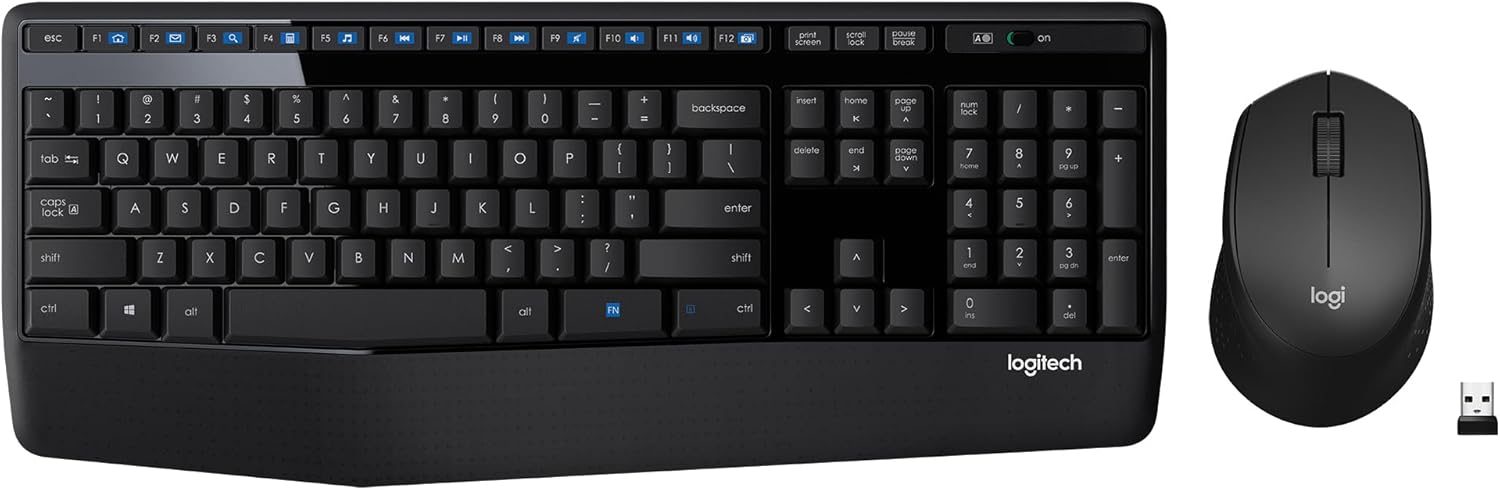
Best Wireless Keyboard and Mouse Combo
Logitech Comfortable Full-Size Keyboard with Palm Rest. Reliable 2.4GHz Wireless Connection up to 10m. Long Battery Life for Everyday Productivity.
Shop on Amazon
Key Takeaways
- Bluetooth keyboard lagging stems from four main causes: input buffer delays, power-saving features, high polling latency, and wireless interference from 2.4GHz devices like routers and mice.
- Quick fixes like reducing Bluetooth connection distance, restarting your keyboard and device, and replacing low batteries can eliminate lag in minutes without technical adjustments.
- Disable Windows power-saving features on your Bluetooth adapter and adjust connection intervals to minimum settings (7.5ms or 15ms) in Device Manager to significantly reduce input delay.
- Update your Bluetooth drivers directly from manufacturer sites and install keyboard firmware patches, as these often include critical latency optimizations for Bluetooth 5.0+ connections.
- If Bluetooth keyboard lagging persists after software fixes, consider switching to a dual-mode keyboard with a 2.4GHz USB dongle, which delivers under 5ms latency compared to Bluetooth’s typical 80ms delay.
- Maintain clean Bluetooth pairings, upgrade to Bluetooth 5.2+ keyboards, and position your router at least 1 meter away from wireless devices to prevent future lag issues.
What Is Bluetooth Keyboard Lag and Why Does It Happen?
Bluetooth keyboard lag is the delay between pressing a key and seeing that character appear on screen. You might notice stuttering, where one keystroke spits out multiple letters (like “ssssave”), or a sluggish response that makes typing feel like wading through mud. For fast typists and programmers, even 50ms of extra latency breaks your flow and kills productivity.
The root cause lies in how Bluetooth handles data packets. Unlike wired USB keyboards that report every keystroke in under 1ms, Bluetooth keyboards batch inputs and transmit them at intervals set by the polling rate, often 100ms or higher. When Windows applies power-saving throttles to your Bluetooth radio, that interval stretches further. High CPU usage from background apps compounds the problem: your system can’t process incoming packets fast enough, creating a buffer backlog that produces the dreaded key stutter.
Radio interference plays a major role too. Bluetooth operates on the 2.4GHz band, the same frequency as Wi-Fi routers, wireless mice, and even microwaves. Overlapping signals force your keyboard to re-transmit dropped packets, adding microseconds (or full seconds) of lag. If you’re typing near a crowded router or a wall of electronics, you’re fighting an invisible signal war, and your keyboard is losing.
Quick Fixes: Simple Solutions to Try First
Check Your Bluetooth Connection Distance and Obstacles
Bluetooth keyboards are rated for 10 meters of range, but real-world performance drops fast when you add walls, metal desks, or other obstructions. Even a thick laptop lid can weaken the signal if your keyboard sits directly beneath it. Move your keyboard within two meters of your laptop or desktop, and clear any metal or concrete barriers between them.
Test by typing at different distances. If lag vanishes when you’re closer, signal strength is the issue. Reposition your laptop so the Bluetooth antenna (usually near the hinge) has line-of-sight to the keyboard. For desktop PCs with rear-panel Bluetooth, use a USB Bluetooth 5.0 adapter on the front panel to bring the receiver closer to your workspace.

Restart Your Keyboard and Device
A simple power cycle clears buffer overflows and resets the Bluetooth pairing handshake. Turn off your keyboard, wait ten seconds, then power it back on. On your PC, disable Bluetooth in Settings, wait five seconds, and re-enable it. Reconnect the keyboard as if pairing for the first time.
If you’re on Windows 11, open Settings → Bluetooth & devices, remove your keyboard from the device list, and re-pair it. This wipes stale connection profiles that can hold outdated latency settings. After re-pairing, test typing speed in a text editor. Many users report this alone cuts lag in half.
Battery and Power Issues Causing Keyboard Lag
Low battery voltage forces Bluetooth keyboards into a low-power transmission mode that reduces signal strength and increases packet intervals. If your keyboard uses AA or AAA batteries, swap them out even if your indicator light still glows green, voltage sag under load can trick the sensor.
Rechargeable keyboards aren’t immune. Lithium-ion cells degrade after 300–500 cycles, and a worn battery can’t sustain the peak current draw needed for fast polling. Plug your keyboard into USB-C or micro-USB and test typing while charging. If lag disappears, your battery is the bottleneck. Replace it or budget for a new keyboard.
Some keyboards enter a sleep mode after 30 seconds of inactivity to save power. The first keystroke wakes the radio, but that handshake adds 100–200ms of delay, enough to drop the first letter or two. Check your keyboard’s manual for a “wake delay” or “sleep timer” setting you can disable, or use manufacturer software (like Logitech Options+ or Keychron’s firmware tool) to adjust sleep behavior.
Wireless Interference: Identifying and Eliminating Signal Conflicts
The 2.4GHz band is a crowded highway. Your Bluetooth keyboard shares spectrum with Wi-Fi (channels 1–11), Bluetooth headphones, wireless mice, baby monitors, and even fluorescent lights. When two devices transmit simultaneously, packet collisions force retransmissions, each retry adds lag.
Use a Wi-Fi analyzer app (like WiFi Analyzer for Windows) to see which channels are saturated. If your router sits on channel 6 and your Bluetooth keyboard stutters, switch your router to channel 1 or 11, this shifts Wi-Fi away from the Bluetooth center frequency (2.44GHz). Bluetooth will auto-hop across 79 sub-channels, but reducing Wi-Fi noise still helps.
“My keyboard lags every time the microwave runs. Moving my desk three feet away from the kitchen fixed it.” via r/MechanicalKeyboards
Turn off Bluetooth devices you’re not using, headphones, game controllers, fitness trackers. Each active connection eats bandwidth and increases collision probability. If you run a VPN like NordVPN or ExpressVPN for security, heavy encryption overhead can spike CPU usage and delay packet processing. Pause the VPN temporarily to test if CPU load is contributing to input lag.
Stay Private. Stay Secure.
Browse the internet with greater privacy and security with NordVPN. Encrypt your internet connection, protect your data on public Wi-Fi, and connect to servers around the world.
Get NordVPNUpdate Bluetooth Drivers and Keyboard Firmware
Outdated Bluetooth radio drivers lock you into legacy polling rates and miss critical latency optimizations. Open Device Manager (Win + X, then M), expand Bluetooth, right-click your adapter (often “Intel Wireless Bluetooth” or “Realtek Bluetooth”), and select Update driver → Search automatically.
For Intel adapters, download the latest package directly from Intel’s Bluetooth driver page. Realtek and Broadcom users should visit their laptop manufacturer’s support site, HP, Dell, and Lenovo often bundle Bluetooth drivers with chipset updates. After installing, reboot and test.
Keyboard firmware updates are just as important. Logitech, Keychron, and other brands release firmware patches that improve pairing stability and reduce input latency. Check your keyboard model on the manufacturer’s site or use their companion app (like Logitech G Hub or Keychron Launcher). Firmware updates typically flash via USB cable, don’t skip this step, as some 2025–2026 updates specifically target Bluetooth 5.2 latency bugs.
Bluetooth Settings and Configuration Adjustments
Disable Power Saving Features
Windows loves to throttle Bluetooth radios to extend battery life, even on desktops. Open Device Manager, expand Bluetooth, right-click your adapter, select Properties → Power Management, and uncheck “Allow the computer to turn off this device to save power.” This keeps your radio at full power and prevents sleep-induced input lag.
Repeat for Universal Serial Bus controllers if your Bluetooth adapter connects via internal USB headers. Some motherboards apply USB power-saving globally, starving both external and internal Bluetooth modules.
Adjust Bluetooth Adapter Settings
Dig into advanced driver settings for polling rate tweaks. In Device Manager → Bluetooth adapter Properties → Advanced, look for options like “Connection Interval,” “Slave Latency,” or “Supervision Timeout.” Set Connection Interval to the minimum (often 7.5ms or 15ms) and Slave Latency to 0. These parameters control how often your PC checks for new keystrokes.
“Lowering my Intel adapter’s connection interval from 30ms to 11.25ms cut my typing lag by 60%. Night and day difference.” via r/WindowsHelp
For deeper control, install Bluetooth Tweaker (Windows) or use BLE Scanner on macOS to view real-time latency stats. Some users run IObit Driver Booster to auto-update all radio and chipset drivers, though manual updates from OEM sites remain more reliable.
Operating System-Specific Troubleshooting Steps
Windows 10/11: Open Control Panel → Keyboard and adjust Repeat delay to Short and Repeat rate to Fast. This won’t fix Bluetooth latency, but it tunes how quickly characters repeat once the signal arrives, reducing the perception of lag. Also disable Fast Startup (Settings → System → Power → Additional power settings → Choose what the power buttons do) because it can corrupt Bluetooth state across reboots.
macOS: Go to System Settings → Keyboard → Key repeat rate and drag the slider to Fast. Open Activity Monitor and sort by CPU to spot heavy processes (like Spotlight indexing or Photos sync) that steal cycles from Bluetooth packet handling. Pause or quit them. If you’re on an M1/M2 Mac, install Bluetooth Debug to log HCI (Host Controller Interface) events and pinpoint disconnection spikes.
Linux: Use bluetoothctl in Terminal to check connection parameters. Run bluetoothctl info [MAC address] and note “Connection Interval.” Lower it with echo "ControllerMode = bredr" >> /etc/bluetooth/main.conf and restart the Bluetooth service: sudo systemctl restart bluetooth. For Ubuntu 24.04+, install blueman for a GUI that exposes latency settings.
Hardware Solutions: When Software Fixes Don’t Work
If you’ve exhausted software tweaks and lag persists, the problem is hardware, either your Bluetooth radio is underpowered or your keyboard’s chipset is slow. Dual-mode keyboards (Bluetooth + 2.4GHz dongle) bypass Bluetooth’s protocol overhead entirely. Models like the Logitech MX Keys or Keychron K8 Pro include a USB 2.4GHz receiver that delivers <5ms latency, faster than most Bluetooth 5.0 connections.

Plug the dongle into a front USB port for shortest signal path. Some users see input latency drop from 80ms to under 10ms by switching modes. If your keyboard lacks a dongle, upgrade to a wired mechanical keyboard for mission-critical typing. The Ducky One 3 TKL offers zero-latency USB-C polling at 1000Hz, ideal for programmers and gamers who can’t tolerate any delay.
For laptops with weak internal Bluetooth, grab a ASUS USB-BT500 or similar Bluetooth 5.0 USB adapter. External adapters often include better antennas and newer chipsets than soldered laptop modules, cutting latency by 20–30ms.

How to Prevent Bluetooth Keyboard Lag in the Future
Maintain clean Bluetooth pairings: delete old or unused devices from your Bluetooth device list every few months to reduce handshake overhead. Keep your OS and drivers current, Windows Update and macOS Software Update often bundle Bluetooth firmware patches that improve latency.
Budget for battery replacement every 12–18 months if you use AA/AAA cells, or every 2–3 years for built-in rechargeable keyboards. Monitor CPU usage with Task Manager (Windows) or Activity Monitor (macOS) and close resource-heavy apps during intensive typing sessions. Run lighter browsers (like Microsoft Edge instead of Chrome with 50 tabs) to free CPU cycles for Bluetooth processing.
Position your router and keyboard thoughtfully: keep Bluetooth devices at least 1 meter from Wi-Fi routers and cordless phones. If you’re upgrading hardware, choose Bluetooth 5.2 or 5.3 keyboards, they support LE Audio and lower latency modes that older Bluetooth 4.2 keyboards can’t access. Finally, consider a dedicated 2.4GHz or wired keyboard for critical work, reserving Bluetooth for casual or portable setups where slight lag won’t derail productivity.
Frequently Asked Questions
What causes Bluetooth keyboard lagging and stuttering?
Bluetooth keyboard lag stems from four main causes: CPU throttling creating input buffer delays, power-saving features starving your Bluetooth radio, high polling latency in Bluetooth drivers, and wireless interference from 2.4GHz devices like routers and mice. Combined, these reduce response time and cause stuttering where keystrokes repeat or appear delayed.
How can I fix Bluetooth keyboard lag quickly?
Start by moving your keyboard within 2 meters of your device, restarting both your keyboard and Bluetooth connection, and checking battery voltage. Then disable power-saving on your Bluetooth adapter via Device Manager, update Bluetooth drivers, and adjust Control Panel key repeat settings. These steps often reduce lag significantly.
Does wireless interference affect Bluetooth keyboard performance?
Yes, significantly. Bluetooth operates on the crowded 2.4GHz band shared with Wi-Fi, headphones, and wireless mice. Overlapping signals force packet retransmissions, adding seconds of lag. Use a Wi-Fi analyzer to identify channel saturation, switch your router to channel 1 or 11, and disable unused Bluetooth devices to minimize interference.
Can a low battery cause Bluetooth keyboard lagging?
Absolutely. Low battery voltage forces keyboards into low-power transmission mode, reducing signal strength and increasing packet intervals. Even rechargeable batteries degrade after 300–500 cycles. If lag disappears while charging, your battery is the culprit—replace it or consider a new keyboard with fresh cells.
What’s the fastest solution if software fixes don’t work?
Switch to a 2.4GHz USB dongle keyboard or external wired keyboard. Dual-mode keyboards like the Logitech MX Keys deliver <5ms latency via dongle, bypassing Bluetooth’s protocol overhead. Alternatively, use a Bluetooth 5.0 USB adapter on your front panel for better antenna positioning and reduced latency by 20–30ms.
How often should I update Bluetooth drivers to prevent lag?
Update Bluetooth drivers immediately when available and check monthly for new releases. Outdated drivers lock you into legacy polling rates and miss latency optimizations. Also update keyboard firmware through manufacturer apps like Logitech G Hub or Keychron Launcher, as 2025–2026 patches specifically target Bluetooth 5.2 latency bugs.
Read More:
- Bluetooth Keyboard Not Working (Here’s the Fixes That Actually Work)
- Bluetooth Keyboard Not Connecting (Here’s Why and How to Fix It Fast)
- Bluetooth Keyboard Keeps Losing Connection (Here’s Why and How to Fix It)
- Bluetooth Keyboard Connected But Not Typing (Here’s How to Fix It Fast)
- Bluetooth Keyboard Keeps Disconnecting (Causes and Quick Fixes)