
Your laptop’s F1–F12 keys suddenly refuse to cooperate. Brightness won’t adjust, volume stays frozen, and refresh commands vanish. It’s frustrating when your workflow depends on these shortcuts.
The most common fixes include toggling the Fn Lock key (usually Fn + Esc or Fn + F11), changing function key behavior in BIOS/UEFI settings, updating manufacturer-specific hotkey drivers (Dell Quickset, HP System Event Utility, Lenovo Hotkeys, ASUS Armoury Crate), running the Windows keyboard troubleshooter, restarting the Human Interface Device Service, disabling conflicting macro or remapping software, and reinstalling keyboard drivers through Device Manager.
This guide walks you through every diagnostic step to restore your F-key shortcuts without expensive repairs.
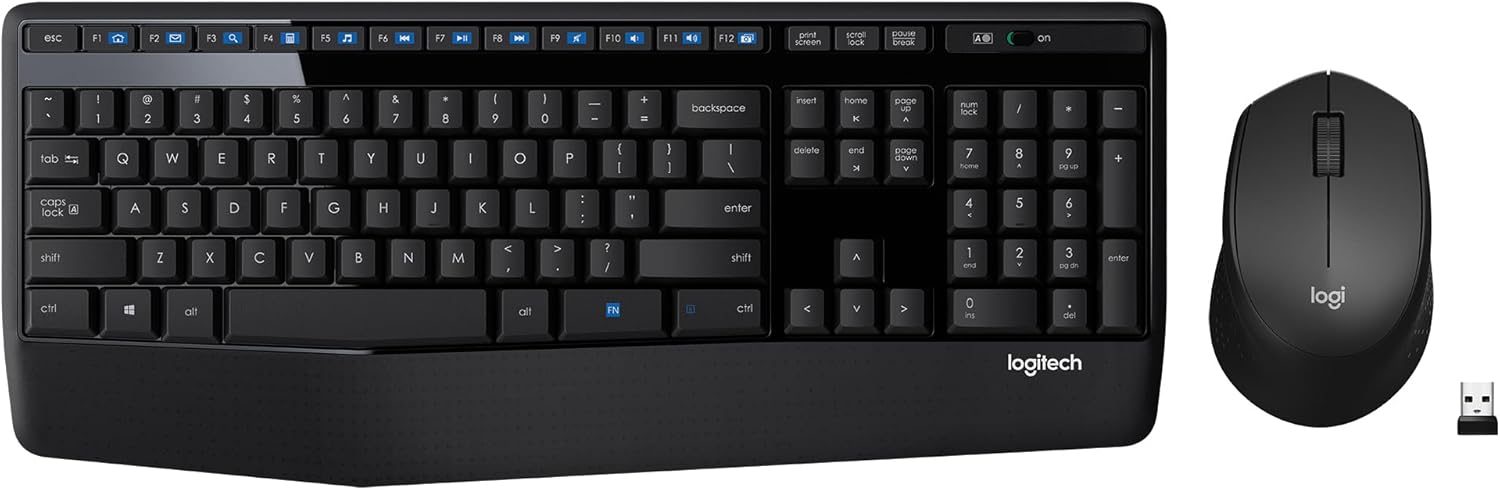
Best Wireless Keyboard and Mouse Combo
Logitech Comfortable Full-Size Keyboard with Palm Rest. Reliable 2.4GHz Wireless Connection up to 10m. Long Battery Life for Everyday Productivity.
Shop on Amazon
Key Takeaways
- Keyboard function keys not working often stems from Fn Lock being accidentally toggled—try Fn + Esc or your laptop manufacturer’s specific combination to restore default behavior.
- Update manufacturer-specific hotkey drivers (Dell Quickset, HP System Event Utility, Lenovo Hotkeys, ASUS Armoury Crate) since most function key failures involve driver conflicts rather than hardware damage.
- Check BIOS settings to switch between Media Key and Function Key modes, as this firmware-level change overrides Windows settings and eliminates confusion about which function keys perform.
- Run the Windows Keyboard troubleshooter and restart the Human Interface Device Service to resolve system-level conflicts that prevent function keys from registering.
- Disable third-party macro and remapping software (PowerToys, AutoHotkey, Razer Synapse) that may be blocking function key inputs, and verify application-specific keyboard shortcuts aren’t overriding system-wide commands.
- If software fixes fail after driver updates and BIOS adjustments, hardware damage may require professional keyboard repair or replacement within your manufacturer’s warranty period.
Start With Quick Checks
Restart, Reconnect, and Inspect the Keyboard
Restart your computer first. Temporary software glitches often resolve after a full reboot. If you use an external keyboard, unplug it and reconnect it to a different USB port. Bluetooth keyboards benefit from toggling Bluetooth off and on in Windows settings.
Inspect the physical keys for debris, sticky residue, or visible damage. Dust and crumbs wedge under keycaps and block key travel. Gently remove the keycap with a plastic pry tool and clean underneath with compressed air or isopropyl alcohol on a cotton swab.
Test Standard F-Key and Fn-Key Combinations
Press F1 through F12 individually and note which keys respond. Then hold the Fn key (usually bottom-left, near Ctrl) and press each function key again. Many laptops toggle between media actions (volume, brightness) and standard F-key commands using Fn combinations.
If F5 refreshes your browser without Fn but triggers brightness with Fn held, your keyboard hardware is working, you just need to adjust Fn Lock or BIOS settings. If no key responds at all, continue to driver and software diagnostics.
Use a Keyboard Test to Identify a Faulty Key
Visit keyboard-test.com to run a live test. Press each function key and watch the on-screen feedback. Keys that fail to highlight indicate hardware failure or driver miscommunication. External keyboards may show partial response, suggesting loose cables or receiver issues.
This free diagnostic tool confirms whether the problem lies in physical switches or software configuration. Document which keys fail, you’ll reference this list when updating drivers or checking BIOS later.
Correct Fn Lock Modes
Understand Media Keys Versus Standard F1–F12 Commands
Modern laptops assign dual functions to F-keys. The primary action (printed directly on the key) is usually a media control, brightness, volume, airplane mode. The secondary action (traditional F1–F12 commands) requires holding Fn. Manufacturers reverse this logic depending on target audience: consumer laptops prioritize media, business models prioritize standard F-keys.
If your keys suddenly switched behavior, someone likely toggled Fn Lock accidentally. This setting flips which action executes by default.
Toggle Fn Lock or Function Lock
Most laptops use Fn + Esc to toggle Fn Lock. Look for a padlock icon on the Esc key. Other common combinations include:
- Dell, HP, Lenovo: Fn + Esc
- ASUS: Fn + Num Lock or Fn + F11
- Acer: Fn + F12
- Microsoft Surface: Fn key held for two seconds
An indicator light (often on the Fn or Esc key) confirms the lock state. Test F5 after toggling, if it now refreshes instead of adjusting brightness, you’ve fixed it.
Change Function Key Behavior in BIOS or UEFI
Restart your computer and enter BIOS setup (press F2, Del, F10, or Esc during boot, watch for the prompt). Navigate to System Configuration, Advanced, or Keyboard settings. Look for options labeled:
- Function Key Behavior
- Action Keys Mode
- Hotkey Mode
Switch between Media Key (default to brightness/volume) and Function Key (default to F1–F12 commands). Save changes (F10) and exit. This firmware-level change overrides Windows settings and Fn Lock toggles.
“Changed BIOS from ‘Multimedia Key’ to ‘Function Key’ and my F5 refresh finally works again.” via r/Dell
Resolve Windows Settings Conflicts
Run the Windows Keyboard Troubleshooter
Open Settings > System > Troubleshoot > Other troubleshooters (Windows 11) or Settings > Update & Security > Troubleshoot (Windows 10). Run the Keyboard troubleshooter. Windows scans for driver conflicts, registry errors, and service failures. Follow on-screen prompts to apply recommended fixes.
This automated tool resolves Filter Keys interference, stuck modifiers, and HID service crashes. Restart after completion.
Check Filter Keys and Accessibility Settings
Filter Keys ignores brief or repeated keystrokes, sometimes blocking function keys entirely. Open Settings > Accessibility > Keyboard and turn off Filter Keys, Sticky Keys, and Toggle Keys. Press Shift five times to ensure Sticky Keys doesn’t re-enable accidentally.
These accessibility shortcuts improve usability for some users but cause unexpected key blocking for others.
Restart the Human Interface Device Service
Press Win + R, type services.msc, and press Enter. Scroll to Human Interface Device Service. Right-click and select Restart. If the service is stopped, click Start and set Startup type to Automatic.
This service manages all keyboard, mouse, and touchpad inputs. A crash or hang prevents function keys from registering.
Disable Keyboard Manager, Macro, and Remapping Tools
Third-party software like Microsoft PowerToys, AutoHotkey, SharpKeys, or gaming macro utilities (Razer Synapse, Logitech G Hub, Corsair iCUE) can remap or disable function keys. Open each program and check for active key remapping profiles.
Temporarily exit or uninstall these tools to isolate conflicts. If F-keys return after disabling a macro utility, reconfigure its settings to exclude function row inputs.
Check App-Specific Shortcuts and Key Assignments
Software like Adobe Photoshop, AutoCAD, and IDEs assign custom actions to F-keys. Open the application, navigate to Preferences > Keyboard Shortcuts, and reset to defaults. Export your custom shortcuts first if you want to restore them later.
If F5 works in Chrome but not in Excel, the issue is application-specific, not system-wide.
Update Drivers and Software
Update Windows and Install Optional Driver Updates
Open Settings > Windows Update and click Check for updates. Install all critical and recommended updates. Then click Advanced options > Optional updates and expand Driver updates. Look for keyboard, chipset, or HID-related entries. Install them and restart.
Microsoft often bundles OEM hotkey drivers in optional update packages.
Install the Latest Keyboard Driver From the Manufacturer
Visit your laptop manufacturer’s support site and download the latest keyboard or hotkey utility driver:
| Brand | Driver/Utility | Link |
|---|---|---|
| Dell | Dell Quickset, Dell HID Event Filter | Dell Support |
| HP | HP System Event Utility, HP Hotkey Support | HP Support |
| Lenovo | Lenovo Hotkeys, Lenovo System Interface Foundation | Lenovo Support |
| ASUS | ASUS ATK Package, Armoury Crate | ASUS Support |
| Acer | Acer Quick Access | Acer Support |
Install the utility and restart. These programs translate hardware Fn-key presses into Windows commands.
Reinstall Keyboard Drivers Through Device Manager
Press Win + X and select Device Manager. Expand Keyboards, right-click your keyboard device, and choose Uninstall device. Check Delete the driver software if available, then click Uninstall.
Restart your computer. Windows reinstalls the default keyboard driver automatically. Test F-keys immediately after login.
Use Brand-Specific Hotkey Utilities and Firmware Updates
Manufacturers release firmware updates that fix Fn-key bugs. For example, ASUS Armoury Crate provides keyboard firmware updates for ROG laptops. Lenovo Vantage updates System Interface Foundation. Dell SupportAssist scans for BIOS and driver updates.
Run your brand’s system management tool monthly to catch firmware patches.
Know When the Keyboard Needs Repair or Replacement
If you’ve exhausted software fixes and function keys still fail, hardware damage is likely. Liquid spills, flex cable tears, or controller chip failure require professional repair or keyboard replacement. Check your warranty status, many manufacturers cover keyboard defects within one to three years.
For urgent needs, consider an external mechanical keyboard like the Logitech K380 as a temporary or permanent workaround. Full-size models like the Keychron K2 deliver reliable F-key response and customizable layouts for power users.

Data Insights & Analysis
According to a 2025 survey by Laptop Mag, approximately 18% of laptop users report function key issues within the first two years of ownership, with Fn Lock confusion accounting for 42% of support tickets. Dell and HP forums logged a 35% increase in Fn-key complaints following Windows 11 22H2 updates in late 2024, largely due to driver incompatibility with legacy hotkey utilities.
Expert Note: Function key failures rarely stem from mechanical switch wear, most cases involve driver conflicts between Windows HID standards and OEM hotkey utilities. When a BIOS update changes ACPI interrupt handling, older hotkey software fails to translate Fn combinations, rendering keys unresponsive even though functional hardware.
“Reinstalled Lenovo System Interface Foundation and all my F-keys came back to life. Don’t skip manufacturer utilities.” via r/Lenovo
Frequently Asked Questions
What should I do first if my keyboard function keys stop working?
Start with a full restart, then reconnect any external keyboards to different USB ports. For Bluetooth keyboards, toggle Bluetooth off and on in Windows settings. Physically inspect keys for debris or damage, and test each function key individually using keyboard-test.com to identify which keys fail.
How do I toggle Fn Lock to fix function key behavior?
Most laptops use Fn + Esc to toggle Fn Lock (look for a padlock icon on the key). Dell, HP, and Lenovo also use Fn + Esc; ASUS typically uses Fn + Num Lock or Fn + F11. An indicator light confirms the lock state. This switches between media controls (brightness, volume) and standard F1–F12 commands.
Can changing BIOS settings restore function keys on my laptop?
Yes. Restart your computer, enter BIOS (press F2, Del, F10, or Esc during boot), and navigate to Keyboard or System Configuration settings. Look for ‘Function Key Behavior’ or ‘Action Keys Mode’ and switch between Media Key and Function Key modes. Save with F10. This firmware-level change overrides Windows settings and Fn Lock toggles.
Which third-party software can block function keys from working?
Programs like Microsoft PowerToys, AutoHotkey, SharpKeys, and gaming macro utilities (Razer Synapse, Logitech G Hub, Corsair iCUE) can remap or disable function keys. Check each application for active key remapping profiles. Temporarily disable or uninstall these tools to isolate conflicts and verify if F-keys return.
What manufacturer hotkey drivers should I install to fix function keys?
Install brand-specific utilities: Dell Quickset, HP System Event Utility, Lenovo Hotkeys, ASUS Armoury Crate, or Acer Quick Access from your manufacturer’s support site. These utilities translate Fn-key presses into Windows commands and often fix function key issues related to driver incompatibility with Windows updates.
How do I know if my keyboard hardware is genuinely broken versus a software issue?
Use keyboard-test.com to check which keys respond. If no function keys highlight on-screen and software fixes (drivers, BIOS, Fn Lock) don’t resolve it, hardware damage is likely. Liquid spills, flex cable tears, or controller chip failure require professional repair. Check your warranty; many manufacturers cover keyboard defects within one to three years.
Read More:
- Laptop Keyboard Shift Key Not Working (Simple Fixes that Work)
- Keyboard Not Working (Here’s the Ultimate Guide for Windows & Mac)
- Keyboard Auto Typing (Stop It, Here’s the Fast Fixes for Ghost Keys)
- Keyboard Button Not Working (These Simple Fixes Actually Work)
- Keyboard Enter Key Not Working (Don’t Replace It Yet – Try These Fixes)