
You connect your keyboard, wait for the reassuring device sound, and nothing happens. No acknowledgment. No cursor response. Just silence from Windows. This dead-zone scenario affects thousands of users daily, triggering frustration and productivity loss.
When your keyboard isn’t detected by Windows, the root cause typically lies in driver enumeration failure, USB power delivery issues, corrupted bus controllers, or physical connector damage. Windows fails to complete the hardware handshake, leaving your peripheral invisible to Device Manager and unusable for input.
Testing your keyboard on another PC immediately isolates whether you’re dealing with hardware failure or a Windows-specific configuration problem. From there, reinstalling Universal Serial Bus controllers, disabling USB Selective Suspend in power settings, performing a flea-power discharge, updating chipset INF drivers, and verifying rear motherboard USB ports provide the highest success rates for restoring detection.
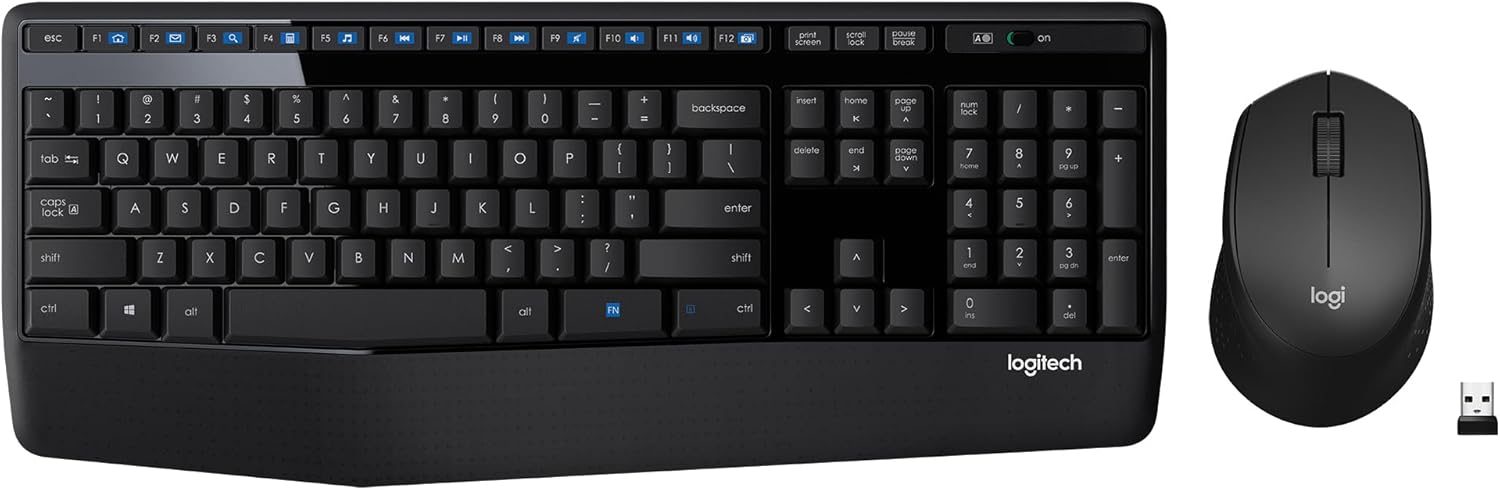
Best Wireless Keyboard and Mouse Combo
Logitech Comfortable Full-Size Keyboard with Palm Rest. Reliable 2.4GHz Wireless Connection up to 10m. Long Battery Life for Everyday Productivity.
Shop on Amazon
Key Takeaways
- A keyboard not detected by Windows typically stems from driver enumeration failure, USB power delivery issues, corrupted bus controllers, or physical connector damage that prevents the hardware handshake from completing.
- Test your keyboard on another PC immediately to isolate whether the issue is hardware failure or a Windows-specific configuration problem requiring software troubleshooting.
- Reinstalling Universal Serial Bus controllers, disabling USB Selective Suspend, performing a flea-power discharge, and updating chipset INF drivers offer the highest success rates for restoring detection.
- Disable Fast Startup and adjust USB power management settings to prevent Windows from locking USB controller states and cutting power to ports mid-session.
- If your keyboard fails across multiple PCs and operating systems, the controller PCB has likely failed and requires hardware replacement or professional repair.
- Update your BIOS firmware and chipset drivers to fix USB enumeration bugs and improve power delivery logic managed by your motherboard.
Why Windows Fails to Detect Your Keyboard
Windows relies on a precise enumeration sequence when you plug in a USB keyboard. The moment the connector enters the port, the system interrogates the device for its descriptor, a data packet containing manufacturer ID, device class, and power requirements. If Windows can’t retrieve or parse this descriptor, it abandons the handshake.
Driver stack corruption tops the list of silent killers. The Universal Serial Bus controllers in Device Manager act as gatekeepers. When these drivers become outdated or corrupted, often after Windows updates or abrupt shutdowns, they stop translating USB signals. You’ll see “Unknown USB Device (Device Descriptor Request Failed)” or Code 43 errors.
Power delivery inconsistencies create another failure point. USB ports supply regulated voltage, but aging motherboards, weak PSU rails, or overloaded hubs starve peripherals. Your keyboard may draw 100–500mA: if the port can’t deliver, Windows never completes device initialization. Front-panel headers, routed through flimsy internal cables, fail more often than rear motherboard ports wired directly to the chipset.
Static charge buildup holds residual voltage in capacitors even when your PC is off. This “flea power” can jam USB communication pathways, preventing fresh enumeration. A proper discharge clears this invisible barrier.
“Keyboard worked fine yesterday. Today Windows acts like it doesn’t exist. Tried 3 USB ports, nothing.” via r/techsupport
Quick Checks Before Troubleshooting
Test Your Keyboard on Another Device
Plug your keyboard into a second computer, laptop, or even a tablet with USB-A/C ports. If the device lights up, responds to keypresses, or triggers installation prompts, you’ve just confirmed the keyboard hardware is functional. The problem lives inside your primary Windows installation.
If the keyboard stays dead across multiple devices, inspect the cable for internal wire breaks near the connector strain relief. Mechanical keyboards with detachable cables let you swap cables in seconds, this braided USB-C to USB-A cable handles high polling rates without signal degradation.
Wireless keyboards require a different test. Swap batteries, verify the USB dongle seats fully, and check for interference from nearby 2.4GHz devices. Some dongles enter low-power sleep modes that Windows misinterprets as disconnection.

Inspect Physical Connections and Ports
Examine USB port gold contacts under bright light. Dust, oxidation, or bent pins block electrical continuity. Compressed air dislodges debris: isopropyl alcohol on a cotton swab cleans oxidized contacts. Never force connectors, USB-A should slide smoothly: resistance indicates misalignment or internal obstruction.
Rear motherboard I/O ports offer superior reliability compared to front-panel headers or external hubs. Motherboard USB 3.0/3.1 ports connect directly to chipset lanes with shielded traces. Front headers run through thin 2.54mm pitch cables prone to signal attenuation and voltage drop.
Powered USB hubs introduce another variable. A hub drawing power from the host PC can’t supply full current to downstream ports. Hubs with dedicated AC adapters eliminate this bottleneck, this Amazon Basics 10-port powered hub provides 60W total, enough for multiple high-draw peripherals.

Restart Your Computer and Reconnect the Keyboard
A full cold boot clears Windows’ hardware enumeration cache and resets USB controller states. Click Start → Power → Shut Down (not Restart). Wait 30 seconds for capacitors to drain. Press the power button.
While the PC is off, disconnect the keyboard USB cable. When Windows loads to the login screen, plug the keyboard into a different rear motherboard USB port, preferably USB 2.0 (black) instead of USB 3.0 (blue). USB 2.0 uses simpler signaling protocols with fewer handshake steps, reducing enumeration failure risk.
Watch for the device connection sound and LED activity on the keyboard. Open Device Manager (Win + X → Device Manager) and expand “Keyboards.” A properly detected device appears as “HID Keyboard Device” or the manufacturer’s name. If you see a yellow triangle or the device lists under “Universal Serial Bus controllers” as “Unknown,” Windows stalled mid-enumeration.
Perform a flea-power discharge for stubborn cases. Shut down, unplug the power cord (desktops) or remove the battery (laptops). Hold the power button for 15–20 seconds to drain residual charge. Reconnect power and boot. This hard reset clears USB port voltage remnants that jam detection logic.
Update or Reinstall Keyboard Drivers
Automatically Update Drivers Through Device Manager
Open Device Manager (Win + X). Expand “Keyboards.” Right-click your keyboard entry → Update driver → Search automatically for drivers. Windows queries Microsoft’s server for signed inbox drivers.
If the keyboard doesn’t appear under “Keyboards,” expand “Universal Serial Bus controllers.” Look for entries labeled “Unknown USB Device” or any item with a yellow exclamation mark. Right-click → Uninstall device → check “Delete the driver software for this device.” Restart. Windows redetects the hardware and reinstalls default drivers from scratch.
For persistent issues, uninstall all USB controllers. In Device Manager, expand “Universal Serial Bus controllers.” One by one, right-click each entry (USB Root Hub, Generic USB Hub, USB Composite Device, Intel/AMD USB 3.0/3.1 eXtensible Host Controller) → Uninstall. Restart. Windows rebuilds the entire USB stack with fresh drivers. This nuclear option fixes corrupted controller enumeration.
Manually Download Drivers from Manufacturer Websites
Generic HID drivers work for 90% of keyboards, but gaming and macro boards need vendor software. Visit the manufacturer’s support page, Logitech, Razer, Corsair, SteelSeries, and download the latest driver package matching your exact model and Windows version.
Conflicting keyboard software causes detection failures. If you previously installed macro utilities, RGB control apps, or remapping tools, uninstall them via Settings → Apps before installing fresh drivers. Residual registry entries and filter drivers block Windows’ native HID stack.
Driver update utilities like Driver Booster scan your hardware IDs against a cloud database and automate bulk updates for chipset, USB, and peripheral drivers. This approach catches outdated Intel Management Engine or AMD Chipset drivers that indirectly affect USB enumeration.
“Uninstalled all USB Root Hubs in Device Manager. Restarted. Windows reinstalled them and keyboard instantly worked. Five months of frustration solved.” via r/Windows10
Run the Windows Keyboard Troubleshooter
Windows includes a diagnostic tool that automates common fixes. Press Win + I → System → Troubleshoot → Other troubleshooters → Keyboard → Run. The wizard checks driver integrity, registry keys, and HID service status.
The troubleshooter resets the Human Interface Device Access service (hidserv), which translates raw USB input into application-layer commands. If this service hangs or its dependencies fail, keyboards become invisible. The automated fix restarts the service chain.
It also scans for filter driver conflicts. Third-party software, especially anti-cheat engines, virtualization tools, or remote desktop apps, inject filter drivers into the keyboard stack. When these filters crash or mismatch after Windows updates, they block all input. The troubleshooter identifies and disables problematic filters.
Check the troubleshooter results panel. If it reports “Fixed: Keyboard driver issue” or “Reset HID service,” test your keyboard immediately. If it says “Detected issues but unable to fix,” note the error code (often pointing to registry corruption or missing system files) and proceed to advanced solutions.
Disable Fast Startup to Fix Detection Issues
Fast Startup saves kernel session state to disk during shutdown, enabling quicker boots. But this hybrid hibernation locks USB controller states, preventing fresh hardware enumeration. Your keyboard might work in BIOS/UEFI but vanish in Windows because the OS reloads a cached controller map that excludes the device.
Disable it: Press Win + R → type powercfg.cpl → Enter. Click “Choose what the power buttons do” → “Change settings that are currently unavailable.” Uncheck “Turn on fast startup (recommended).” Save changes. Shut down (not restart) and power on.
After disabling Fast Startup, Windows performs a full cold boot every time, reinitializing USB controllers from hardware defaults. This adds 5–10 seconds to boot time but eliminates enumeration glitches tied to stale power states.
Fast Startup interacts poorly with BIOS updates and chipset driver changes. If you recently flashed firmware or installed motherboard drivers, this setting can trap your system in a detection loop. Disabling it synchronizes Windows’ hardware expectations with actual chipset capabilities.
Check USB Power Management Settings
Windows aggressively cuts power to USB ports to extend battery life or reduce idle consumption. When USB Selective Suspend kills power mid-session, devices drop offline. Some keyboards can’t reestablish connection without a full reboot.
Open Device Manager → expand “Universal Serial Bus controllers.” Right-click each “USB Root Hub” entry → Properties → Power Management tab. Uncheck “Allow the computer to turn off this device to save power.” Repeat for every hub entry.
Next, adjust global power plan settings. Press Win + R → type powercfg.cpl → Enter. Click “Change plan settings” next to your active plan → “Change advanced power settings.” Expand “USB settings” → “USB selective suspend setting.” Set both “On battery” and “Plugged in” to Disabled. Apply.
Some motherboards enforce USB power limits in BIOS/UEFI. Restart, enter BIOS (usually Del, F2, or F12 during boot), navigate to Advanced → USB Configuration. Look for “USB Power Delivery” or “ErP Ready” settings. Disabling ErP Ready stops the motherboard from cutting standby power to peripherals.
For users managing multiple devices or experiencing VPN connection drops alongside keyboard issues, running a stable VPN like ExpressVPN ensures uninterrupted remote sessions while troubleshooting, critical when USB failures lock you out mid-fix.
Update Your BIOS and Chipset Drivers
Outdated BIOS firmware can mismanage USB lane assignments, especially after Windows feature updates alter ACPI tables. Motherboard vendors release BIOS updates to fix USB enumeration bugs, improve power delivery logic, and patch xHCI controller firmware.
Identify your motherboard model: Press Win + R → type msinfo32 → Enter. Note “BaseBoard Manufacturer” and “BaseBoard Product.” Visit the manufacturer’s support site (ASUS, MSI, Gigabyte, ASRock), download the latest BIOS file and flashing utility. Follow the vendor’s exact instructions, interrupting a BIOS flash bricks the board.
Chipset drivers act as translators between Windows and motherboard silicon. Intel releases chipset INF updates quarterly: AMD bundles USB fixes in AMD Chipset Drivers. Download the package matching your CPU generation, run the installer, and restart.
After updating chipset drivers, open Device Manager and verify that “Intel Chipset Device Software” or “AMD PCI/SMBus” entries appear under “System devices.” These drivers include USB 3.x eXtensible Host Controller Interface (xHCI) profiles that govern descriptor handshakes and power negotiation.
Remove Conflicting Keyboard Software
Macro recorders, RGB control suites, and remapping utilities inject filter drivers into the keyboard input chain. When these tools update incompatibly or their services crash, they block Windows’ HID subsystem from accessing the hardware.
Open Settings → Apps → Installed apps. Search for Logitech G Hub, Razer Synapse, Corsair iCUE, SteelSeries GG, or any keyboard customization software. Click the three dots → Uninstall. Restart. Test the keyboard using Windows’ default drivers.
Some software leaves behind filter drivers even after uninstall. Open Device Manager → View → Show hidden devices. Expand “Keyboards” and “Non-Plug and Play Drivers.” Look for grayed-out entries with vendor names (e.g., “LGS HID Filter,” “Razer Keyboard Filter”). Right-click → Uninstall device → check “Delete driver software.” Restart.
Registry cleaner utilities like CCleaner can remove orphaned startup entries that launch crashed keyboard services. Run a registry scan focusing on HKLM\SYSTEM\CurrentControlSet\Services and HKCU\Software entries. Back up the registry before making changes.
When to Replace Your Keyboard or Seek Professional Help
If your keyboard fails on multiple PCs, different operating systems, and after cable swaps, the controller PCB has likely failed. Liquid spills corrode traces: static discharge fries diodes. No software fix recovers dead silicon.
For laptop users with integrated keyboards, testing an external USB keyboard isolates the fault. If the external keyboard works but the built-in fails, the laptop’s internal keyboard ribbon cable or connector has detached. This requires disassembly and reseating, consider professional repair unless you’re comfortable with laptop teardowns.
Motherboard USB controller failure is rare but catastrophic. If no USB device (keyboards, mice, flash drives) works across all ports and all troubleshooting steps fail, the chipset’s USB lanes may be damaged. Add-in PCIe USB cards bypass the motherboard controller, this USB 3.0 PCIe card provides fresh ports independent of motherboard silicon.

Before replacing hardware, create a Windows installation USB and attempt a repair install (Settings → System → Recovery → Advanced startup → Troubleshoot → Advanced options → Startup Repair). This rebuilds core drivers and services without erasing personal files, often fixing deep registry corruption that blocks USB enumeration.
Frequently Asked Questions
Why is my keyboard not detected by Windows?
Windows keyboard detection failures typically stem from driver corruption, USB power delivery issues, or physical connector damage. The system performs a hardware handshake upon connection, retrieving device descriptors. If this fails, you’ll see errors like ‘Unknown USB Device’ or Code 43. Testing your keyboard on another PC isolates whether it’s a hardware or Windows configuration issue.
How do I fix a keyboard not detected by Windows?
Start with quick checks: restart your PC and test the keyboard on a different USB port (preferably rear motherboard USB 2.0). If detection fails, uninstall all USB Root Hubs in Device Manager and restart—Windows will rebuild the USB stack. Update chipset drivers and disable Fast Startup in power settings, which can cache stale USB controller states.
What is a flea-power discharge and why does it help?
Flea-power discharge clears residual voltage trapped in capacitors even when your PC is off. This static buildup jams USB communication pathways, preventing fresh device enumeration. To perform it: shut down, unplug the power cord (or remove battery), hold the power button for 15–20 seconds, then reconnect and boot.
Should I use front-panel USB ports or rear motherboard ports for my keyboard?
Rear motherboard USB ports offer superior reliability. They connect directly to chipset lanes with shielded traces, while front-panel headers run through thin internal cables prone to signal attenuation and voltage drop. Motherboard USB 2.0 (black) ports use simpler signaling protocols with fewer enumeration steps, reducing detection failure risk.
Can outdated keyboard software prevent Windows detection?
Yes. Macro recorders, RGB control suites, and remapping utilities inject filter drivers that can block Windows’ HID subsystem. If you previously installed vendor software (Logitech G Hub, Razer Synapse, Corsair iCUE), uninstall it via Settings → Apps before testing. Residual filter drivers may persist; remove them in Device Manager under ‘Non-Plug and Play Drivers.’
When should I replace my keyboard instead of troubleshooting?
Replace your keyboard if it fails on multiple PCs, different operating systems, and after cable swaps—indicating controller PCB failure. Liquid damage, static discharge, or mechanical failure are permanent. However, if the keyboard works on another computer, your Windows installation has a software issue worth addressing before buying replacement hardware.
Read More:
- Keyboard Anti-Ghosting Not Working (Here’s Why and How to Fix It)
- Keyboard Not Working After Restart (Diagnosis, Causes, and Solutions)
- Keyboard Not Working After Sleep (Reasons and How to Fix It)
- Keyboard Not Working in BIOS (Reasons and Hardware Solutions)
- Keyboard Works in BIOS but Not Windows (Here’s the Proven Fixes)