
Your keyboard lights up and responds perfectly when you boot into BIOS or UEFI. But the moment Windows loads, it becomes completely unresponsive.
This frustrating issue occurs because Windows uses its own driver stack separate from the basic BIOS firmware, and corrupted keyboard drivers, power management conflicts, problematic Windows updates, or registry filter driver errors can block your keyboard from initializing properly during OS startup, even though the hardware itself functions perfectly.
You’re not dealing with a broken keyboard, you’re facing a software conflict that prevents Windows from properly loading the Human Interface Device (HID) driver stack. Let’s isolate and fix the specific driver or configuration causing the lockout.
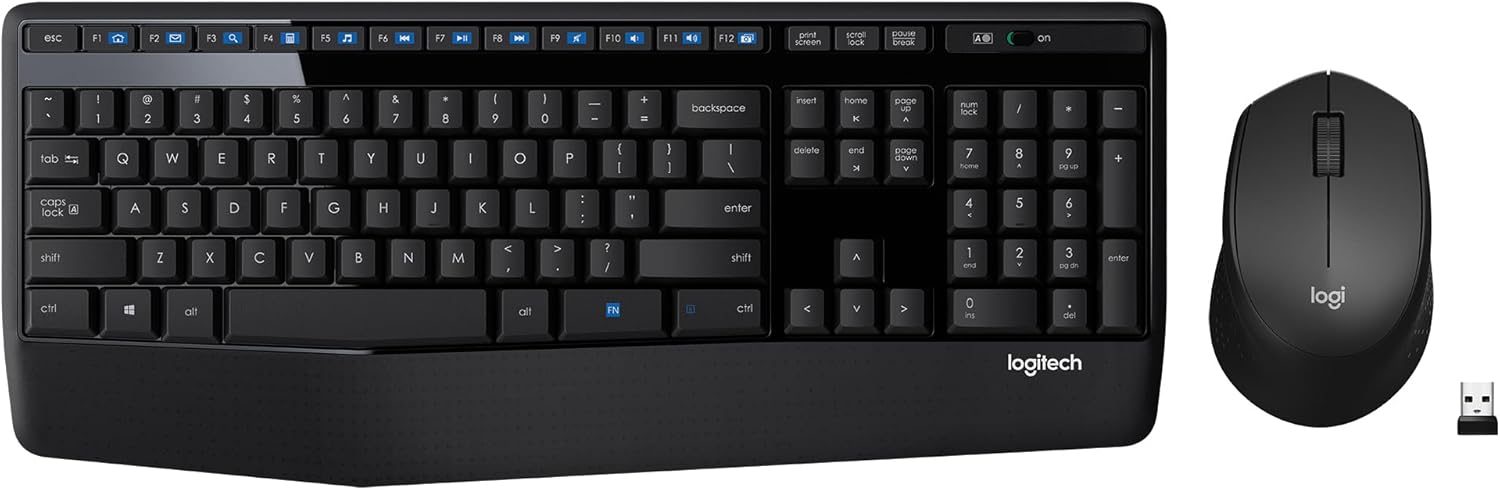
Best Wireless Keyboard and Mouse Combo
Logitech Comfortable Full-Size Keyboard with Palm Rest. Reliable 2.4GHz Wireless Connection up to 10m. Long Battery Life for Everyday Productivity.
Shop on Amazon
Key Takeaways
- Keyboard failures in Windows despite working in BIOS are caused by corrupted drivers, power management conflicts, or problematic updates—not hardware issues—because Windows uses a complex driver stack separate from BIOS firmware.
- Boot into Safe Mode to test your keyboard and identify whether third-party drivers or services block operation; if it works in Safe Mode but fails normally, a driver conflict is confirmed.
- Uninstall and reinstall keyboard drivers completely through Device Manager, then install chipset drivers from your motherboard manufacturer to resolve driver initialization failures.
- Disable USB Selective Suspend in Power Options and uncheck power-saving settings for USB Root Hubs in Device Manager to prevent USB ports from powering down during Windows startup.
- Check registry entries under the keyboard class installer for corrupted UpperFilters and LowerFilters values added by antivirus software or gaming utilities, and delete any problematic third-party filter driver entries.
- If your keyboard works in Linux but not Windows, or if a PS/2 keyboard functions while USB keyboards fail, the issue is software-level driver corruption or USB controller failure requiring professional diagnosis.
Why Your Keyboard Functions in BIOS but Fails in Windows
Understanding the difference between how BIOS and Windows handle keyboard input is critical. Your BIOS uses simple, universal firmware-level protocols that communicate directly with your keyboard hardware. Windows, but, loads a complex driver hierarchy that includes USB controllers, HID drivers, and filter drivers that can break at multiple points.
Driver Issues: The Most Common Culprit
Windows relies on the kbdclass driver and various HID-compliant keyboard drivers to translate your keystrokes into system input. When these drivers become corrupted, outdated, or blocked by third-party software, your keyboard fails to initialize.
Corrupted UpperFilters and LowerFilters registry entries under the keyboard class installer frequently cause this exact symptom. These registry keys control which drivers load before and after the standard keyboard driver. Antivirus software, system utilities, and failed driver installations often add entries here that later prevent proper keyboard initialization.
Third-party keyboard software like macro tools, RGB lighting controllers, or gaming utilities can inject filter drivers that conflict with Windows’ native HID stack. A clean Windows installation works fine, but after installing these utilities, your keyboard stops responding at login.
USB Controller and Power Management Problems
Windows USB Selective Suspend can power down USB ports to save energy, sometimes failing to wake them properly when needed. Your BIOS doesn’t use these power management features, which is why your keyboard works there but fails once Windows applies its power policies.
Outdated or corrupted USB controller drivers prevent proper enumeration of connected devices. Your motherboard chipset drivers directly control how Windows manages USB ports, and mismatched versions can cause input devices to disconnect during OS initialization. If Windows loads a generic USB driver instead of your chipset manufacturer’s optimized driver, device initialization timing can fail.
Quick Diagnostic Steps to Identify the Problem
Before diving into fixes, confirm whether this is truly a software issue. Try connecting a different USB keyboard to various USB ports, both USB 2.0 and USB 3.0. If those keyboards also fail in Windows but work in BIOS, you’ve confirmed a driver or software conflict.
Access Windows using the On-Screen Keyboard. Press Windows key + U at the login screen to open accessibility options, then click the On-Screen Keyboard icon. This allows you to log in and perform troubleshooting steps.
Check if your keyboard works in other operating systems. Boot from a Linux live USB, if your keyboard functions normally in Ubuntu or similar distributions, Windows is definitely the problem. This eliminates hardware failure from consideration.
Note when the keyboard stops responding. Does it work until the login screen appears, or does it fail earlier during the Windows loading animation? Timing helps pinpoint whether the issue occurs during driver initialization or later in the boot sequence.
Fix 1: Boot Windows in Safe Mode and Test Your Keyboard
Safe Mode loads Windows with only essential drivers, bypassing most third-party software and filter drivers. If your keyboard works in Safe Mode but fails in normal boot, you’ve confirmed that a third-party driver or service blocks normal keyboard operation.
Restart your computer and interrupt the normal boot process three times consecutively to trigger Windows Recovery Environment. Select Troubleshoot > Advanced options > Startup Settings > Restart. Press F4 to boot into Safe Mode, or F5 for Safe Mode with Networking if you need internet access for driver downloads.
Once in Safe Mode, test your keyboard thoroughly. Open Notepad and type, if it works, the hardware is fine. Now you need to identify which driver or service causes the conflict. Open Device Manager, expand Keyboards, and look for any devices with yellow warning triangles.
Perform a clean boot to isolate problematic software. Type msconfig in the search box, go to the Services tab, check “Hide all Microsoft services,” then click Disable All. Restart and test your keyboard. If it works, re-enable services one by one to identify the culprit. Gaming software and RGB control utilities are frequent offenders.
Fix 2: Update or Reinstall Keyboard Drivers
Corrupted keyboard drivers are the single most common cause of this issue. You’ll need to completely remove existing drivers and force Windows to reinstall them cleanly.
Boot into Safe Mode as described previously. Open Device Manager (right-click Start button, select Device Manager). Expand the Keyboards section, right-click each keyboard device, and select Uninstall device. Check the box “Delete the driver software for this device” if available, then click Uninstall.
Expand Human Interface Devices and uninstall any HID-compliant keyboard entries. Don’t worry, Windows will reinstall these automatically. Restart your computer normally. Windows should detect the keyboard as new hardware and install fresh drivers.
If automatic driver installation fails, download your motherboard chipset drivers directly from the manufacturer, visit the support page for Intel boards, AMD’s site for AMD systems, or your laptop manufacturer’s driver download section. Install the complete chipset package, which includes USB controller drivers.
Consider using Driver Booster to automatically scan for outdated USB and keyboard drivers. This tool identifies missing Microsoft and vendor-specific drivers that Windows Update often overlooks. For users who frequently encounter driver conflicts, a VPN like NordVPN can help securely download drivers from manufacturer servers when troubleshooting from Safe Mode with Networking.

Stay Private. Stay Secure.
Browse the internet with greater privacy and security with NordVPN. Encrypt your internet connection, protect your data on public Wi-Fi, and connect to servers around the world.
Get NordVPNFix 3: Disable USB Selective Suspend and Power Management
Windows power management aggressively powers down USB ports, sometimes failing to wake them when needed. This causes keyboards to appear dead even though they’re physically connected.
Open Control Panel > Hardware and Sound > Power Options > Change plan settings > Change advanced power settings. Expand USB settings > USB selective suspend setting. Set both “On battery” and “Plugged in” to Disabled. Click Apply and OK.
In Device Manager, expand Universal Serial Bus controllers. Right-click each USB Root Hub entry, select Properties, go to the Power Management tab, and uncheck “Allow the computer to turn off this device to save power.” Repeat for every USB hub listed.
Some motherboards carry out additional USB power management in BIOS. Restart and enter BIOS/UEFI setup, navigate to power management or USB configuration settings, and disable any “USB Power Delivery in S3/S4/S5” or similar options. These settings can prevent USB devices from initializing properly during Windows startup.
Fix 4: Uninstall Problematic Windows Updates
Windows updates occasionally introduce bugs that break keyboard functionality. Microsoft KB updates targeting USB drivers or HID services have historically caused widespread keyboard failures.
Boot into Safe Mode and navigate to Settings > Update & Security > Windows Update > View update history > Uninstall updates. Look for recent Quality Updates or driver updates installed within the past two weeks. Note the KB number of any update installed just before your keyboard stopped working.
“Keyboard stopped working after KB5034441 update. Uninstalled it and keyboard came back instantly.” via r/Windows10
Select the suspect update and click Uninstall. Restart your computer and test. If the keyboard works, pause Windows updates temporarily (Settings > Update & Security > Pause updates for 7 days) until Microsoft releases a fix. Check Microsoft’s Known Issues page regularly for acknowledgment of keyboard-related bugs.
After uninstalling problematic updates, consider blocking them permanently using the Show or Hide Updates troubleshooter available from Microsoft’s support tools.
Fix 5: Check for Filter Driver Conflicts
Filter drivers sit between Windows and your keyboard, intercepting input before it reaches the operating system. Corrupted entries in the registry prevent proper keyboard initialization.
Press Windows + R, type regedit, and press Enter. Navigate to HKEY_LOCAL_MACHINE\SYSTEM\CurrentControlSet\Control\Class\{4d36e96b-e325-11ce-bfc1-08002be10318}. This is the keyboard class installer registry key.
Look for UpperFilters and LowerFilters values in the right pane. These should typically only contain kbdclass or be absent entirely. If you see additional entries like third-party driver names, antivirus hooks, or unfamiliar DLL references, the filter stack is corrupted.
“Deleted UpperFilters and LowerFilters registry entries, restarted, and keyboard immediately started working at login screen.” via Microsoft Community Forums
Right-click each problematic filter entry and select Delete. Be careful, only delete UpperFilters and LowerFilters, nothing else in this registry location. Restart your computer. Windows will rebuild these entries with default values, clearing any corrupted filter driver references.
Fix 6: Run Windows Hardware Troubleshooter and SFC Scan
Windows includes built-in diagnostic tools that can automatically detect and repair keyboard driver issues. Start with the Hardware and Devices troubleshooter.
Open Command Prompt as Administrator and type: msdt.exe -id DeviceDiagnostic then press Enter. This launches the hidden Hardware and Devices troubleshooter. Follow the prompts, it will scan for driver conflicts, registry errors, and service failures affecting input devices.
Run System File Checker to repair corrupted Windows system files that might affect keyboard drivers. In an elevated Command Prompt, type sfc /scannow and press Enter. The scan takes 15-30 minutes and automatically repairs any corrupted system files it finds.
If SFC reports errors it cannot fix, run DISM to repair the Windows component store: DISM /Online /Cleanup-Image /RestoreHealth. This downloads replacement files from Windows Update and can take 20-40 minutes. After DISM completes, run sfc /scannow again to verify all repairs.
Restart your computer after running these scans. The combination of troubleshooter diagnostics, SFC repairs, and DISM component restoration resolves many obscure driver initialization failures caused by corrupted system files.
When to Consider Hardware Replacement or Professional Help
If all software fixes fail, hardware-level USB controller failure becomes more likely. Motherboard USB chips can develop faults that manifest differently under BIOS (simple firmware) versus Windows (complex driver stack).
Test with a PS/2 keyboard if your motherboard still includes a PS/2 port. PS/2 uses a completely different hardware interface that bypasses USB controller issues entirely. If a PS/2 keyboard works in Windows while USB keyboards fail, your USB controller or its Windows drivers have failed beyond software repair.
For a reliable backup input solution, consider the Logitech K380 Multi-Device Bluetooth Keyboard from Amazon. Bluetooth keyboards use a different hardware stack than USB, sometimes working when USB keyboards fail.

As an ultimate desk upgrade, the Keychron K8 Pro Wireless Mechanical Keyboard offers both Bluetooth and USB-C connectivity, giving you multiple fallback options.

If you’ve exhausted driver fixes, registry repairs, and power management adjustments without success, professional diagnosis may reveal deeper issues like corrupted UEFI firmware or motherboard chipset failure requiring specialized tools to diagnose and repair.
Frequently Asked Questions
Why does my keyboard work in BIOS but not in Windows?
Your keyboard works in BIOS because it uses simple firmware protocols, while Windows relies on complex driver hierarchies including USB controllers and HID drivers. Corrupted drivers, power management conflicts, or filter driver errors can block keyboard initialization in Windows even though the hardware functions perfectly in BIOS.
What are UpperFilters and LowerFilters registry entries, and how do they affect keyboard functionality?
UpperFilters and LowerFilters are registry keys that control which drivers load before and after the standard keyboard driver. Corrupted entries from antivirus software, third-party utilities, or failed installations can prevent proper keyboard initialization in Windows. Deleting problematic entries restores normal keyboard operation.
How can I test if my keyboard issue is a software problem or hardware failure?
Try connecting different USB keyboards to various ports. Boot into Linux live USB or BIOS—if keyboards work there but fail in Windows, it’s a software issue. Also test with a PS/2 keyboard if available, as it bypasses USB controller issues using a different hardware interface.
What is USB Selective Suspend and why does it cause keyboard failures?
USB Selective Suspend is a Windows power management feature that powers down USB ports to save energy. Sometimes it fails to wake ports properly, causing keyboards to become unresponsive. Disabling this feature in Power Options and Device Manager can resolve keyboard initialization problems during Windows startup.
Can a Windows update cause my keyboard to stop working?
Yes, Windows updates targeting USB drivers or HID services occasionally introduce bugs that break keyboard functionality. If your keyboard stopped after a recent update, boot into Safe Mode and uninstall the suspect KB update. If it works afterward, pause updates temporarily until Microsoft releases a fix.
What should I do if Safe Mode enables my keyboard but normal Windows boot doesn’t?
This confirms a third-party driver or service conflict. Perform a clean boot via msconfig, disable all non-Microsoft services, and restart. Then re-enable services one by one to identify the culprit. Gaming software and RGB control utilities are frequent offenders that inject conflicting filter drivers.
Read More:
- Keyboard Ghosting (Here’s the Gamer’s Guide to Missed Inputs)
- Keyboard Anti-Ghosting Not Working (Here’s Why and How to Fix It)
- Keyboard Not Working After Restart (Diagnosis, Causes, and Solutions)
- Keyboard Not Working After Sleep (Reasons and How to Fix It)
- Keyboard Not Working in BIOS (Reasons and Hardware Solutions)