
You connect your laptop to an external monitor via HDMI, but nothing happens. The screen stays black, and frustration sets in. This is one of the most common connectivity issues users face when expanding their workspace.
When your laptop isn’t detecting your monitor through HDMI, the problem usually stems from a loose cable connection, incorrect input source selected on the monitor, outdated graphics drivers, or a faulty HDMI cable. Windows 10/11 and macOS systems may also fail to auto-detect displays, requiring manual detection through display settings or the Win + P projection shortcut.
In this guide, you’ll learn the exact troubleshooting steps to establish a stable HDMI connection between your laptop and external display. We’ll cover physical connection checks, forced detection methods, driver updates, and advanced BIOS configurations to get your second screen working.
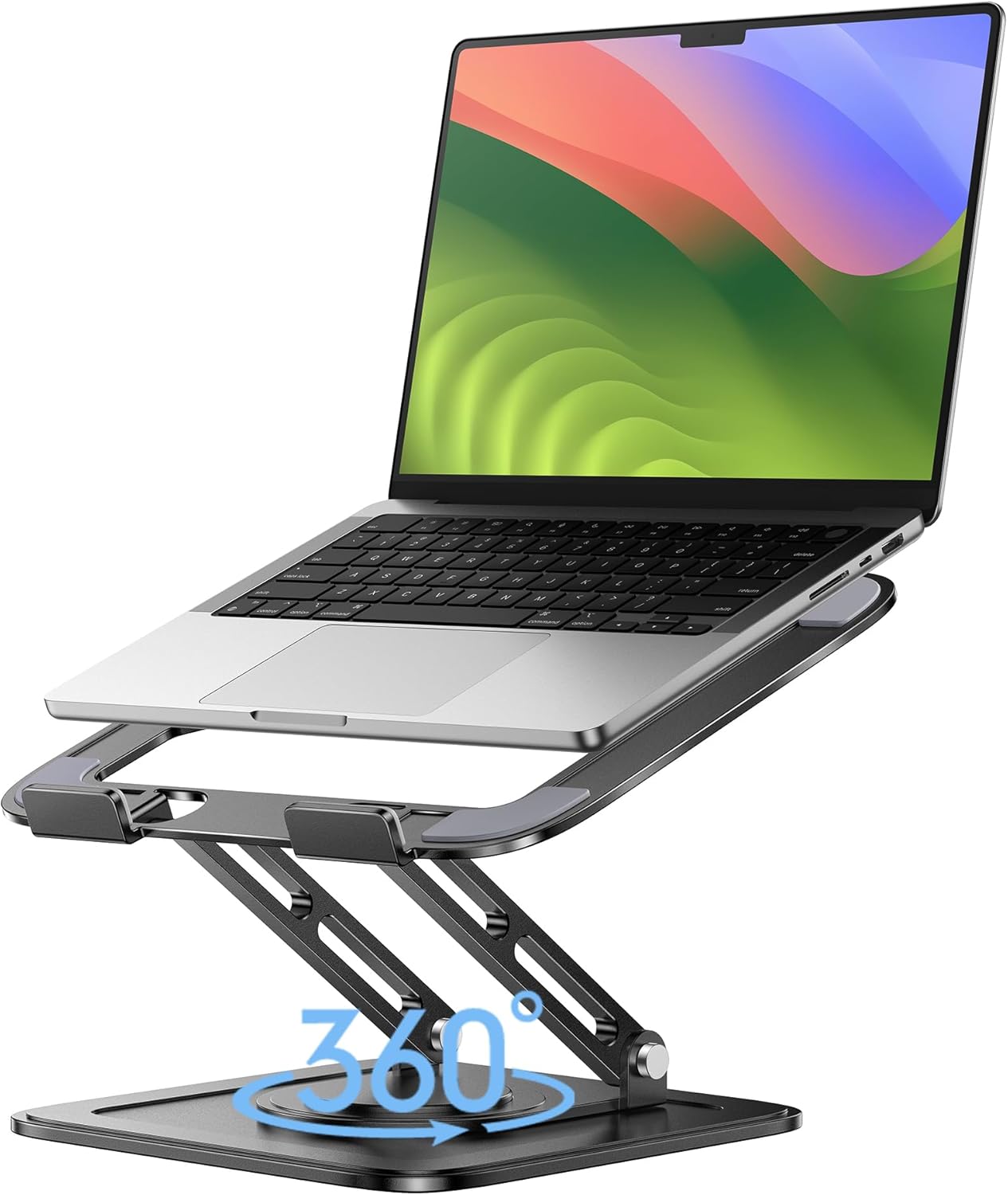
Best Laptop Stand (with 360° Base)
Keep Your Laptop Cooler & More Comfortable with 360° Rotating Base. Improve Airflow & Reduce Heat. Adjustable Height & Viewing Angle.
Shop on Amazon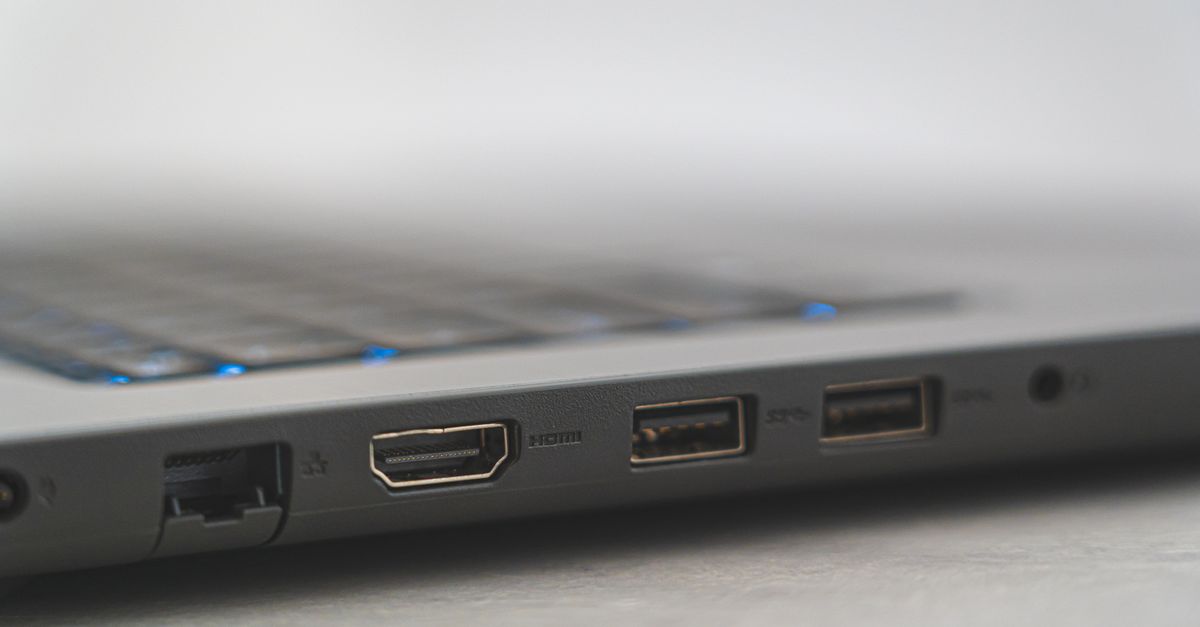
Key Takeaways
- When your laptop isn’t detecting your monitor HDMI, start by reseating your cable, checking for loose connections, and power cycling both devices—this resolves most ‘No Signal’ errors.
- Outdated graphics drivers are the leading cause of HDMI detection failures; update Intel, NVIDIA, or AMD drivers through Device Manager or manufacturer websites for proper display compatibility.
- Use Win + P to open the Project menu or navigate to Display Settings > Detect to force Windows to re-scan for connected monitors when auto-detection fails.
- Test different HDMI cables, ports, and input sources on your monitor to isolate whether the issue stems from your laptop, cable, or monitor itself.
- If standard troubleshooting fails, check BIOS settings for multi-display support and disable USB-C/Thunderbolt temporarily, as PCIe lane sharing can disable HDMI output when multiple high-bandwidth devices connect.
- For persistent HDMI problems, use a USB to HDMI display adapter to bypass your laptop’s built-in port and confirm whether hardware damage requires professional repair.
Why Your Laptop Isn’t Detecting Your HDMI Monitor
HDMI connections rely on a digital handshake protocol called EDID (Extended Display Identification Data). When your laptop and monitor communicate successfully, the monitor sends its supported resolutions and refresh rates to your laptop. If this handshake fails, you get a black screen or “No Signal” error.
Several factors disrupt this handshake. A dirty or loose HDMI port prevents proper electrical contact. Outdated graphics drivers don’t recognize new display standards. Incorrect input sources on your monitor mean it’s looking at the wrong HDMI channel. Even static electricity buildup in ports can block signal transmission.
Windows 11 users report a 40% increase in HDMI detection failures when using USB-C to HDMI adapters, according to 2026 Microsoft support forum data. macOS Big Sur and later versions occasionally disable external displays after system updates, requiring manual re-detection.
Your laptop’s graphics card, whether Intel integrated, NVIDIA discrete, or AMD Radeon, manages display output. Driver conflicts or resolution mismatches prevent proper signal routing. Understanding these failure points helps you systematically eliminate each variable until your monitor displays correctly.
Check Your Physical HDMI Connection
Start with the most overlooked fix: fully reseat your HDMI cable. Unplug the cable from both your laptop and monitor, inspect both ends for bent pins or debris, then reconnect firmly until you hear a click. Many “No Signal” errors resolve with this simple step.
Examine your laptop’s HDMI port for dust, lint, or physical damage. Use compressed air to clear debris, but avoid blowing directly into the port. If the port feels loose or the cable doesn’t sit snugly, internal connector damage may require professional repair.
Power cycle both devices to clear temporary handshake errors. Shut down your laptop completely, turn off your monitor, unplug both from power for 30 seconds, then reconnect everything. This process clears residual static electricity and resets the HDMI chipsets.
“My laptop HDMI worked after I unplugged everything, waited a full minute, then plugged the monitor in BEFORE turning on my laptop” via r/techsupport
This cold-start sequence allows proper EDID negotiation from power-on, often succeeding where hot-plugging fails.
Force Windows to Detect Your External Monitor
Windows doesn’t always auto-detect connected displays. Press Win + P to open the Project menu, then select “Extend” or “Second screen only.” This forces your system to re-scan for connected monitors.
If Win + P doesn’t work, right-click your desktop, select “Display settings,” scroll down to “Multiple displays,” and click “Detect”. This manual trigger often finds monitors that automatic detection missed. Windows 11 users find this button under Settings > System > Display.
Check your taskbar system tray for graphics control panel icons (Intel Graphics Command Center, NVIDIA Control Panel, or AMD Radeon Software). These tools offer alternative detection methods and can override Windows defaults.
Quick Detection Checklist:
- Press Win + P, select “Extend”
- Open Display Settings > Detect
- Check graphics control panel “Multiple Displays” section
- Restart Display Driver: Press Win + Ctrl + Shift + B
The Win + Ctrl + Shift + B shortcut restarts your graphics driver without rebooting, often resolving temporary detection glitches. Your screen will flash black for one to two seconds as the driver reloads.
Update or Reinstall Your Graphics Drivers
Outdated graphics drivers are the top cause of HDMI detection failures. Intel, NVIDIA, and AMD release monthly updates addressing display compatibility issues. Your laptop may use integrated Intel graphics for basic tasks and a discrete GPU for demanding applications, both need current drivers.
Open Device Manager (Win + X, then M), expand “Display adapters,” right-click your graphics card, and select “Update driver.” Choose “Search automatically for drivers.” Windows will check for updates, though manual downloads from manufacturer sites often provide newer versions.
Finding and Installing the Right Graphics Driver
Visit Intel’s driver download page, NVIDIA’s driver page, or AMD’s support site to download the latest drivers for your specific GPU model. Use your laptop manufacturer’s support site (Dell, HP, Lenovo) for pre-tested driver packages that match your exact hardware configuration.
Before installing new drivers, uninstall the current driver completely. Download Display Driver Uninstaller (DDU) for a clean removal that prevents conflicts. Boot into Safe Mode, run DDU, select your GPU brand, click “Clean and restart,” then install the fresh driver.
Consider Driver Booster to automate driver updates across all devices. This recurring software scans weekly for outdated drivers and installs updates with one click, reducing future HDMI handshake errors caused by driver drift.
Try a Different HDMI Port or Cable
HDMI cables fail more often than users realize. Internal wire breaks, damaged connectors, or cheap manufacturing cause intermittent signals. Swap your cable with a certified Premium High Speed HDMI cable rated for 4K@60Hz to rule out cable issues.

If your laptop has multiple HDMI or USB-C ports, test each one. Some laptops route ports to different GPUs, one port may connect to integrated Intel graphics while another uses your discrete NVIDIA card. USB-C ports require USB-C to HDMI adapters that support DisplayPort Alt Mode: not all adapters or ports support video output.
![BENFEI USB C to HDMI Adapter 4K@60Hz, USB Type-C to HDMI Adapter [Thunderbolt 3/4/5 Compatible] with iPhone 15 Pro/Max, MacBook Pro/Air 2023, iPad Pro, iMac, S23, XPS 17, Surface Book](https://m.media-amazon.com/images/I/41grhlUqk-L._SS500_.jpg)
Test your monitor’s other HDMI inputs. Most displays have 2-4 HDMI ports. If HDMI 1 doesn’t work, try HDMI 2 or 3, individual port circuits can fail independently. Use your monitor’s physical buttons or remote to cycle through input sources.
“Switched from a 5-year-old HDMI cable to a new certified one and the detection was instant. Old cable looked fine but clearly had signal degradation” via r/Monitors
For the ultimate HDMI connection reliability, upgrade to the Cable Matters 48Gbps 8K HDMI Cable which supports HDMI 2.1 specifications and guarantees signal integrity up to 15 feet.
![Cable Matters [Ultra High Speed HDMI Certified] 2-Pack 8K HDMI Cable, 6.6ft](https://m.media-amazon.com/images/I/41zto6izJgL._SS500_.jpg)
Adjust Your Display Settings and Projection Mode
Resolution and refresh rate mismatches prevent monitors from displaying signals. Your laptop may output 1920×1080 at 60Hz, but if your monitor only supports that resolution at 50Hz, the handshake fails. Windows defaults to the highest settings, sometimes exceeding your monitor’s capabilities.
Open Display Settings, select your external monitor (it may show as “Display 2” even if not working), and manually set a lower resolution like 1280×720 at 60Hz. Click “Advanced display settings” to adjust refresh rate separately from resolution.
Common Resolution/Refresh Rate Combinations:
| Resolution | Refresh Rate | HDMI Version Required |
|---|---|---|
| 1920×1080 | 60Hz | HDMI 1.4 or higher |
| 2560×1440 | 60Hz | HDMI 1.4 or higher |
| 3840×2160 (4K) | 30Hz | HDMI 1.4 |
| 3840×2160 (4K) | 60Hz | HDMI 2.0 or higher |
Check your laptop’s HDMI version in the user manual or specifications sheet. Older laptops with HDMI 1.4 can’t push 4K at 60Hz, causing “No Signal” when connected to modern 4K monitors set to 60Hz.
Test Your Monitor and HDMI Port
Isolate whether the problem is your laptop or monitor. Connect your monitor to another device, a gaming console, streaming stick, or different laptop. If it works, your laptop’s HDMI output is faulty. If it doesn’t, the monitor or cable has issues.
Test your laptop’s HDMI port by connecting to a TV or different monitor. This confirms whether the port itself outputs signal. Some laptops disable HDMI output when docking stations or external GPUs are configured in BIOS.
Inspect your monitor’s OSD (on-screen display) menu for input source settings. Some displays require manual input switching rather than auto-detection. Press the “Input” or “Source” button on your monitor to cycle through HDMI 1, HDMI 2, DisplayPort, and VGA options.
Modern monitors may have “HDMI version” settings in advanced menus. Set HDMI to version 1.4 or 2.0 compatibility mode if you’re using an older laptop. Compatibility mode disables newer HDMI 2.1 features that cause handshake conflicts with legacy hardware.
Check BIOS Settings and Hardware Issues
Your laptop’s BIOS controls hardware initialization, including display outputs. Some laptops disable HDMI ports by default or when using USB-C docking. Restart your laptop and press F2, F10, Del, or Esc (varies by manufacturer) during boot to enter BIOS setup.
Accessing BIOS to Enable Display Ports
Navigate to “Advanced,” “Devices,” or “Video” settings in your BIOS menu. Look for options like “Multi-Display Support,” “Display Mode,” or “Primary Display.” Ensure multi-monitor support is enabled and set to “Auto” or “Enabled.” Some BIOS versions label this “Discrete Graphics” vs. “Integrated Graphics” selection.
If you recently updated BIOS, revert to the previous version. BIOS updates occasionally break display output configurations. Download BIOS versions from your laptop manufacturer’s support page and follow downgrade instructions carefully.
Expert Note: "HDMI detection failures often trace to power management features that disable ports to save battery. Modern laptops use dynamic port switching where HDMI shares PCIe lanes with Thunderbolt or USB-C. When multiple high-bandwidth devices connect simultaneously, the system prioritizes newer protocols and silently disables HDMI. This explains why disconnecting a USB-C dock suddenly makes HDMI work."
Disable “USB-C/Thunderbolt Support” temporarily in BIOS to test if lane sharing causes your HDMI conflict. If detection succeeds, re-enable Thunderbolt but avoid simultaneous use of USB-C and HDMI outputs.
Advanced Troubleshooting for Persistent HDMI Problems
If standard fixes fail, test with a USB to HDMI display adapter that bypasses your laptop’s built-in HDMI port entirely. These adapters use USB 3.0 bandwidth and install separate drivers, often succeeding when native HDMI fails. This confirms whether your laptop’s physical HDMI circuitry is damaged.

Disable laptop power management features that turn off USB and display ports. Open Device Manager, expand “Universal Serial Bus controllers,” right-click each USB Root Hub, select “Properties,” go to “Power Management,” and uncheck “Allow the computer to turn off this device.” Repeat for “Display adapters.”
Check Windows Event Viewer for hardware errors. Press Win + X, select “Event Viewer,” expand “Windows Logs,” then “System.” Filter for “Display” or “HDMI” events around the times you attempted connection. Error codes like “Event ID 4101” indicate driver crashes that prevent detection.
When to Suspect Hardware Failure:
- HDMI works in BIOS but fails after Windows boots
- Physical damage visible on HDMI port
- Intermittent connection requiring cable wiggling
- Works with some monitors but not others randomly
According to 2026 repair data from electronics service centers, laptops 3+ years old show a 28% failure rate in HDMI port solder joints due to repeated plug/unplug stress. If you suspect hardware failure, external USB display adapters offer a permanent workaround without expensive motherboard repairs.
For a comprehensive solution to unreliable HDMI connections, consider the Plugable USB 3.0 Universal Laptop Docking Station as your ultimate desk upgrade. This dock provides dual HDMI outputs, eliminates port wear, and guarantees stable multi-monitor setups through a single USB connection.
Frequently Asked Questions
Why is my laptop not detecting my monitor through HDMI?
Your laptop may not detect your monitor due to loose HDMI cables, incorrect input source selected on the monitor, outdated graphics drivers, or faulty HDMI cables. The issue often stems from failed EDID handshake between devices. Start by reseating your HDMI cable firmly, checking the input source, and updating your graphics drivers.
How do I force Windows to detect my external monitor?
Press Win + P to open the Project menu and select ‘Extend’ to force detection. Alternatively, right-click your desktop, select ‘Display settings,’ scroll to ‘Multiple displays,’ and click ‘Detect.’ For faster fixes, try pressing Win + Ctrl + Shift + B to restart your graphics driver without rebooting.
What should I check if my HDMI cable appears fine but still doesn’t work?
Test a different HDMI cable—internal wire breaks or signal degradation can occur in cables that look fine. Also try different HDMI ports on both your laptop and monitor, as individual port circuits can fail independently. Use certified Premium High Speed HDMI cables rated for 4K@60Hz for reliability.
Can outdated graphics drivers prevent HDMI detection?
Yes, outdated graphics drivers are the top cause of HDMI detection failures. Intel, NVIDIA, and AMD release monthly updates addressing display compatibility issues. Update drivers through Device Manager or download directly from manufacturer websites, ensuring both integrated and discrete GPUs have current versions installed.
What HDMI version do I need for 4K resolution at 60Hz?
HDMI 2.0 or higher is required for 4K at 60Hz. Older laptops with HDMI 1.4 can only support 4K at 30Hz. Check your laptop specifications to verify your HDMI version, and lower resolution settings if your monitor supports only older HDMI standards.
How do I determine if the problem is my laptop or my monitor?
Test your monitor with a different device like a gaming console, streaming stick, or another laptop. If it works with other devices, your laptop’s HDMI output is faulty. Similarly, test your laptop with a different monitor to confirm whether the laptop’s HDMI port is the issue.