
Your Rheem tankless water heater is flashing a code, and the hot water is gone. You need answers fast, not a 90-page manual.
Rheem tankless water heater troubleshooting codes are numeric fault indicators that flash on your unit’s display or remote controller to identify specific failures, ranging from ignition problems (codes 11, 12) and combustion issues (codes 13, 99) to sensor malfunctions (codes 31, 51). You can resolve many of these errors yourself by resetting the unit, cleaning the flame rod, checking gas supply pressure, or clearing inlet filters. Hard lockout codes like 11 and 13 often require you to cut power for 30 seconds, restore it, and retry before calling a licensed technician.
This guide organizes every major Rheem error code by severity, walks you through DIY fixes, and tells you exactly when to step back and call a pro.
Key Takeaways
- Rheem tankless water heater troubleshooting codes are numeric fault indicators (like 11, 12, 13, 31, 51, and 99) that help diagnose specific ignition, flame, combustion, sensor, and overheating problems without requiring a full manual.
- Hard lockout codes require a 30-second power cycle to reset, but always address the root cause first—repeated resets without diagnosis can mask dangerous gas supply or venting issues.
- The most common Rheem error code 11 (no ignition) is often fixed by cleaning the flame rod with fine-grit sandpaper, checking gas supply pressure of at least 3.5″ WC, or verifying gas availability.
- Sensor failures (codes 31 and 51) and overheating (code 99) frequently stem from loose wiring connections or scale buildup in the heat exchanger, both solvable with basic maintenance and descaling.
- Call a licensed technician immediately for code 13 (abnormal combustion), persistent code 11 after cleaning, any gas smell, or codes that recur more than three times weekly, as these indicate serious safety hazards.
- Annual maintenance—flushing the heat exchanger, cleaning inlet filters, inspecting venting, and verifying gas pressure—prevents approximately 80% of recurring Rheem tankless water heater troubleshooting codes.
Rheem tankless water heaters use onboard microprocessors to monitor ignition, flame stability, exhaust temperatures, and water flow in real time. When something falls outside safe parameters, the system generates a numeric error code and locks the unit to prevent damage or hazardous conditions.
The problem? Those flashing numbers don’t mean much without context. A code 11 and a code 12 both involve ignition, but the root causes and fixes differ significantly. Similarly, sensor codes like 31 and 51 point to completely different thermistors inside your unit. Understanding these distinctions saves you time, money, and the frustration of replacing parts you don’t need to replace.
This reference covers the Rheem Performance Platinum series, Rheem Professional Prestige models, and most Rheem-branded condensing and non-condensing units sold through 2026. Keep your model number handy, it’s on the rating plate inside the front panel door.
Understanding Rheem Tankless Error Codes
How Diagnostic Codes Work
Your Rheem unit runs a self-diagnostic loop every time it fires. Sensors feed data to the control board, which compares readings against factory thresholds. If a reading falls out of range, say, no flame detected within the ignition window, the board logs a fault code and displays it on the front panel or your wireless remote controller.
Most Rheem models store the last 10 error codes in memory. You can access this error history by pressing and holding the “UP” and “DOWN” arrows simultaneously for 5 seconds on the MC-91 remote, or by using the onboard diagnostic button sequence described in your installation manual. This history is critical for identifying intermittent failures that don’t show up during a single test.
Soft Lockout vs. Hard Lockout
Rheem systems use two lockout levels. A soft lockout means the unit tried and failed to ignite or maintain flame, but it will automatically retry after a brief pause, typically three attempts. If all retries fail, the system enters a hard lockout, which requires a manual reset.
Hard lockouts display a persistent flashing code. You must cycle power (turn the unit off, wait 30 seconds, turn it back on) to clear a hard lockout. Codes 11, 12, and 13 commonly trigger hard lockouts, while flow-related codes like P1 (low water flow) often resolve themselves once you restore adequate flow.
Common Display Methods
Depending on your model, error codes appear in different ways:
- LED digit display on the front panel (most Performance Platinum units)
- Flashing red light sequences on older models without digital screens
- MC-91 or MC-195 wireless remote readouts showing the code number directly
- Priority indicator lights that blink a set number of times corresponding to the error
If you see a flashing red light on your Rheem tankless remote, count the blinks between pauses. That count is your error code number.
When to Reset Your Unit
Reset your Rheem tankless water heater after any hard lockout code appears and you’ve addressed the likely cause. Don’t just reset repeatedly without investigating, three consecutive ignition failures could indicate a genuine gas supply or venting problem. Repeated resets without diagnosis can mask a dangerous condition.
To perform a basic Rheem tankless maintenance reset, disconnect power at the breaker or unplug the unit for 30 seconds. Restore power. If the code reappears immediately, the underlying issue persists and you need to dig deeper or call a technician.
Decoding Major Fault Codes and Root Causes
Ignition and Flame Failure Codes
Codes 11 and 12 are the most frequent Rheem tankless error codes. Code 11 means “no ignition”, the unit tried to fire but detected no flame. Common causes include a dirty flame rod, insufficient gas supply pressure (Rheem specifies minimum 3.5″ WC for natural gas), or a failed igniter. Code 12 means “flame loss”, the burner ignited but the flame disappeared during operation, often due to wind downdrafts in the vent system or intermittent gas pressure drops.
Cleaning flame rods to fix Rheem codes is one of the most effective zero-cost repairs. Use fine-grit sandpaper (600-grit or higher) to gently remove oxidation from the flame sensing rod. A carbon-coated rod can’t conduct the microamp signal the control board needs to confirm flame presence.
“Cleaned the flame rod on my Rheem with some steel wool and code 11 hasn’t come back in 6 months. Took 10 minutes.” via r/Plumbing
Overheating and Thermistor Issues
Rheem tankless sensor failure codes 31 and 51 point to thermistor problems. Code 31 indicates an inlet thermistor short or open circuit. Code 51 flags the same condition on the outgoing hot water thermistor. Both require you to check wiring connections first, a loose plug causes the same code as a failed sensor.
Code 99 signals a critical overheating event where exhaust temperatures exceeded safe limits. This is a combustion error that usually traces back to scale buildup on the heat exchanger restricting water flow, which causes the unit to overheat. Troubleshooting Rheem water heater code 99 starts with descaling.
| Code | Category | Meaning | Likely Fix |
|---|---|---|---|
| 11 | Ignition | No ignition detected | Clean flame rod, check gas supply |
| 12 | Flame | Flame loss during operation | Inspect venting, check gas pressure |
| 13 | Combustion | Abnormal combustion | Check gas type, inspect heat exchanger |
| 31 | Sensor | Inlet thermistor fault | Check wiring, replace sensor |
| 51 | Sensor | Outlet thermistor fault | Check wiring, replace sensor |
| 99 | Overheat | Exhaust over-temp | Descale heat exchanger |
| P1 | Flow | Low water flow | Clean inlet filter, check valves |
| 05 | Blower | Blower motor failure | Check wiring, replace blower |
| 76 | Communication | Remote communication error | Check wiring to remote |
Ventilation and Exhaust Errors
Rheem tankless error 05 indicates a blower motor problem, the fan that pushes combustion air through the unit isn’t running or isn’t reaching the expected RPM. Check for debris blocking the fan blades. A failed blower motor requires replacement.
Exhaust-related codes also appear when vent terminations are blocked by bird nests, ice, or improper installation. Rheem requires specific vent lengths and elbow counts: exceeding them starves the burner of air.
Condensate and Neutralizer Problems
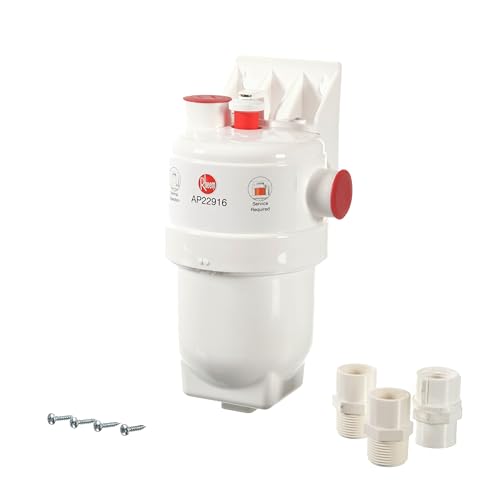
Rheem water heater fault code 29 relates to the condensate neutralizer on condensing models. If the neutralizer cartridge is clogged or the drain line is blocked, condensate backs up and triggers this code. Flush the drain line and replace the neutralizer media (typically crusite or calcium carbonate pelite) annually.
A Rheem condensate neutralizer kit from Amazon keeps this maintenance simple and prevents code 29 from recurring.
Troubleshooting Steps and DIY Solutions
Resetting and Restarting Procedures
Here’s how to reset your Rheem tankless water heater code:
- Turn off the unit at the breaker or power switch
- Wait a full 30 seconds
- Restore power
- Open a hot water tap to initiate a call for heat
- Observe the display for returning codes
If the code clears and hot water returns, monitor the unit over the next 24 hours. Check your error history to see if the same code has been recurring, that points to an intermittent issue that will likely return.
Cleaning and Maintenance Tasks
Descaling your heat exchanger every 12 months prevents codes 99 and P1. Use a tankless water heater flush kit with pump and descaler to circulate white vinegar or a commercial descaling solution through the unit for 45–60 minutes.

Clean the inlet water filter screen, it’s behind the cold water inlet valve. A clogged screen restricts flow and triggers Rheem error code P1 (low water flow). Pull the filter, rinse it under running water, and reinstall.
Checking Sensors and Filters
For codes 31 and 51, disconnect the thermistor plug from the control board and measure resistance with a multimeter. At 77°F (25°C), a functioning Rheem thermistor should read approximately 10kΩ. A reading of 0Ω (short) or infinite resistance (open) confirms the sensor has failed.
The flame sensing rod should show 1–3 microamps during operation. If your multimeter reads below 0.5 microamps with the burner lit, the rod needs cleaning or replacement.
Component Testing and Replacement
For Rheem tankless code 76 (communication error), the issue sits between the main controller and the remote. Check the two-wire communication cable for damage, loose terminals, or water intrusion at connection points. Replacing the wire run often solves persistent code 76 faults.
“Code 76 drove me crazy for weeks. Turned out a mouse chewed through the comm wire behind the drywall.” via r/HVAC
For ongoing monitoring and tracking of error patterns, a tool like HomeAssistant can log temperature and flow data from smart sensors you add to the plumbing lines, giving you early warnings before codes appear.
Professional Help and Preventive Maintenance
Identifying When to Call a Technician
Call a licensed plumber or gas technician if:
- Code 13 (abnormal combustion) appears, this can indicate a cracked heat exchanger or wrong gas type
- Code 99 returns after descaling
- You smell gas at any point during troubleshooting
- Code 11 persists after cleaning the flame rod and verifying gas supply
- Any code reappears more than three times within a week
Gas-related repairs on Rheem tankless water heaters require a licensed professional in most jurisdictions. Don’t attempt to adjust gas valves or replace gas components yourself.
Safety Considerations and Warnings
Always turn off gas and electrical supply before opening your Rheem unit’s front panel. Carbon monoxide is an invisible, odorless threat, if your CO detector alarms while the unit is running, shut it down immediately and ventilate the area. Combustion errors (codes 13 and 99) can indicate incomplete combustion that produces CO.
Never bypass safety lockouts. They exist to protect your home from fire and gas hazards.
Routine Maintenance and Prevention
A simple annual checklist prevents most Rheem tankless error codes:
- Flush and descale the heat exchanger
- Clean the inlet water filter
- Sand the flame sensing rod
- Inspect the venting for blockages
- Check condensate drain lines (condensing models)
- Verify gas supply pressure with a manometer (3.5″ WC minimum for natural gas)
This 60-minute annual routine addresses the root causes behind codes 11, 12, P1, 29, and 99, the five most common faults in the Rheem tankless error codes list for 2026.
Error Codes in Other Tankless Brands
Rheem error codes don’t translate directly to other brands. Rinnai uses a different numbering system (e.g., Rinnai code 11 means something slightly different than Rheem code 11). Navien and Noritz each have their own diagnostic languages. If you’re managing multiple brands on a property, keep separate cheat sheets for each manufacturer.
Data Insights and Analysis
According to service call data aggregated by plumbing trade groups, ignition failure (code 11) accounts for roughly 35–40% of all Rheem tankless service calls. Hard water regions see code 99 (overheating from scale) at nearly double the rate of soft water areas. And sensor failures (codes 31/51) spike during winter months when inlet water temperatures drop below 45°F, pushing thermistors to the edges of their operating range.
Expert Note: "Code 99 isn't really an overheating problem, it's a flow problem masquerading as a temperature problem. Scale narrows the heat exchanger passages, water slows down, and the same BTU input now overheats a smaller volume of water. Fix the flow, and you fix the temperature."
Frequently Asked Questions
What does Rheem tankless water heater error code 11 mean and how do I fix it?
Code 11 indicates no ignition detected—the unit tried to fire but found no flame. Common fixes include cleaning the flame rod with fine-grit sandpaper to remove carbon buildup, verifying gas supply pressure meets the minimum 3.5″ WC, and checking igniter function. If the code persists after these steps, call a licensed technician.
How do I reset my Rheem tankless water heater after an error code?
Turn off power at the breaker or switch, wait 30 seconds, restore power, then open a hot water tap. If the code clears and hot water returns, monitor the unit over 24 hours. However, don’t reset repeatedly without investigating the underlying issue—repeated codes indicate a genuine problem requiring diagnosis.
What is the difference between a soft lockout and a hard lockout on Rheem tankless water heaters?
A soft lockout means the unit will automatically retry ignition after a brief pause (typically three attempts). A hard lockout requires manual power cycling to clear and is signaled by a persistent flashing code. Codes 11, 12, and 13 commonly trigger hard lockouts that require manual reset.
Can I fix Rheem error code 99 by myself, or do I need a professional?
Code 99 signals exhaust overheating, typically caused by scale buildup restricting water flow through the heat exchanger. You can descale the unit yourself using a tankless water heater flush kit with white vinegar or commercial descaler (45–60 minutes). If the code returns after descaling, call a technician to check for deeper combustion or heat exchanger issues.
What should I check if my Rheem tankless water heater displays code P1?
Code P1 indicates low water flow, usually caused by a clogged inlet water filter screen or restricted flow. Check and clean the filter screen behind the cold water inlet valve. Also verify that isolation valves are fully open and check for line blockages. Descaling annually prevents P1 from recurring.
How often should I perform maintenance on my Rheem tankless water heater to prevent error codes?
An annual 60-minute maintenance routine prevents most Rheem tankless error codes: flush and descale the heat exchanger, clean the inlet water filter, sand the flame sensing rod, inspect venting for blockages, and verify gas supply pressure at 3.5″ WC minimum. This addresses the root causes of codes 11, 12, P1, 29, and 99.
Read More:
- Rheem Water Heater Problems (Complete Troubleshooting Guide)
- Rheem Water Heater Pilot Light Won’t Stay Lit (Here’s the Tech’s Fix-It Guide)
- Code 12 on Rheem Tankless Water Heater (Flame Failure Fix Guide)