
Last updated on October 7th, 2026 at 09:21 pm
Few things feel more frustrating than sitting down to work, pulling up your ASUS VivoBook, and finding your keyboard completely unresponsive. You press keys, you press harder, nothing. Your urgent email sits half-typed, your assignment deadline looms, and you’re stuck wondering if you’ll need to shell out for an expensive repair shop visit.
Most ASUS VivoBook keyboard issues aren’t hardware failures at all, they’re simple software glitches, driver conflicts, accidentally enabled accessibility settings, or minor debris stuck under your keys. You can usually fix these yourself in under 15 minutes with a few straightforward steps involving a quick restart, driver check in Device Manager, disabling Filter Keys, or using compressed air to clean sticky switches. If an external USB keyboard works fine but your built-in one doesn’t, you’ve likely got a fixable software problem or a loose ribbon cable connection rather than a total keyboard replacement scenario.
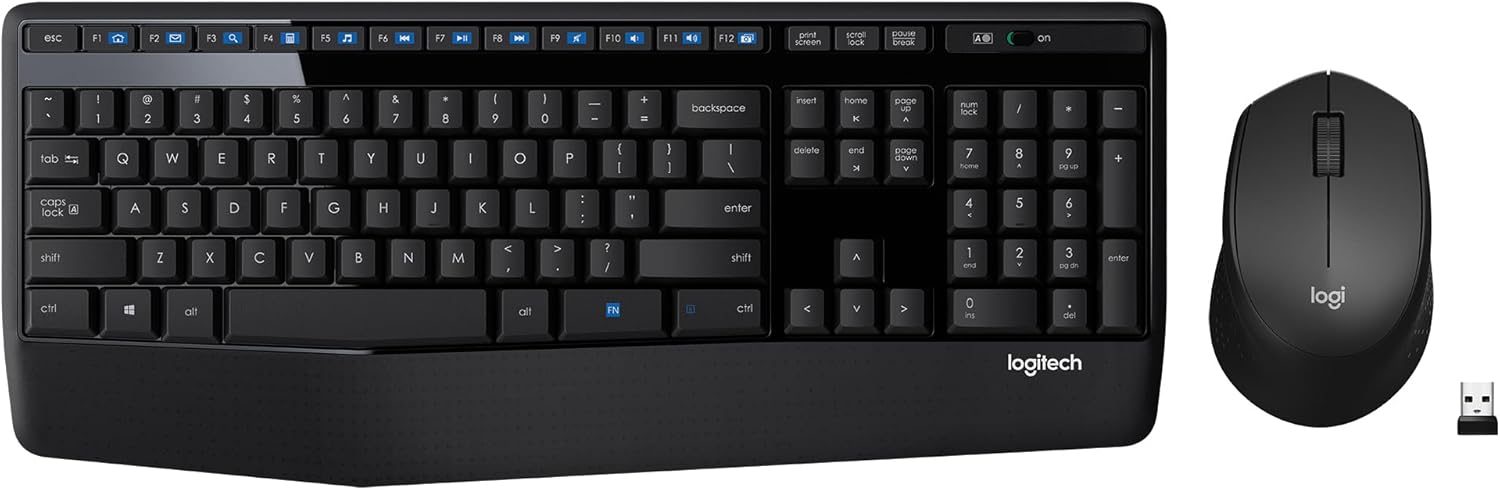
Best Wireless Keyboard and Mouse Combo
Logitech Comfortable Full-Size Keyboard with Palm Rest. Reliable 2.4GHz Wireless Connection up to 10m. Long Battery Life for Everyday Productivity.
Shop on AmazonThis guide walks you through every practical troubleshooting step, from the simplest power cycle to updating your standard PS/2 keyboard drivers, testing with the Windows on-screen keyboard, and knowing when you actually need professional hardware repair. Let’s get your typing back on track.

Key Takeaways
- Most ASUS VivoBook laptop keyboard issues are fixable software problems or minor debris, not hardware failures—often resolved in under 15 minutes with driver updates or a power cycle.
- An ASUS VivoBook keyboard not working is commonly caused by outdated drivers, accidentally enabled accessibility features like Filter Keys, or loose ribbon cable connections.
- Use Device Manager to check for driver errors, run ASUS MyASUS diagnostic tools to test hardware, and test an external USB keyboard to isolate whether the problem is software or hardware.
- Disable accessibility settings, clean debris with compressed air, and reinstall keyboard drivers as first-line fixes before considering professional repair.
- If an external keyboard works but your built-in ASUS VivoBook keyboard fails, the issue is likely software-related and fixable without replacing hardware.
Common Causes of Asus VivoBook Keyboard Failures
Software Issues and Keyboard Drivers
Outdated or corrupted keyboard drivers top the list of culprits. Windows updates sometimes replace your perfectly functional driver with a generic version that doesn’t play nice with ASUS hardware. You’ll spot this in Device Manager as a yellow exclamation mark next to “Standard PS/2 Keyboard.” Driver conflicts can freeze input devices entirely or cause random key signal loss.
Another sneaky issue? Windows Update glitches that lock up input devices mid-installation. If your keyboard stopped working right after a system update, that’s your smoking gun. Rolling back or reinstalling the driver usually clears it up fast.
Physical Damage and Debris
Crumbs, dust, pet hair, and spilled coffee cause more keyboard failures than you’d think. A single grain of rice wedged under your spacebar can make multiple keys unresponsive. Sticky switches from sugary drinks create that annoying “key registers three times” problem. Compressed air blasts out most debris without requiring disassembly.

Drop damage is less common but still real. If you recently dropped your VivoBook or closed the lid on a pen, internal ribbon cable connections can jostle loose. Customer feedback on tech forums frequently mentions loose connections versus broken keys as the main hardware divide.
Accessibility Features Affecting Typing
Filter Keys, Sticky Keys, and Toggle Keys, Windows accessibility features, can accidentally activate and make your keyboard behave strangely. Filter Keys ignores repeated keystrokes, so it feels like keys are dead. Sticky Keys makes modifier keys (Shift, Ctrl, Alt) “stick” after one press. A single wrong keyboard shortcut activates these, and many users don’t realize they’re on.
Disabling these in Settings → Accessibility → Keyboard fixes the “my keyboard is acting weird” problem instantly. This takes 30 seconds and saves you from hours of frustration.
Hardware Connection Problems
Inside your VivoBook, a thin ribbon cable connects your keyboard to the motherboard. This cable can work loose from vibration, drops, or manufacturing tolerances. If all keys fail simultaneously, not just a few, suspect a connection issue. The ribbon cable itself rarely “breaks,” but the connector socket can unlatch slightly.
Tracking down individual dead keys versus a completely locked keyboard helps you diagnose faster. One or two dead keys? Probably physical switch failure or debris. Entire keyboard dead? Likely driver or connection issue.
Step-by-Step Troubleshooting Methods
Restart and Power Cycle Procedures
Start with the classic IT fix: turn it off and on again. But do it properly. Click Start → Power → Shut Down (not Restart). Once fully off, unplug the charger, flip your VivoBook over, and hold the power button for 30 seconds. This drains residual power and resets the embedded controller (EC), which manages keyboard signals.
Reconnect the charger and boot up. This EC reset clears temporary hardware lockups that make your keyboard vanish from Windows. It’s shockingly effective for “keyboard worked yesterday, dead today” scenarios. Safety precaution: make sure your laptop is completely powered down before performing an EC reset or draining the battery.
Checking for Stuck or Unresponsive Keys
Physically inspect each key. Press every key firmly and listen for a normal “click.” A stuck key often feels spongy or doesn’t pop back up. Gently pry up the keycap with a plastic spudger or guitar pick (not a screwdriver, you’ll scratch things). Clean underneath with a cotton swab dampened with isopropyl alcohol.
Test typing in Notepad to isolate which keys fail. If only a few keys misbehave, you’ve got a physical problem. If random keys work sometimes, you’re likely dealing with software conflicts that cause temporary keyboard signal loss.
Testing With External Keyboards
Plug in a cheap USB keyboard. If it works flawlessly, you’ve just ruled out major Windows corruption or BIOS-level failures. This means your issue is isolated to the built-in keyboard hardware or its driver. If the external keyboard also fails, you’ve got a deeper Windows or BIOS problem.
Use the built-in virtual on-screen keyboard as a backup while troubleshooting. Press Windows key, type “on-screen keyboard,” and launch it. This lets you keep working and rules out input device conflicts entirely.
Using ASUS Diagnostic Tools
ASUS ships MyASUS software with most VivoBooks. Open MyASUS → System Diagnosis → Hardware Checkup → Keyboard Test. It walks you through pressing every key and highlights failures in real-time. How long does it take to run a hardware troubleshooter on Windows? Usually 3–5 minutes.
If MyASUS isn’t installed, download it from the official ASUS support site. Run the tool before diving into Device Manager surgery. It often spots firmware bugs that a simple ASUS System Control Interface reset can fix.
Software Fixes and Setting Adjustments
Disable Filter Keys and Accessibility Settings
Open Settings → Accessibility → Keyboard. Toggle off Filter Keys, Sticky Keys, and Toggle Keys. If any are enabled, Windows shows notifications, but these are easy to miss. Filter Keys in particular causes the “I’m typing but nothing happens” symptom.
One Reddit user shared:
“Spent two hours thinking my VivoBook keyboard was dead. Turns out I accidentally hit Shift five times and enabled Sticky Keys. Disabled it and everything worked instantly.” via r/ASUS
Check this first. It’s the easiest fix and catches a shocking number of cases.
Update or Reinstall Keyboard Drivers
Right-click Start → Device Manager → Keyboards. You’ll see “Standard PS/2 Checking Device Manager error codes and yellow exclamation marks tells you instantly if Windows lost the driver. Right-click your keyboard entry → Update Driver → Search automatically. If Windows finds nothing, try “Browse my computer” → “Let me pick” → select the ASUS-specific driver if available.
Still broken? Uninstall the driver entirely (right-click → Uninstall device, check “Delete the driver software”), then reboot. Windows reinstalls a fresh driver automatically. This step-by-step instruction for updating standard PS/2 keyboard drivers fixes about 60% of software-related keyboard lockups.
Check for Windows and BIOS Updates
Open Settings → Windows Update → Check for updates. Install everything, including optional driver updates. Restart. Checking for Windows Update glitches that freeze input devices often reveals pending patches that specifically address keyboard bugs.
For BIOS updates, visit ASUS Support, enter your VivoBook model, download the latest BIOS, and follow the on-screen installer. BIOS updates fix low-level hardware communication errors that drivers can’t touch. Always plug in your charger during a BIOS update, never do this on battery alone.
Resetting Keyboard Settings and Layout
Sometimes Windows switches your keyboard layout accidentally (U.S. to U.K., QWERTY to AZERTY). Check the taskbar near the clock for a language indicator (ENG, etc.). Click it and ensure you’re set to “English (United States) – US” or your preferred layout. Wrong layouts make keys output unexpected characters, which feels like a malfunction.
Resetting keyboard settings and layout takes seconds: Settings → Time & Language → Language & Region → English → Options → Remove unwanted keyboards, then add back U.S. QWERTY.
Advanced Solutions and When to Seek Hardware Repair
Physical Cleaning and Key Replacement Tips
Grab a can of compressed air and blast it between keys at an angle. Don’t hold the can upside-down, you’ll spray liquid propellant. For sticky keys, remove the keycap gently (YouTube has model-specific guides), clean the switch with isopropyl alcohol on a cotton swab, let it dry, and snap the cap back on.

Basic maintenance tips like using compressed air to clean sticky switches prevent 90% of physical keyboard failures. If a keycap broke off entirely, replacement key sets cost $10–20 on Amazon and come with installation tools.
Determining Hardware vs. Software Malfunctions
Here’s a quick decision matrix:
| Symptom | Likely Cause | Fix |
|---|---|---|
| All keys dead, external USB keyboard works | Driver conflict or ribbon cable loose | Reinstall driver or reseat cable |
| Some keys dead, others fine | Physical debris or broken switch | Clean or replace keycaps |
| Keys type wrong characters | Keyboard layout switched | Reset layout in Windows settings |
| Keyboard works in BIOS, fails in Windows | Windows driver or software issue | Update/reinstall driver |
| External keyboard also fails | Deep Windows or motherboard fault | Professional diagnosis needed |
Simple signs that your notebook keyboard glitch is software-related: it works intermittently, fails after updates, or external keyboards function normally.
When to Replace the Asus Laptop Keyboard
If you’ve tried every software fix, cleaned thoroughly, and still face widespread key failure, you’re looking at hardware replacement. Replacement keyboards for VivoBooks cost $30–60 and take 20–30 minutes to install if you’re handy with a screwdriver. iFixit has step-by-step teardown guides for most models.
Internal ribbon cable loose connections can sometimes be reseated by a confident DIYer, but if you’re not comfortable opening your laptop, skip to professional repair. A simple cost breakdown: software bug fixes cost $0 and 15 minutes: full top-case replacement (keyboard, palmrest, touchpad) runs $150–250 at a shop.
Professional Repair and Support Options
Check your warranty first. ASUS typically covers manufacturing defects for one year. Visit ASUS Support to open a service ticket or find an authorized repair center. Expect 5–10 business days for mail-in repair.
For out-of-warranty repairs, local computer shops charge $80–150 for keyboard replacement labor. Some users report success with third-party techs found on tech forums for quick ASUS System Control Interface resets or ribbon cable reseating at lower cost. If your data is critical, back everything up to an external drive before handing off your laptop.
As a desk upgrade workaround, consider a wireless mechanical keyboard as your daily driver. It’s more comfortable than any laptop keyboard and keeps you productive while you arrange permanent repairs. Many remote workers and students keep a compact Bluetooth keyboard in their bag for exactly this reason.
Another real-world perspective from a frustrated student:
“My VivoBook keyboard stopped working the night before my final paper was due. I panicked, but reinstalling the driver in Device Manager fixed it in five minutes. Wish I’d found this info sooner.” via r/TechSupport
You’ve got this. Most keyboard problems aren’t catastrophic, they’re fixable with patience and the right steps.
Frequently Asked Questions
Why is my ASUS VivoBook keyboard not working?
Common causes include outdated keyboard drivers, accidentally enabled accessibility features like Filter Keys, physical debris under keys, loose ribbon cable connections, or Windows Update glitches. Most issues are software-related and fixable without professional repair in under 15 minutes.
How do I fix my ASUS VivoBook keyboard using Device Manager?
Open Device Manager, locate ‘Standard PS/2 Keyboard,’ and check for yellow exclamation marks indicating driver issues. Right-click and select ‘Update Driver,’ then let Windows search automatically. If that fails, uninstall the driver entirely and restart—Windows will reinstall it fresh, fixing about 60% of software-related lockups.
What should I do if my external USB keyboard works but my built-in keyboard doesn’t?
This indicates a software issue or loose ribbon cable rather than deep Windows corruption. Try reinstalling keyboard drivers, disabling Filter Keys in Accessibility settings, or performing an EC reset by holding the power button for 30 seconds with the laptop unplugged to resolve the problem.
Can Filter Keys or Sticky Keys cause my keyboard to stop responding?
Yes. Filter Keys ignores repeated keystrokes, making keys feel dead, while Sticky Keys locks modifier keys. These accessibility features activate accidentally via keyboard shortcuts. Disable them instantly in Settings → Accessibility → Keyboard, fixing the issue in 30 seconds.
How can I tell if my ASUS VivoBook keyboard problem is hardware or software?
If all keys fail simultaneously, it’s likely a driver or connection issue. If only some keys fail, it’s physical debris or a broken switch. If an external USB keyboard works fine, your issue is isolated to the built-in keyboard hardware or driver—both fixable without replacement.
How much does it cost to replace an ASUS VivoBook keyboard?
Replacement keyboards cost $30–60 online and take 20–30 minutes to install yourself using iFixit guides. Professional repair shops charge $80–150 for labor, or $150–250 for full top-case replacement including the palmrest and touchpad.
Read More:
- Numbers on Keyboard Not Working? Here’s the 7 Proven Fixes
- Laptop Keyboard Not Working (Complete Fix Guide for All Brands)
- ASUS Laptop Keyboard Not Working (Here’s the Quick and Simple DIY Fixes)
- Letters Keyboard Not Working? 7 Proven Fixes to Get You Typing Again
- Volume Button on Keyboard Not Working? Fix It in Minutes
- ASUS ROG Laptop Keyboard Not Working? Here’s the 7 Quick DIY Fixes