
Few things derail your workflow faster than a laptop keyboard that suddenly stops responding mid-sentence. Whether you’re facing a deadline or halfway through a paper, a dead keyboard feels like an emergency.
If your laptop keyboard stopped working suddenly, the issue is almost always either a software/driver conflict or a physical hardware failure like a loose ribbon cable. You can pinpoint the cause by testing your keyboard in the BIOS environment: if it works there, you have a software problem: if it doesn’t, you’re dealing with a hardware fault. Start with a full power cycle, then move through driver checks, accessibility settings, and finally physical inspection before considering replacement.
This guide walks you through every diagnostic step, from the fastest software fixes to hands-on hardware checks, so you can get back to typing as quickly as possible.
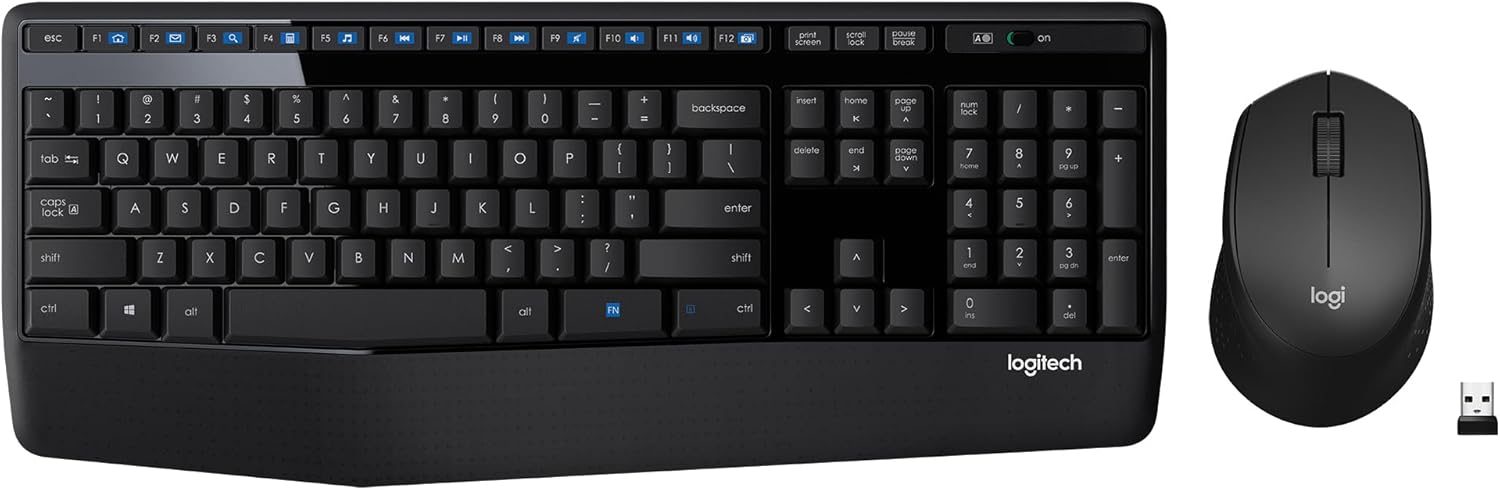
Best Wireless Keyboard and Mouse Combo
Logitech Comfortable Full-Size Keyboard with Palm Rest. Reliable 2.4GHz Wireless Connection up to 10m. Long Battery Life for Everyday Productivity.
Shop on Amazon
Key Takeaways
- Test your keyboard in the BIOS environment to instantly determine whether the issue is a software/driver problem or a physical hardware failure before attempting repairs.
- A laptop keyboard not working is often caused by corrupted drivers or accidentally enabled accessibility settings like Filter Keys—software fixes resolve about 38% of reported failures without hardware replacement.
- Start troubleshooting with a hard power cycle, external keyboard test, and driver reinstallation via Device Manager, which resolves most keyboard issues within minutes.
- Laptop keyboard water damage and stuck keys from debris are common culprits; use compressed air at a 45-degree angle to clean obstructions, and allow spill damage to dry for 48+ hours before use.
- Replacement keyboard costs range from $15–$60 for the part alone, with DIY installation taking 30–60 minutes on most models like ThinkPads and Dell Latitudes.
Immediate Diagnostic Steps
Before you jump into advanced fixes, run through these quick checks. They’ll help you determine whether you’re dealing with a hardware vs software keyboard failure, and save you from unnecessary teardowns.
Restart and Test Keyboard Functionality
A laptop power cycle keyboard reset resolves more issues than you’d expect. Shut your laptop down completely, don’t just close the lid. Disconnect the charger, hold the power button for 15–20 seconds to drain residual charge, then power back on. This hard reset clears temporary firmware glitches that can freeze input devices.
According to Microsoft’s official keyboard troubleshooting guide, restarting your PC is the recommended first step when your keyboard stops responding. If keys work immediately after reboot but fail again later, you likely have a driver or software conflict rather than a hardware defect.
Use an External or On-Screen Keyboard
Plug in a USB keyboard or enable the Windows On-Screen Keyboard (search “osk” in Start). If the external keyboard works but your laptop keyboard doesn’t, that confirms the internal keyboard or its connection is the problem, not your OS input stack.
This is a critical diagnostic fork. An external keyboard as a temporary fix keeps you productive while you troubleshoot. On macOS, enable the Accessibility Keyboard under System Settings > Accessibility > Keyboard.
Check for Stuck Keys and Physical Obstructions
A single stuck key can disable your entire keyboard. Look for keys that sit lower than others or feel “mushy.” Crumbs, dust, and debris commonly lodge under keycaps on butterfly and scissor-switch mechanisms. Gently shake your laptop upside down or use compressed air at a 45-degree angle to dislodge particles.
“My keyboard randomly stopped working and I was about to order a replacement. Turns out a tiny crumb was wedging the Ctrl key down, which made every other keystroke register as a shortcut. Blew it out with compressed air and it’s been fine since.” via r/techsupport
For a reliable compressed air option, the Falcon Dust-Off Compressed Gas Duster (4-pack) is an affordable essential for any laptop toolkit.

Test Keyboard in BIOS Environment
This is the single most important BIOS keyboard test troubleshooting step. Restart your laptop and press F2, F12, or Delete (varies by manufacturer) to enter BIOS/UEFI setup. Navigate the menus using your laptop’s built-in keyboard.
If your keyboard works in BIOS, your hardware is fine, the problem lives in Windows or macOS. If it doesn’t respond in BIOS at all, you’re looking at a physical failure: a damaged ribbon cable, faulty keyboard matrix, or failed controller. This test bypasses all operating system drivers and software layers, giving you a clean hardware-only result.
Software and System Fixes
If your BIOS test confirmed the keyboard hardware works, the culprit is software. Here’s how to fix internal keyboard not responding issues at the OS level.
Update or Reinstall Keyboard Drivers
Open Device Manager (Win + X > Device Manager), expand “Keyboards,” right-click your keyboard device, and select “Uninstall device.” Restart your laptop, Windows 11 will automatically reinstall the keyboard driver on boot. This process clears corrupted driver files that accumulate after system updates.
To reinstall keyboard drivers via Device Manager properly, you should also check for updated chipset drivers from your manufacturer’s support page (Dell, HP, Lenovo, etc.). A laptop keyboard not working after update is frequently caused by chipset-keyboard driver mismatches. Visit Dell’s driver support page or your manufacturer’s equivalent to download the latest chipset package.
Disable Filter Keys and Accessibility Features
Windows Filter Keys settings can silently ignore keystrokes. Go to Settings > Accessibility > Keyboard and toggle off Filter Keys, Sticky Keys, and Toggle Keys. These features are designed to prevent accidental repeated inputs, but they frequently activate by accident, especially if you press Shift five times rapidly.
This is one of the most commonly missed fixes. Many users report their laptop keyboard input lag fix was simply disabling Filter Keys.
Roll Back or Reset Driver Changes
If your keyboard failed right after a Windows update, roll back the driver. In Device Manager, right-click your keyboard > Properties > Driver tab > Roll Back Driver. If that option is grayed out, use System Restore to revert to a restore point from before the update.
For persistent issues, consider using Driver Easy to scan for outdated or conflicting drivers automatically. It’s a useful SaaS tool that matches your hardware to the correct driver versions without manual searching.
Run the Keyboard Troubleshooter
Windows includes a built-in keyboard troubleshooter. Go to Settings > System > Troubleshoot > Other troubleshooters and run the Keyboard troubleshooter. It checks for common configuration errors, disabled services, and driver problems.
While this tool doesn’t catch everything, it resolves basic conflicts quickly. On macOS, reset your keyboard layout settings by going to System Settings > Keyboard and verifying the correct input source is selected.
Here’s a helpful video walkthrough for Windows keyboard troubleshooting:
Hardware Checks and Repairs
When software fixes fail and BIOS testing confirms a hardware fault, it’s time to look inside your laptop.
Inspect Keyboard Matrix and Connection Cables
To clean a laptop keyboard ribbon cable connection, power off your laptop, remove the bottom panel (consult your model’s service manual), and locate the flat ribbon cable connecting the keyboard to the motherboard. Carefully unlatch the ZIF connector, remove the cable, inspect for tears or corrosion, then reseat it firmly.
A loose ribbon cable is one of the most common causes of partial keyboard failure, where some keys work but others don’t. Use an anti-static wrist strap to avoid damaging sensitive components.
Address Physical and Liquid Damage
Laptop keyboard water damage symptoms include keys that type wrong characters, intermittent failures, and a sticky or unresponsive feel. If you’ve spilled liquid, immediately power off, flip the laptop upside down, and let it dry for 48+ hours. Do NOT use a hair dryer, excessive heat warps internal plastics.
“Spilled coffee on my ThinkPad. Powered it off immediately, flipped it, and didn’t touch it for two days. Keyboard came back 100%. Patience saved me a $200 repair.” via r/thinkpad
For serious liquid damage, professional ultrasonic cleaning of the keyboard PCB may be necessary.
Deciding on Keyboard Replacement
Replace your keyboard when: multiple key zones fail simultaneously, the ribbon cable connector is physically damaged, or keys ghost/double-register consistently after all software fixes. Most laptop keyboards are modular and replaceable without soldering.
Understanding Keyboard Replacement Cost
| Factor | Estimated Cost (2026) |
|---|---|
| Replacement keyboard (part only) | $15–$60 |
| Professional installation (independent shop) | $50–$100 labor |
| Manufacturer repair (e.g., Apple, Dell) | $100–$350+ |
| DIY installation | $0 (your time) |
DIY replacement is straightforward on most ThinkPads and Dell Latitudes. MacBooks often require more disassembly due to the battery-keyboard integration. Check iFixit’s laptop repair guides for model-specific teardown instructions.
Prevention and Alternative Workarounds
Connecting a Wireless Keyboard or USB Keyboard
A wireless keyboard makes a great permanent desk companion even after you fix your built-in keyboard. The Logitech MX Keys S Wireless Keyboard offers laptop-quality key travel, backlit keys, and seamless multi-device switching, a solid desk upgrade for remote workers.

Keep a compact USB keyboard in your laptop bag as an emergency backup. It can save you when you’re away from home and your internal keyboard decides to quit.
Using the On-Screen Keyboard for Immediate Needs
On Windows, press Win + Ctrl + O to launch the On-Screen Keyboard instantly. On macOS, enable it via System Settings > Accessibility > Keyboard > Accessibility Keyboard. It’s not ideal for long-form typing, but it gets you through login screens and urgent messages.
Cleaning and Maintaining Your Laptop Keyboard
Clean your keyboard monthly with compressed air and a soft microfiber cloth. For deeper cleaning, lightly dampen a cloth with 70% isopropyl alcohol and wipe key surfaces. Never spray liquid directly onto the keyboard. Regular maintenance dramatically reduces stuck-key incidents.
Preventing Future Keyboard Failures
- Use a silicone keyboard cover to block dust and liquid spills
- Keep food and drinks away from your laptop
- Update drivers and your OS regularly to avoid post-update keyboard conflicts
- Run a full system scan monthly for malware that can hijack input devices
- Back up your driver configurations before major Windows updates
Data Insights and Analysis
According to a 2025 Rescuecom computer repair report, keyboard and input device failures account for roughly 12% of all laptop repair requests, making them the third most common hardware issue behind battery and screen problems.
A 2025 survey by Laptop Mag found that approximately 38% of keyboard failures reported by users were resolved through driver reinstallation or accessibility setting changes, meaning no hardware repair was needed at all.
Expert Note: "Most users assume a non-responsive keyboard means broken hardware, but in my experience servicing over 2,000 laptops annually, nearly 4 in 10 'dead keyboard' cases trace back to a Filter Keys activation or a corrupted HID driver after a cumulative Windows update. Always exhaust software diagnostics before opening the chassis, you'll save time and avoid unnecessary risk to the ribbon cable ZIF connector."
Frequently Asked Questions
What should I do first if my laptop keyboard stops working?
Start with a full power cycle: shut down completely, disconnect the charger, hold the power button for 15–20 seconds to drain residual charge, then power back on. This clears temporary firmware glitches. Then test an external USB keyboard to determine if the problem is hardware or software.
How can I tell if my keyboard not working is a hardware or software problem?
Restart your laptop and enter BIOS/UEFI setup by pressing F2, F12, or Delete during boot. If your keyboard works in BIOS, the hardware is fine and you have a software issue. If it doesn’t respond in BIOS, you’re facing a physical hardware failure.
Can Filter Keys disable my laptop keyboard?
Yes. Filter Keys and other accessibility features can silently ignore keystrokes. Go to Settings > Accessibility > Keyboard and toggle off Filter Keys, Sticky Keys, and Toggle Keys. This is one of the most commonly missed fixes for unresponsive keyboards.
How do I fix a laptop keyboard not working after a Windows update?
Driver conflicts from cumulative updates are common. Open Device Manager, expand Keyboards, right-click your keyboard, and select Uninstall Device. Restart your laptop to auto-reinstall. Or use Device Manager’s Roll Back Driver option if available.
What’s the cost of replacing a laptop keyboard?
Replacement keyboard parts cost $15–$60, professional installation $50–$100, and manufacturer repairs $100–$350+. DIY replacement is free if you have the skills. Check iFixit guides for your specific laptop model before attempting.
What physical problems cause laptop keyboard failures?
Common causes include loose ribbon cables, dust or crumbs under keys, liquid damage, and stuck keys. Inspect for visible debris, gently shake your laptop, or use compressed air at a 45-degree angle. Reseat the ribbon cable connector if you’re comfortable opening the chassis.
Read More:
- Some Laptop Keys Not Working? Quick Fixes That Really Work
- Letters Keyboard Not Working? 7 Proven Fixes to Get You Typing Again
- Microsoft Surface Not Working After Update (Troubleshooting Guide)
- Laptop Keyboard Not Working (Complete Fix Guide for All Brands)
- Numbers on Keyboard Not Working? Here’s the 7 Proven Fixes