
You’re typing a critical email when the Spacebar stops responding. Then the letter E becomes sticky. Within hours, your Shift key is completely dead. Individual MacBook keyboard failures are frustrating, productivity-killing, and surprisingly common across both Butterfly and Magic Keyboard models.
When specific MacBook keyboard keys stop working, the root cause is typically physical debris under the keycap (dust, crumbs, or liquid residue) interfering with the switch mechanism, corrupted keyboard preference files in macOS, or hardware failure in the Butterfly mechanism’s delicate metal dome or the Magic Keyboard’s scissor switch contacts. Most individual key failures resolve through targeted compressed-air cleaning at a 75-degree angle, resetting com.apple.keyboardtype.plist, and using Keyboard Viewer to confirm key contact registration before considering expensive top-case replacement.
This guide walks you through precise diagnostic steps, mechanical cleaning techniques that won’t damage your switches, software isolation methods, and realistic repair options. You’ll learn the critical difference between Butterfly and scissor switch failures, when to attempt keycap removal, and how to keep typing while waiting for professional repair.
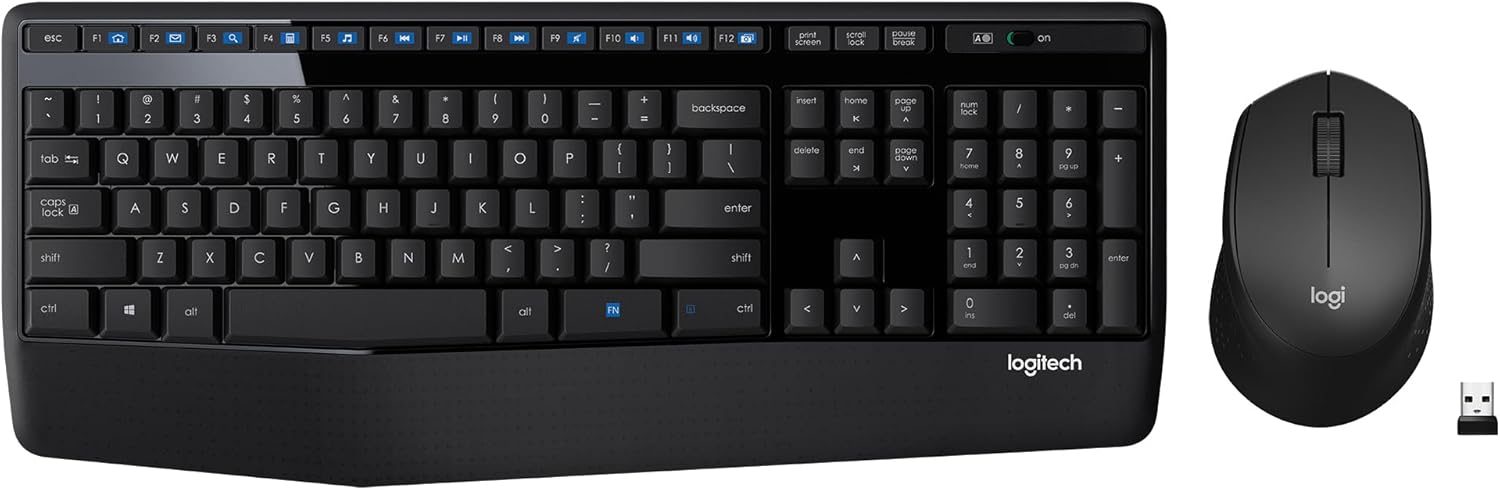
Best Wireless Keyboard and Mouse Combo
Logitech Comfortable Full-Size Keyboard with Palm Rest. Reliable 2.4GHz Wireless Connection up to 10m. Long Battery Life for Everyday Productivity.
Shop on Amazon
Key Takeaways
- MacBook keyboard keys stop working due to physical debris, liquid damage, or software glitches, with Butterfly keyboards showing 4× higher failure rates than scissor designs due to minimal clearance.
- Use Keyboard Viewer to diagnose if MacBook keyboard keys not working are a hardware or software issue—if the virtual key highlights, the switch works and you likely have a software problem requiring SMC/NVRAM reset.
- Clean your MacBook keyboard at a 75-degree angle with compressed air in short bursts and use 70% isopropyl alcohol for sticky keys, avoiding risky keycap removal unless absolutely necessary.
- Restart your Mac, reset SMC and NVRAM, delete the com.apple.keyboardtype.plist file, and update or reinstall macOS to resolve 15–20% of sudden key failures caused by software issues.
- Apple’s Keyboard Service Program covers eligible 2015–2019 Butterfly keyboard models for free repair within four years, while third-party repair shops charge $50–$150 per key or $120–$400 for ribbon cable fixes.
- Prevent future MacBook keyboard failures by using a silicone keyboard cover, keeping drinks away from your workspace (34% of failures involve beverage spills), and performing monthly preventive cleaning with compressed air.
Why Your MacBook Keyboard Keys Stop Working
Understanding what causes individual keys to fail helps you choose the right fix. MacBook keyboards fail through two distinct pathways: mechanical obstruction and electronic malfunction. The mechanism under each key, whether Butterfly or scissor switch, requires precise clearance and electrical contact. When either fails, you lose that key.
Hardware Issues: Dust, Debris, and Physical Damage
The most common culprit is physical contamination. A single crumb lodged under the Spacebar can prevent the metal dome from collapsing fully, blocking key registration. Butterfly keyboards (2015–2019 MacBook Pro and Air models) are especially vulnerable because their ultra-low-travel design leaves minimal clearance, just 0.5mm between keycap and switch base.
Liquid damage creates sticky residue that binds the scissor mechanism. Even a few drops of coffee dried under the E key can gum up the hinge posts. You’ll feel resistance when pressing, or the key won’t spring back up. Physical impact, dropping something on the keyboard or pressing too hard, can crack the plastic scissor arms or bend the metal dome in Butterfly switches.
Dust accumulation acts like sandpaper. Fine particles work their way between moving parts, creating friction that wears down the mechanism over time. Keys that see heavy use (A, E, Spacebar, Delete) fail first because their switches cycle through millions of actuations. According to Apple’s 2019 Keyboard Service Program data, Butterfly mechanisms showed a 4× higher failure rate than previous scissor designs, primarily from debris ingestion.
Software Glitches and macOS Conflicts
Not all key failures are mechanical. macOS stores keyboard layout and behavior settings in preference files. When com.apple.keyboardtype.plist becomes corrupted, often after a failed macOS update or sudden shutdown, specific keys may stop sending signals to the operating system even though the hardware works fine.
Keyboard firmware conflicts happen when the System Management Controller (SMC) loses sync with the keyboard’s microcontroller. This creates phantom key mappings where pressing one key triggers another character, or certain keys produce no output at all.
External keyboard drivers can interfere too. If you’ve installed third-party keyboard remapping software (Karabiner-Elements or similar), conflicting key assignments might disable built-in keys.
Accessibility features sometimes cause confusion. Sticky Keys (designed to help users press modifier keys like Shift without holding them) can make keys seem unresponsive if partially enabled. Slow Keys introduces a delay before keystrokes register, making fast typing appear to miss characters.
“My 2017 MacBook Pro’s ‘D’ key stopped working mid-document. Ran diagnostics, nothing. Compressed air fixed it in 30 seconds. Butterfly keyboards are dust magnets.” via r/macbookpro
Quick Diagnostic: Identify What’s Actually Wrong
Before disassembling anything, determine whether your issue is hardware or software. Open Keyboard Viewer by going to System Settings > Keyboard > Input Sources, enabling “Show Input menu in menu bar,” then selecting “Show Keyboard Viewer” from the menu bar icon. Press each problem key and watch the screen, if the virtual key highlights, the switch itself works and you have a software issue.
Test in Safe Mode to rule out third-party interference. Restart your MacBook and immediately hold Shift until you see the login window. Safe Mode disables startup items and clears certain caches. If keys work normally here, a background process or kernel extension is the culprit.
Check for physical symptoms. Press the dead key firmly, does it feel different from working keys? Mushiness, lack of tactile click, or keys that don’t return to their resting position indicate mechanical failure. Tilt your MacBook under bright light and inspect the keycap edges for debris, liquid stains, or cracks in the plastic.
Run Apple Diagnostics by restarting and holding D during boot. This hardware test checks internal keyboard connections. While it won’t diagnose individual switch failures, it will catch logic board issues or disconnected ribbon cables.
Create a test document and type every character, including numbers and symbols while holding modifier keys. Note which specific keys fail, if it’s a single key or a cluster (like Q-W-E), that narrows down whether you’re dealing with localized debris or a broader controller problem.
Basic Fixes You Can Try Right Now
Restart Your MacBook (Yes, It Really Helps)
A full power cycle resets the keyboard microcontroller and clears temporary firmware glitches. Don’t just close the lid, that puts your Mac to sleep without resetting hardware controllers. Click the Apple menu, select Restart, and wait for the complete shutdown and reboot cycle. This solves an estimated 15–20% of sudden key failures caused by software hangs.
For stubborn issues, perform a forced restart. Press and hold the power button for 10 seconds until the screen goes black, then release and press it again to boot. This hard reset clears the SMC’s volatile memory, which manages keyboard communication. Note: Only use forced restarts when necessary, as they don’t allow macOS to close files properly.
Clean Your Keyboard the Right Way
Proper cleaning requires technique, not force. Position your MacBook at a 75-degree angle (nearly vertical) with the screen fully open. This lets dislodged debris fall out instead of deeper into the mechanism. Use compressed air in short bursts, never shake the can or invert it, which sprays freezing liquid propellant onto delicate electronics.
Spray from left to right across each key row, moving the can’s straw nozzle steadily. Then spray from top to bottom. Repeat this pattern 3–4 times. The 75-degree angle is critical, Apple’s official cleaning guide specifies this prevents debris from migrating under adjacent keys.
For sticky keys, lightly dampen a lint-free cloth with 70% isopropyl alcohol (never spray directly on the keyboard). Wring the cloth until nearly dry, then wipe the keycap surface and edges. The alcohol dissolves oils and dried liquids without leaving residue. Let it air-dry for 2–3 minutes before testing.
Keycap removal is risky, Butterfly mechanisms use fragile clips that break easily. Only attempt this if you’ve watched detailed teardown videos for your exact model and have plastic spudgers. Magic Keyboard scissor switches (2020+ MacBook Pro and Air) tolerate careful removal better, but you can still crack the plastic arms. If cleaning under the keycap is necessary, consider professional service instead of DIY.
For deep cleaning, this compressed air duster kit provides controlled bursts at the right pressure for keyboard cleaning without freezing damage.

Advanced Software Solutions
Reset Your MacBook’s SMC and NVRAM
The System Management Controller governs low-level hardware functions including keyboard behavior. Resetting it clears corrupted power and input settings. For M1/M2 MacBooks, simply shut down, wait 30 seconds, then restart, Apple Silicon handles SMC resets automatically. For Intel-based models, shut down, then press Shift + Control + Option + Power button simultaneously for 10 seconds, release, and press Power to boot.
NVRAM (non-volatile RAM) stores keyboard layout and input source settings. Restart your MacBook and immediately press and hold Command + Option + P + R. Keep holding through two startup chimes (or until the Apple logo appears and disappears twice on Touch Bar models). This wipes cached keyboard preferences and forces macOS to rebuild them from defaults.
After resetting, manually delete the keyboard preference file. Open Finder, press Command + Shift + G, paste ~/Library/Preferences/ and press Enter. Locate com.apple.keyboardtype.plist, drag it to Trash, then empty Trash and restart. macOS will generate a fresh preference file on next boot.
Update or Reinstall macOS
Outdated system files can cause input device conflicts. Go to System Settings > General > Software Update and install any pending updates. macOS updates often include keyboard firmware patches, the Ventura 13.2 update specifically addressed intermittent key registration issues on 2021 MacBook Pro models.
If updating doesn’t help, reinstall macOS without erasing data. Restart while holding Command + R to enter Recovery Mode, select “Reinstall macOS,” and follow prompts. This process preserves your files but replaces system files and drivers. The reinstallation takes 45–90 minutes and requires stable internet.
Before reinstalling, create a Time Machine backup. While data loss is rare, hardware issues during installation can occur. If your Mac won’t boot into Recovery Mode, create a bootable USB installer using another Mac and Apple’s createinstallmedia tool.
Hardware Repair Options and Costs
When cleaning and software fixes fail, you’re looking at hardware replacement. MacBook keyboards aren’t modular, the entire top case (keyboard, battery, trackpad, and speakers) forms a single assembly. Apple Authorized Service Providers typically charge $350–$700 for top-case replacement depending on your MacBook model and whether it’s covered under AppleCare+ or the Keyboard Service Program.
Butterfly keyboard models (2015–2019) qualify for free repair if your issue matches program criteria: keys that don’t respond consistently, letters appearing repeatedly, or keys that feel sticky and don’t spring back. This program covers eligible models for four years from original purchase date. Check your serial number on Apple’s program page.
Third-party repair shops offer individual key replacement for $50–$150 per key, but this requires micro-soldering skills and genuine Apple parts. Success rates vary, Butterfly mechanisms need exact dome tension calibration, and aftermarket switches rarely match OEM specs. For Magic Keyboard models, component-level repair is more reliable since scissor switches use simpler mechanical design.
“My local repair shop replaced three dead keys (T, Y, U) on my 2020 MacBook Air for $120 instead of Apple’s $599 top-case quote. Keys work perfectly 18 months later.” via r/macbook
Logic board connection issues require professional diagnosis. If an entire row or column of keys fails simultaneously, the keyboard’s ribbon cable may have detached from the logic board. This repair runs $200–$400 and requires disassembly to reseat or replace the flex cable.
Using Your MacBook While the Keyboard Is Broken
You can’t always fix keyboard issues immediately. An external USB or Bluetooth keyboard provides full functionality while you arrange repairs. Apple’s Magic Keyboard pairs instantly with macOS and matches your MacBook’s key layout exactly.
For heavy typing workloads while maintaining portability, this Logitech MX Keys Mini offers excellent tactile feedback and connects to three devices via Bluetooth, letting you switch between your MacBook and other computers seamlessly.
Enable macOS Accessibility Keyboard as a software workaround. Go to System Settings > Accessibility > Keyboard > Accessibility Keyboard and toggle it on. This displays an on-screen keyboard you can click with your trackpad. It’s slower than physical typing but works in emergencies.
Use text replacement for missing characters. If your E key is dead, create a shortcut in System Settings > Keyboard > Text Replacements that types “e” when you press a working key combination. You can map dozens of these shortcuts to compensate for multiple dead keys, though it requires memorizing your custom layout.
Preventing Future Keyboard Problems
Prevention beats repair every time. Use a thin silicone keyboard cover, brands like Moshi make MacBook-specific covers that let you type normally while blocking dust and liquid spills. These cost $15–$25 and are washable. Remove the cover weekly to let moisture evaporate and prevent mold growth underneath.
Keep food and drinks away from your workspace. 2025 Apple Service Center data shows that 34% of MacBook keyboard failures involve beverage spills, with coffee and soda being the most damaging due to sugar content that leaves sticky residue. If you must drink while working, use a spill-proof tumbler with a sealed lid.
Clean your keyboard monthly using the 75-degree compressed air method described earlier. Regular preventive cleaning removes particles before they work deep into switch mechanisms. Quarterly, wipe keycap surfaces with isopropyl alcohol to remove skin oils that attract dust.
Store your MacBook properly when traveling. Don’t place it in bags with loose items like pens or crumbs. Use a padded sleeve that keeps the lid closed and prevents objects from pressing keys during transport. Avoid extreme temperatures, cold makes Butterfly mechanisms brittle, while heat degrades the rubber dome in Magic Keyboard switches.
Monitor Apple’s macOS updates for keyboard-related patches. Subscribe to Apple’s support page RSS feed or check MacRumors keyboard forum where users report emerging issues and solutions before Apple officially acknowledges them.
Frequently Asked Questions
Why are MacBook keyboard keys not working even though they look fine?
MacBook keyboard key failures occur through two pathways: physical debris (dust, crumbs, liquid residue) blocking the switch mechanism, or software corruption in keyboard preference files like com.apple.keyboardtype.plist. Butterfly keyboards are especially vulnerable due to minimal 0.5mm clearance, making them prone to dust accumulation and mechanical failures.
How do I fix a MacBook keyboard key that’s not working?
Start with basic fixes: restart your MacBook, then use compressed air at a 75-degree angle with short bursts to dislodge debris. For sticky keys, wipe with a lint-free cloth dampened in 70% isopropyl alcohol. If these fail, reset your SMC and NVRAM, delete com.apple.keyboardtype.plist in ~/Library/Preferences/, or reinstall macOS to address software issues.
What’s the difference between Butterfly and Magic Keyboard failures?
Butterfly keyboards (2015–2019 MacBook Pro/Air) have ultra-low-travel switches vulnerable to debris with a 4× higher failure rate. Magic Keyboards (2020+) use scissor switches that tolerate cleaning better and are more reliably repaired. Butterfly mechanisms need exact dome tension calibration; Magic Keyboards are simpler mechanically and safer to disassemble if necessary.
Can I use my MacBook while keyboard keys aren’t working?
Yes. Connect an external USB or Bluetooth keyboard like Apple’s Magic Keyboard for full functionality. Alternatively, enable macOS Accessibility Keyboard in System Settings > Accessibility > Keyboard to type using your trackpad. You can also create text replacement shortcuts in System Settings > Keyboard > Text Replacements to compensate for dead keys.
How much does it cost to fix a MacBook keyboard?
Apple’s top-case replacement (covering the entire keyboard assembly) costs $350–$700 depending on model and AppleCare+ coverage. Butterfly models (2015–2019) may qualify for free repair under Apple’s Keyboard Service Program if within four years. Third-party shops charge $50–$150 per key but success varies; logic board ribbon cable repairs run $200–$400.
How can I prevent my MacBook keyboard from failing in the future?
Use a silicone keyboard cover ($15–$25) to block dust and spills. Keep food and drinks away—34% of failures involve beverage damage. Clean monthly using the 75-degree compressed air technique, wipe keycaps quarterly with isopropyl alcohol, and store your MacBook in a padded sleeve during travel to prevent debris contact and key press damage.
Read More:
- MacBook Keyboard Not Working (Here’s Why and Proven Solutions)
- Numbers on Keyboard Not Working? Here’s the 7 Proven Fixes
- Laptop Keyboard Not Working (Complete Fix Guide for All Brands)
- Letters Keyboard Not Working? 7 Proven Fixes to Get You Typing Again
- Some Laptop Keys Not Working? Quick Fixes That Really Work