
If your Samsung TV is not displaying in HD, the issue is often related to incorrect resolution settings, outdated firmware, or problems with the input source and cables. Ensuring your TV and connected devices are set to output and receive the correct HD resolution is key to fixing the problem. This can involve adjusting picture settings, checking cable quality, or updating your TV’s software.
You might also encounter a “resolution not supported” error if the connected device is outputting a resolution your TV cannot handle. Checking and changing your connected device’s output resolution to match your TV’s capabilities will improve picture clarity. Understanding these common causes helps you quickly restore HD quality and enjoy sharp, clear images on your Samsung TV.
If these steps don’t resolve the issue, deeper troubleshooting like resetting your TV or consulting professional support might be necessary. Knowing how to address these factors prevents frustration and enhances your viewing experience.
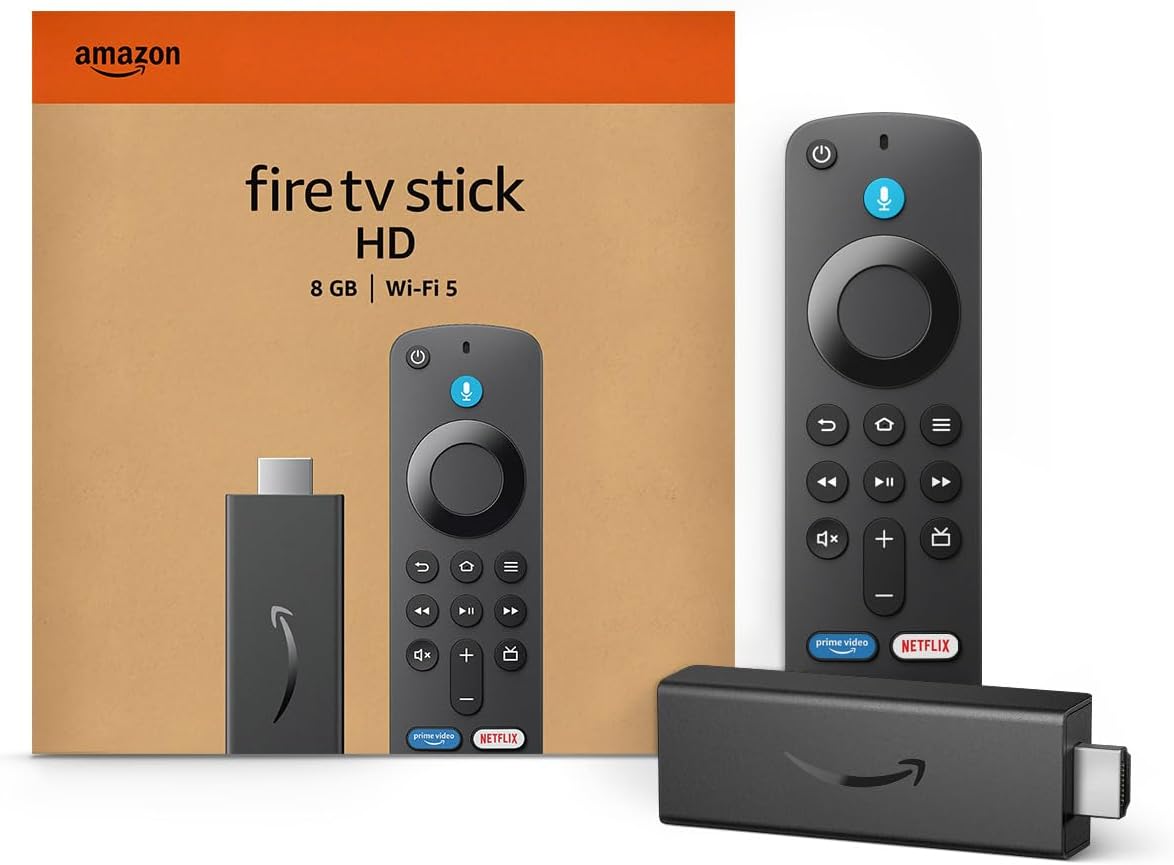
Amazon Fire TV Stick HD
Turn Any TV to a Smart TV. Stream Netflix, Prime Video & More. Alexa Voice Remote Included. Easy Plug & Play Setup.
Shop on Amazon
Understanding Why Your Samsung TV Is Not HD
When your Samsung TV isn’t displaying in HD, it could be due to several factors ranging from the model type to how channels are broadcast. Issues often involve the TV’s hardware capabilities, the signal source, or tuner limitations within the TV. Understanding these elements can help you identify why your picture quality may be inconsistent or lacking high definition.
Types of Samsung TV Models and HD Compatibility
Samsung TV models vary widely in their support for HD content. Older or entry-level Samsung TVs may only support standard definition or lower HD resolutions, like 720p, due to their panel and processing hardware. Smart TVs generally have better compatibility with HD, Full HD, and sometimes 4K signals, but only if the model supports those resolutions explicitly.
You should check your TV’s model number and specifications to confirm HD support. For example, some models in the Samsung LE-series or earlier might lack Full HD or 1080p capabilities. In contrast, more recent Samsung Smart TVs usually support Full HD and higher resolutions but require the right input and settings to display HD content properly.
How HD Channels Differ from Standard Channels
HD channels transmit video at higher resolutions, usually 720p or 1080p, significantly improving picture clarity and detail compared to standard definition (SD) channels. The difference is visible in sharper images and more vivid colors, especially on larger screens.
However, not all channels broadcast in HD. Many free-to-air or basic cable channels still transmit in SD. If your Samsung TV frequently switches between HD and SD or shows a fuzzy picture, it might be because the channel itself is in standard definition or the broadcast signal is weak. HD channels may also require a compatible tuner or subscription, depending on your region.
Common Misconceptions About TV Resolution
One common misconception is that buying any Samsung TV guarantees HD viewing. HD quality depends on several variables, including the content source, appropriate HDMI or antenna connections, and TV settings. Using a non-HDMI cable or an outdated antenna can limit the resolution regardless of your TV’s capabilities.
Another myth is that all HD-ready TVs provide identical picture quality. The term “HD-ready” generally means a TV supports a minimum resolution of 720p, not necessarily Full HD or 4K. Furthermore, if your TV’s input device or streaming app doesn’t output HD, your picture quality will remain at SD levels.
Role of Freeview and Tuner Capabilities
Freeview is a common digital terrestrial service providing both SD and HD channels for many Samsung TVs. However, the HD content’s availability depends on your TV’s tuner and region. Some older Samsung TVs have tuners that only decode SD content, limiting your channel choices to non-HD.
Also, if your TV tuner or external box is not compatible with HD broadcasts, your screen may display messages like “HD not supported” or default to SD resolution automatically. Ensuring your Samsung TV tuner supports Freeview HD and your antenna is appropriately set up is essential for receiving HD signals reliably.
For more detailed troubleshooting on Samsung TV resolution issues, see how to resolve such problems at How to Fix Poor Resolution on Your Samsung TV.
Diagnosing Issues With HD on Samsung TVs
When your Samsung TV isn’t displaying HD channels properly, it usually comes down to signal quality, cable connections, or software settings. Pinpointing the cause requires checking signal availability, assessing picture problems, verifying your hardware, and ensuring your firmware is up to date.
Checking for HD Signal and Channel Availability
Start by confirming that the HD channels you want to watch are available in your area. Some services, like Freeview, provide HD broadcasts only in specific regions, and not all channels offer HD content continuously. Use your TV’s electronic program guide or the Freeview website to verify channel listings.
If you’re accessing content through an external device, ensure it supports HD output and is set to output at the correct resolution. For built-in tuners, run a channel scan to detect available HD signals. Missing channels after a scan could indicate limited HD coverage or signal interference.
Resolving Pixelation and Picture Quality Problems
Pixelation—where you see blocky or grainy images—is a common symptom of poor HD reception. It typically results from a weak or inconsistent signal rather than a TV hardware fault.
Check connections, especially your HDMI or antenna cables, for any looseness or damage. Changing to a higher-quality coaxial or HDMI cable can improve signal integrity. Avoid long or overly twisted cables, which degrade the signal.
Adjusting your TV’s picture settings can also help reduce visible noise. Lowering sharpness and enabling noise reduction features may improve the viewing experience. If pixelation persists, consider contacting your service provider to check for signal issues.
Assessing Aerials, Cables, and Signal Strength
Your TV’s ability to display HD depends heavily on aerial quality and signal strength. Ensure your aerial is designed for digital HD reception and is directed properly toward the transmitter.
Use your Samsung TV’s built-in signal meter (often found in settings under ‘Antenna’ or ‘Signal Information’) to quantify the signal level and quality. Levels below optimal thresholds can cause freezes or loss of HD signals.
Inspect all cable connections between your aerial, any set-top boxes, and your TV. Replace any worn or damaged cables. If you rely on an indoor aerial, relocating it to a clearer signal area can make a significant difference.
Firmware and Software Update Checks
Keeping your Samsung TV’s firmware up to date is essential for optimal HD performance. Firmware updates often include improvements for tuner sensitivity, signal processing, and bug fixes that can resolve HD channel issues.
You can update your firmware via the TV’s network connection by navigating to All Settings > Support > Software Update > Update Now. If your TV isn’t connected to the internet, download the update on a USB drive from Samsung’s official site and install it manually through the same menu.
After updating, perform a full channel rescan. If problems with HD persist even after updates and rescans, you might need professional support to check for hardware faults.
How to Enable and Optimize HD on Samsung TV
To enjoy HD content on your Samsung TV, you’ll need to adjust several settings related to resolution, input source, and picture formatting. Ensuring these are set correctly will improve the clarity and sharpness of HD channels and streaming services.
How to Change Resolution on Samsung TV
Start by accessing the Settings menu using your remote. Navigate to Picture or Display Settings, where you can find resolution options. Select the highest available resolution, such as 1080p for Full HD or 4K UHD if your TV supports it.
On Samsung Smart TVs, you may also find options like HDMI UHD Color that you should enable to allow higher-quality signals through specific HDMI ports. This setting lets your TV receive the full bandwidth needed for HD and UHD content.
If you’re streaming or using an external device, make sure the device’s output matches your TV’s supported resolution to avoid blurry or non-HD images.
Selecting the Right Input and Source
Your Samsung TV’s picture quality depends heavily on the input source’s resolution. Identify which HDMI port is connected to your HD device like a cable box or streaming media player. Use high-speed HDMI cables to maintain signal integrity.
Check your external device’s settings to ensure it is outputting HD content. For example, set your cable box or streaming device to output at 720p, 1080p, or higher, matching your TV’s supported resolutions.
Switch the TV’s input source to the correct HDMI port by pressing the Source button on your remote and selecting the connected device. Confirm this input supports HD channels; otherwise, you might see only standard-definition images.
Adjusting Picture Size and Aspect Ratio
Improper picture size or aspect ratio can distort HD images, making them appear stretched or blurry. Go to Picture Settings, then Aspect Ratio or Picture Size.
Select 16:9 or Auto to match your TV’s native widescreen format. Avoid settings like Zoom or 4:3 unless you know the content was produced in that format, as these can degrade HD quality.
In some Samsung models, you can also find advanced settings to tweak picture scaling. Use these to ensure the image fits the screen properly without cutting off edges or adding black bars. Correct sizing preserves the sharpness of HD channels on your Samsung Smart TV.
For more detailed guidance, see this Samsung TV picture settings guide.
Additional Solutions and Advanced Troubleshooting
When your Samsung TV fails to display in HD, deeper steps may be required beyond basic adjustments. You can restore the TV’s original settings or explore support options and hardware upgrades to resolve persistent issues.
Resetting to Factory Defaults
Resetting your Samsung Smart TV to factory defaults can clear any incorrect settings affecting HD output. This process removes custom configurations, including picture adjustments and network settings.
To reset, go to Settings > General > Reset, and enter your PIN (default is usually 0000). Confirm the reset and allow the TV to restart. After that, your picture settings will return to the original state.
A factory reset can resolve software glitches causing HD detection problems. However, you will need to set up your TV and reconnect to Wi-Fi again.
Keep in mind this should be a last resort after trying firmware updates and cable tests.
Contacting Support or Upgrading Equipment
If the reset doesn’t fix the HD issue, contacting Samsung Support can help identify deeper hardware or firmware problems specific to your model. Provide your TV’s model code and software version for faster assistance.
Sometimes, older HDMI cables or external devices limit HD quality. Upgrading to high-speed HDMI cables and ensuring your source devices support the desired resolution can eliminate compatibility issues.
Firmware often plays a key role, so staying current with updates through the TV’s settings or via USB can be critical for optimal performance.
In some cases, persistent resolution problems might mean considering a new Smart TV or hardware upgrade to meet your HD streaming or broadcast needs more reliably.
For more details on troubleshooting Samsung TV picture issues, visit Samsung’s official troubleshooting page.