
You’re miles from the nearest café, deadlines looming, and your laptop refuses to connect to your phone’s hotspot. That spinning connection icon mocks you while “Can’t connect to this network” flashes across your screen.
Your laptop won’t connect to your mobile hotspot due to incompatible Wi-Fi frequency bands (5 GHz vs. 2.4 GHz), outdated network drivers, incorrect password entries, MAC address randomization conflicts, carrier tethering restrictions, or corrupted network profiles on either your laptop or phone.
This guide walks you through proven fixes for both Windows and Mac laptops connecting to iPhone and Android hotspots. You’ll learn how to toggle frequency bands, reset network settings, update drivers, and configure USB tethering alternatives. Let’s restore your mobile internet access right now.
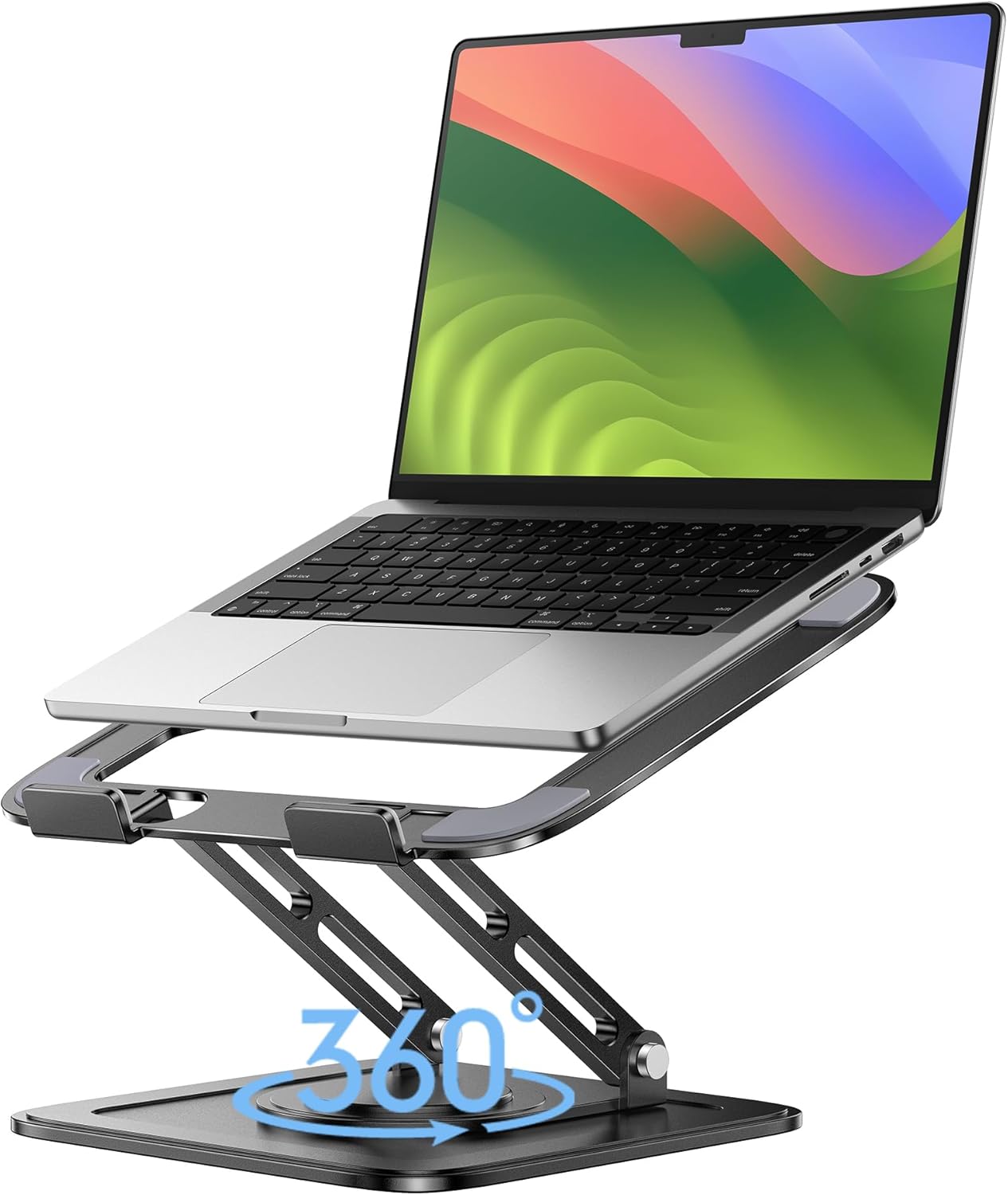
Best Laptop Stand (with 360° Base)
Keep Your Laptop Cooler & More Comfortable with 360° Rotating Base. Improve Airflow & Reduce Heat. Adjustable Height & Viewing Angle.
Shop on Amazon
Key Takeaways
- Laptop not connecting to hotspot most often results from Wi-Fi frequency band mismatches (5 GHz vs. 2.4 GHz), so enable 2.4 GHz compatibility mode on your phone first.
- Always forget and reconnect to the hotspot network after clearing corrupted profiles, and verify your password carefully for capitalization and special characters.
- Update your Windows laptop’s network adapter drivers through Device Manager or your manufacturer’s support site, as outdated drivers are the leading cause of mobile hotspot failures.
- Check your carrier’s tethering allowances and disable MAC address randomization on Mac by unchecking ‘Use private Wi-Fi address’ to prevent carrier blocking.
- If Wi-Fi tethering fails completely, use USB tethering as a reliable wired alternative that bypasses Wi-Fi complications and battery concerns.
- Disable VPN clients and firewall software temporarily when troubleshooting, then create exception rules once connectivity is restored.
Why Your Laptop Won’t Connect to Your Mobile Hotspot
The most common culprit is frequency band incompatibility. Many iPhones default to 5 GHz for faster speeds, but older laptop Wi-Fi adapters only support 2.4 GHz. Your laptop literally can’t see or maintain a connection to the wrong band.
Password mismatches happen more than you’d think. iOS and Android auto-generate complex hotspot passwords with mixed cases and special characters. One typo locks you out, and some laptops cache the incorrect password, repeating the authentication failure.
MAC address randomization adds another layer of complexity. Windows 10/11 and macOS now randomize hardware addresses for privacy, but some mobile carriers flag randomized MACs as unauthorized devices and block tethering access.
Carrier restrictions also play a role. Not all unlimited data plans include hotspot tethering, and some throttle or cap it separately. According to OpenSignal’s 2025 Mobile Network Experience Report, carrier tethering restrictions affect approximately 18% of U.S. mobile users, particularly on budget prepaid plans.
Outdated or corrupted network drivers on your laptop prevent proper handshake protocols with mobile hotspots. Driver conflicts with recent Windows updates frequently surface in tech support forums, especially after major feature releases.
Quick Fixes to Try First
Restart Your Devices and Toggle Airplane Mode
Start with the simplest solution. Restart both your laptop and smartphone completely, not just sleep mode. Power cycling clears temporary network stack errors and resets wireless radios.
On your phone, enable Airplane Mode for 10 seconds, then disable it. This forces your cellular modem and Wi-Fi radio to reinitialize. On iPhone, swipe down from the top-right corner and tap the airplane icon. Android users swipe down and tap the airplane icon in Quick Settings.
After toggling Airplane Mode, manually enable Personal Hotspot (iPhone) or Mobile Hotspot (Android) again. Don’t assume it auto-enables, verify the hotspot icon appears in your status bar.
On your laptop, toggle Wi-Fi off and on using the taskbar (Windows) or menu bar (Mac). Wait 15 seconds between toggles to allow the wireless adapter to fully reset.
Forget and Reconnect to the Hotspot Network
Corrupted network profiles cause persistent connection loops. You need to delete the saved hotspot profile completely.
On Windows:
- Open Settings > Network & Internet > Wi-Fi
- Click “Manage known networks”
- Select your hotspot name
- Click “Forget”
- Reconnect and re-enter the password carefully
On Mac:
- Click the Wi-Fi icon and select “Open Network Preferences” (or System Settings > Wi-Fi)
- Click “Advanced”
- Find your hotspot in the list
- Click the minus (–) button to remove it
- Click OK and reconnect
When re-entering your hotspot password, double-check capitalization and special characters. View the password on your phone first: iPhone users go to Settings > Personal Hotspot: Android users tap the hotspot notification or check Settings > Network & Internet > Hotspot & tethering.
Fix Windows Laptop Hotspot Connection Issues
Update or Reinstall Your Network Adapter Drivers
Outdated Wi-Fi drivers are the leading cause of mobile hotspot connection failures on Windows laptops. Microsoft’s generic drivers often lack protocol support for newer smartphone hotspot implementations.
Open Device Manager (right-click Start button and select Device Manager). Expand “Network adapters” and locate your wireless adapter, typically Intel, Realtek, or Qualcomm.
Right-click your Wi-Fi adapter and select “Update driver.” Choose “Search automatically for drivers.” If Windows finds nothing, visit your laptop manufacturer’s support site (Dell, HP, Lenovo, etc.) and download the latest wireless driver for your exact model.
If updating doesn’t work, try a clean reinstall. Right-click the adapter, select “Uninstall device,” check “Delete the driver software,” and restart. Windows will reinstall the driver automatically. For persistent issues, consider using Driver Booster to automate driver updates across all hardware.
Reset Network Settings on Windows
Windows accumulates network configuration debris over time. A full network reset wipes all Wi-Fi passwords and VPN settings but often resolves stubborn hotspot issues.
Navigate to Settings > Network & Internet > Advanced network settings > Network reset. Click “Reset now” and confirm. Your laptop will restart.
After reboot, reconnect to your mobile hotspot from scratch. This clears any conflicting DNS servers, proxy settings, or IP configuration remnants.
Fix Mac Laptop Hotspot Connection Problems
Mac laptops encounter fewer driver issues but suffer from Bluetooth handoff conflicts and Continuity feature interference when connecting to iPhone hotspots.
First, disable Wi-Fi MAC address randomization for your hotspot. Go to System Settings > Wi-Fi, click the (i) info button next to your hotspot name, and uncheck “Use private Wi-Fi address.” This prevents carrier blocking.
If your MacBook connects but shows “No Internet,” verify your iPhone’s cellular data is active and not restricted. Go to iPhone Settings > Cellular and ensure Cellular Data is on and Personal Hotspot isn’t blocked.
“My MacBook Pro would connect to my iPhone hotspot but immediately disconnect after 30 seconds. Turning off ‘Auto-Join Hotspot’ and manually connecting each time fixed it.” via r/mac
For persistent disconnects, reset network settings on your Mac. Go to System Settings > General > Transfer or Reset > Reset Network Settings (macOS Ventura and later). On older macOS versions, delete /Library/Preferences/SystemConfiguration/ preference files, specifically com.apple.airport.preferences.plist and NetworkInterfaces.plist, then restart.
Troubleshoot Mobile Hotspot Settings on Your Phone
Your phone’s hotspot configuration often causes laptop connection failures. Start by switching from 5 GHz to 2.4 GHz for maximum compatibility.
On iPhone (iOS 17+):
- Settings > Personal Hotspot > Maximize Compatibility (toggle ON)
- This forces 2.4 GHz operation
On Android:
- Settings > Network & Internet > Hotspot & tethering > Wi-Fi hotspot
- Tap AP Band or Hotspot Band
- Select “2.4 GHz Band”
Change your hotspot password to something simpler temporarily. Auto-generated passwords with mixed symbols often get mistyped. Use 8–10 alphanumeric characters without special symbols for testing.
Verify your carrier plan allows tethering. Some prepaid plans and grandfathered unlimited plans block or charge extra for hotspot use. Check your mobile carrier’s app or website for tethering allowances.
Reset network settings on your phone if nothing else works. This erases saved Wi-Fi passwords and Bluetooth pairings. On iPhone: Settings > General > Transfer or Reset iPhone > Reset > Reset Network Settings. On Android: Settings > System > Reset options > Reset Wi-Fi, mobile & Bluetooth.
Advanced Solutions for Persistent Connection Issues
Check for IP Address and DNS Conflicts
Mobile hotspots typically assign IP addresses via DHCP in the 192.168.x.x range. If your laptop has a static IP configured, conflicts arise.
On Windows, open Command Prompt (type cmd in Start menu) and run:
ipconfig /release

ipconfig /renew

ipconfig /flushdns
On Mac, open Terminal and run:
sudo dscacheutil -flushcache

sudo killall -HUP mDNSResponder
Manually set DNS servers if your hotspot connection works but internet access fails. Use Google DNS (8.8.8.8 and 8.8.4.4) or Cloudflare DNS (1.1.1.1). On Windows: Network Adapter Properties > Internet Protocol Version 4 > Use the following DNS server addresses. On Mac: System Settings > Wi-Fi > Details > DNS > add DNS servers.
Disable VPN and Security Software Temporarily
VPN clients and aggressive firewall software interfere with hotspot authentication. Disconnect your VPN completely before connecting to the hotspot.
“NordVPN kept blocking my Android hotspot connection on my ThinkPad. Disabling the kill switch in settings solved it instantly.” via r/VPN
Temporarily disable Windows Defender Firewall or third-party antivirus software to test. If disabling the firewall fixes your hotspot connection, create an exception rule for your hotspot network.
Hardware Alternative: For business-critical connectivity, consider the TP-Link M7350 4G LTE Mobile Hotspot Router, which provides dedicated hotspot hardware independent of your phone’s battery and carrier restrictions.

USB tethering bypasses Wi-Fi issues entirely. Connect your phone to your laptop via USB cable. On iPhone, trust the computer when prompted. On Android, enable USB tethering in Settings > Network & Internet > Hotspot & tethering > USB tethering. Windows and Mac automatically recognize the connection. As an ultimate desk solution, the Anker PowerExpand Elite 13-in-1 Thunderbolt 3 Dock provides wired Ethernet connectivity to supplement unreliable hotspot connections when you’re working from a temporary base.
Frequently Asked Questions
Why won’t my laptop connect to my phone’s hotspot?
Common causes include Wi-Fi frequency band incompatibility (5 GHz vs. 2.4 GHz), outdated network drivers, incorrect password entries, MAC address randomization conflicts, carrier tethering restrictions, or corrupted network profiles on your laptop or phone.
How do I fix a laptop not connecting to hotspot on Windows?
Start by restarting both devices and toggling Airplane Mode on your phone. Then forget the hotspot network from your Wi-Fi settings, update your network adapter drivers through Device Manager, and perform a network reset in Settings > Network & Internet > Advanced network settings > Network reset.
What should I do if my MacBook won’t connect to iPhone hotspot?
Disable Wi-Fi MAC address randomization by going to System Settings > Wi-Fi, click the info button next to your hotspot, and uncheck ‘Use private Wi-Fi address.’ Also ensure your iPhone’s cellular data is active and verify Personal Hotspot is enabled in iPhone settings.
Can I switch my hotspot to 2.4 GHz for better laptop compatibility?
Yes. On iPhone, enable ‘Maximize Compatibility’ in Settings > Personal Hotspot to force 2.4 GHz operation. On Android, go to Settings > Hotspot & tethering > Wi-Fi hotspot, select AP Band, and choose ‘2.4 GHz Band’ for wider device compatibility.
What is USB tethering and how does it solve hotspot connection problems?
USB tethering connects your phone to your laptop via a USB cable, bypassing Wi-Fi entirely. Enable it in your phone’s hotspot settings, trust the device when prompted, and your laptop will automatically recognize the connection—ideal when Wi-Fi hotspot fails.
How do carrier restrictions affect my laptop’s hotspot connection?
Some mobile carriers block hotspot tethering on certain plans, particularly budget prepaid plans, or cap data separately. According to OpenSignal’s 2025 report, approximately 18% of U.S. mobile users face carrier tethering restrictions. Check your carrier’s app or website to verify tethering is included in your plan.
Read More:
- Laptop Not Shutting Down (Why It Happens and How to Fix It)
- Laptop Not Booting From USB (Why It’s Happen and Complete Fix Guide)
- Laptop Not Responding (Why It Happen and How to Fix It Fast)
- Laptop Not Charging When Plugged In (Here’s How to Fix It Fast)
- Laptop Not Booting Up (Common Causes and How to Fix It Fast)
- Laptop Not Connecting to Internet (Most Users Fix It With This Method)