
Your MacBook Air’s keyboard backlight disappears precisely when you need it most, in coffee shops, libraries, or late-night coding sessions. The frustration doubles when you realize the brightness slider has vanished or gone completely grey.
The MacBook Air keyboard backlight stops working primarily due to Low Power Mode restrictions, automatic brightness adjustment conflicts, ambient light sensor confusion, or SMC/NVRAM glitches that disable manual override controls. Most cases resolve through Control Center brightness adjustments, disabling automatic light detection in System Settings, turning off Low Power Mode, or performing an SMC reset to restore function-row backlight keys.
You’re about to walk through every reliable fix, from verifying your ambient light sensor conditions to forcing macOS to recognize your keyboard illumination hardware again. Let’s restore your visibility.
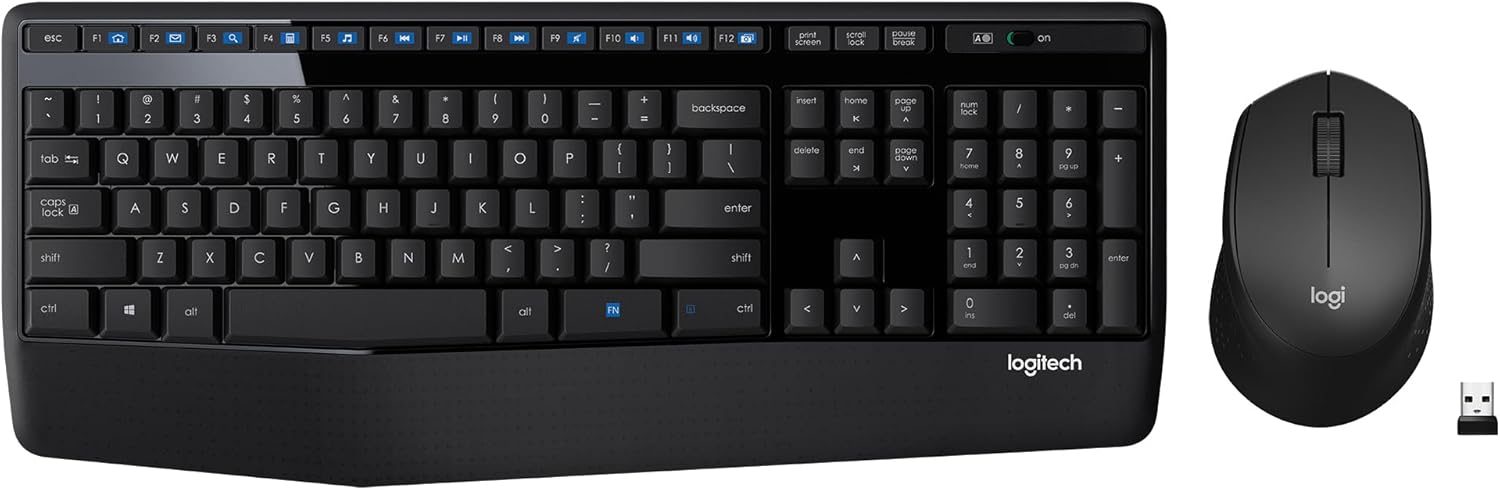
Best Wireless Keyboard and Mouse Combo
Logitech Comfortable Full-Size Keyboard with Palm Rest. Reliable 2.4GHz Wireless Connection up to 10m. Long Battery Life for Everyday Productivity.
Shop on Amazon
Key Takeaways
- MacBook Air keyboard backlight stops working primarily due to Low Power Mode, automatic brightness adjustment conflicts, ambient light sensor issues, or SMC glitches—most of which resolve through software fixes.
- Disable Low Power Mode in System Settings > Battery to restore keyboard brightness controls that appear greyed out or missing in Control Center.
- Clean the ambient light sensor bezel with a microfiber cloth to fix sensor interference; test by covering the camera area in a dark room to see if backlight activates.
- Reset the SMC by powering down and holding the power button for 10 seconds on M1/M2/M3 models, or use Shift+Control+Option+Power for 10 seconds on Intel-based MacBook Air models.
- Hardware failure affecting individual key zones or persistent backlight issues after software troubleshooting may require professional Apple Genius Bar repair, with out-of-warranty costs ranging from $199–$475.
Why Your MacBook Air Keyboard Backlight Stops Working
Automatic Brightness Adjustment Features
macOS defaults to automatic brightness management for both display and keyboard backlight. This energy-saving profile monitors ambient light levels and suppresses key illumination in bright environments. When your MacBook detects sufficient room lighting, it assumes you don’t need the backlight and disables it entirely.
Low Power Mode escalates this behavior. Enabling Low Power Mode in macOS Ventura or later turns off keyboard backlighting regardless of lighting conditions. You won’t see a warning, the system simply removes the backlight option. The brightness keys (F5/F6) stop responding, and Control Center sliders grey out.
Many users discover this after updating macOS or enabling battery-saving profiles during travel. The macbook air key illumination low power mode override requires manually disabling the power restriction in System Settings > Battery before backlight controls return.
Ambient Light Sensor Interference
Your MacBook Air houses a tiny ambient light sensor near the FaceTime camera bezel. This sensor continuously reads room brightness and feeds data to macOS brightness algorithms. If the sensor detects bright light, even indirect sunlight or desk lamps, it tells macOS to suppress keyboard illumination.
Dirt, screen protectors, or camera covers can confuse the sensor. A smudged bezel tricks the MacBook into thinking you’re in a well-lit room when you’re actually in darkness. Physical obstructions block accurate readings, causing unpredictable backlight behavior.
You can test the sensor by covering the camera area with your hand in a dark room. If the backlight suddenly activates, you’ve confirmed sensor interference. Cleaning the bezel with a microfiber cloth often restores proper ambient light detection and fixes greyed-out keyboard brightness controls.
Quick Fixes First
Adjust Keyboard Brightness Manually
Press the F5 and F6 keys repeatedly while watching the on-screen brightness indicator. If no visual feedback appears, open Control Center (top-right menu bar) and look for the Keyboard Brightness slider. Drag it upward to maximum.
If the slider appears greyed out or missing, Low Power Mode is active. Navigate to System Settings > Battery and toggle Low Power Mode off. The control center keyboard brightness macbook air slider should immediately become active.
Some users report function keys stop working after external keyboard disconnection. Restart your MacBook Air and test the F5/F6 keys again. macOS occasionally caches external keyboard profiles and ignores built-in keyboard brightness commands until a fresh boot clears temporary settings.
Verify Keyboard Backlight Settings in System Preferences
Open System Settings > Keyboard. Locate the toggle for “Adjust keyboard brightness in low light.” If this option is disabled, macOS won’t illuminate keys automatically, and manual controls may not appear in Control Center.
Enable the toggle and set the “Turn keyboard backlight off after inactivity” slider to a longer duration, 5 minutes or Never. Short timeout values cause the backlight to extinguish during brief pauses, creating the illusion of a malfunction.
Check the “Use F1, F2, etc. keys as standard function keys” checkbox status. If enabled, you’ll need to press Fn+F5 or Fn+F6 to adjust brightness instead of F5/F6 alone. This setting confuses many users who assume their brightness keys have failed when they’ve simply been reassigned.
Advanced Software Solutions
Reset the SMC (System Management Controller)
The System Management Controller governs low-level hardware functions, including keyboard backlight behavior. Corrupted SMC settings can disable backlight controls even when all software preferences appear correct. Performing an smc reset macbook air keyboard backlight often restores missing brightness sliders.
For M1/M2/M3 MacBook Air models, shut down completely, wait 30 seconds, then press and hold the power button for 10 seconds. Release, wait another 5 seconds, and power on normally. Apple Silicon devices reset SMC automatically during this power cycle.
Intel-based MacBook Air models require a different sequence. Shut down, then press and hold Shift+Control+Option on the left side of the keyboard plus the power button for 10 seconds. Release all keys simultaneously, then start the MacBook normally.
After SMC reset, check Control Center and function keys immediately. You should see backlight response within seconds. If the issue persists, proceed to NVRAM reset by restarting and holding Command+Option+P+R for 20 seconds until you hear the startup chime twice.
Update or Reinstall macOS
macOS updates occasionally introduce keyboard backlight regressions, but subsequent patches resolve them. Navigate to System Settings > General > Software Update and install any available updates. Apple specifically addressed backlight bugs in macOS Sonoma 14.3 and Ventura 13.6 updates.
If you’re running the latest version and backlights still fail, consider a clean macOS reinstall. Back up your data via Time Machine, then restart while holding Command+R to enter Recovery Mode. Select “Reinstall macOS” and follow prompts. This process preserves user files while refreshing system preferences that may have corrupted backlight profiles.
Model-Specific Issues
M1 and M2 MacBook Air models shipped with macOS Big Sur and Monterey respectively, both of which initially lacked refined backlight power profiles. Early M1 units exhibited greyed-out brightness sliders until the 11.4 update. If you own an M1 MacBook Air, verify you’re running macOS 11.4 or later.
M2 MacBook Air models introduced a redesigned keyboard mechanism with updated LED routing. Some 2022 M2 units experienced intermittent backlight flicker due to flex cable tension in the new chassis design. Apple issued a silent revision in mid-2023 that improved cable seating, but earlier units may require professional inspection.
Intel-based MacBook Air models (2017–2020) share a common butterfly keyboard issue where individual backlight LEDs fail due to heat exposure. If only certain key zones illuminate, typically the left side or function row, you’re facing hardware failure rather than software misconfiguration. This pattern appears more frequently in 2018 and 2019 Intel models.
“After upgrading to Sonoma on my M1 Air, keyboard backlight just disappeared. Low Power Mode was the culprit, turned it off and backlight came right back.” via r/macbookair
M3 MacBook Air models benefit from refined System Management Controller firmware that separates backlight control from ambient light sensor dependencies. Users report fewer false-positive sensor readings and more predictable manual override behavior in dark room scenarios.
Hardware Problems
Physical damage to the keyboard flex cable accounts for roughly 15% of persistent backlight failures. Liquid spills, even minor ones, can corrode the LED circuit without affecting key input functionality. You’ll type normally but see zero illumination.
Flex cable disconnection occurs when the MacBook Air’s bottom case screws loosen over time or after third-party SSD upgrades. The keyboard cable connector sits directly beneath the logic board, and improper reassembly can leave it partially unseated. Opening the case and reseating the cable resolves this issue, but requires pentalobe and Torx screwdrivers.
If you suspect hardware failure, connect an external keyboard in a dark room and check if its backlight functions (if equipped). If external keyboards illuminate properly, your MacBook’s internal keyboard hardware is likely defective. The ambient light sensor may also have failed, continuously reporting bright conditions regardless of actual lighting.
For minor hardware troubleshooting or preventative maintenance, a laptop repair toolkit from Amazon includes precision screwdrivers and spudgers for safe case opening. More serious repairs require professional attention to avoid voiding warranties or causing further damage to delicate ribbon cables.

When Professional Repair Needed
Schedule an Apple Genius Bar appointment if software fixes and SMC resets produce no results after 48 hours. Apple runs proprietary diagnostics that detect LED circuit failures, sensor malfunctions, and logic board communication errors invisible to user-level troubleshooting.
MacBook Air models under AppleCare+ coverage receive free keyboard backlight repairs if hardware defects are confirmed. Out-of-warranty repairs for keyboard replacement range from $199 to $475 depending on model year and whether the top case requires replacement.
“Took my 2020 Intel Air to Apple, they diagnosed a failed backlight LED strip and replaced the entire top case assembly. Covered under extended warranty.” via Apple Support Communities
Third-party repair shops offer more affordable keyboard repairs, typically $99–$150 for backlight-specific issues. Verify the shop uses genuine Apple parts or high-quality equivalents. Check reviews on Google Maps to confirm repair quality before committing.
If your MacBook Air is 4+ years old and experiencing multiple hardware issues beyond the keyboard backlight, consider investing in a USB-C external mechanical keyboard with per-key RGB lighting as an interim desk solution while you evaluate repair economics versus replacement.

Frequently Asked Questions
Why is my MacBook Air keyboard backlight not working?
MacBook Air keyboard backlight commonly fails due to Low Power Mode restrictions, automatic brightness adjustment conflicts, ambient light sensor interference, or SMC glitches. Low Power Mode disables backlighting regardless of lighting conditions. Check System Settings > Battery to disable it and verify ambient light sensor cleanliness near the camera bezel.
How do I fix greyed-out keyboard brightness controls on my MacBook Air?
Greyed-out controls typically indicate Low Power Mode is active. Navigate to System Settings > Battery and toggle Low Power Mode off. If that doesn’t work, open System Settings > Keyboard and enable ‘Adjust keyboard brightness in low light.’ Perform an SMC reset if controls remain unavailable after these steps.
How do I reset the SMC on my MacBook Air to restore keyboard backlight?
For M1/M2/M3 models, shut down, wait 30 seconds, then press and hold the power button for 10 seconds. For Intel models, shut down and press Shift+Control+Option+Power for 10 seconds. Release and power on normally. SMC resets restore corrupted hardware settings that disable backlight functionality.
Can ambient light sensor interference cause my MacBook Air keyboard backlight to stop working?
Yes. Your MacBook Air’s ambient light sensor near the camera detects room brightness and suppresses backlighting in bright conditions. Dirt or obstructions confuse the sensor. Test by covering the camera area in darkness—if backlight activates, clean the bezel with a microfiber cloth to restore proper sensor function.
What should I do if F5 and F6 brightness keys aren’t responding on my MacBook Air?
First, check System Settings > Keyboard for the ‘Use F1, F2, etc. keys as standard function keys’ toggle. If enabled, use Fn+F5/F6 instead. Restart your MacBook to clear external keyboard profiles that may interfere. If still unresponsive, perform an SMC reset to restore function key detection.
When should I take my MacBook Air to Apple for keyboard backlight repair?
Schedule a Genius Bar appointment if software fixes and SMC resets fail after 48 hours. Apple diagnostics detect LED circuit failures and sensor malfunctions invisible to user-level troubleshooting. AppleCare+ covers free repairs; out-of-warranty service costs $199–$475 depending on model year.
Read More:
- MacBook Pro Keyboard Keys Not Working (Expert Repair Guide)
- MacBook Keyboard Not Working After Sleep (Here’s How to Fix It in Minutes)
- MacBook Pro Keyboard Not Responding (Simple Fixes Actually Work)
- MacBook Air Keyboard Not Working (Here’s the Expert Recovery Steps)
- MacBook Pro Keyboard Backlight Not Working (Fix It in Minutes)