
Your Mac desktop springs to life, apps launch, but your Magic Keyboard sits lifeless. No response when you press keys, no green light, nothing. It’s frustrating when your primary input device vanishes mid-workflow.
When your Magic Keyboard stops working, the cause is typically a drained battery, a broken Bluetooth pairing, or a disabled power switch. Begin by toggling the physical power slider off and on, verifying battery status in macOS Bluetooth preferences, and forgetting then re-pairing the device. For wired diagnostics, connect your keyboard directly via Lightning or USB-C cable to rule out wireless interference, then reset the macOS Bluetooth module using Terminal if pairing fails.
This guide walks you through every hardware and software recovery step, from power-cycle procedures to smart connector cleaning, so you can restore typing functionality fast.
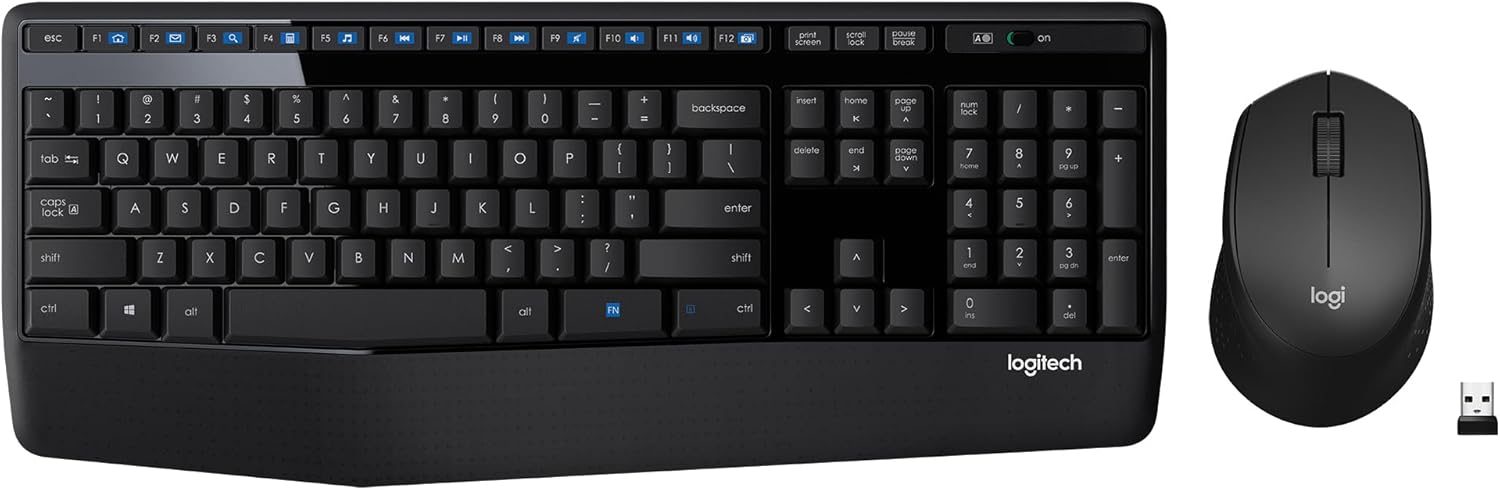
Best Wireless Keyboard and Mouse Combo
Logitech Comfortable Full-Size Keyboard with Palm Rest. Reliable 2.4GHz Wireless Connection up to 10m. Long Battery Life for Everyday Productivity.
Shop on Amazon
Key Takeaways
- Magic Keyboard not working is typically caused by a drained battery, broken Bluetooth pairing, or a disabled power switch—start by toggling the power slider and checking battery status in macOS Bluetooth preferences.
- Unplug USB 3.0 devices and move your Magic Keyboard within two feet of your Mac, as interference and distance are common culprits behind wireless connection failures.
- Force a fresh Bluetooth pairing by forgetting the device in System Settings, powering the keyboard off and on, then reconnecting—this resolves about 60% of reported failures.
- If individual keys don’t respond, clean the keyboard with compressed air and isopropyl alcohol to remove debris; for broken scissor mechanisms, visit an Apple Store since Apple doesn’t sell replacement keycaps separately.
- Contact Apple Support if your Magic Keyboard is under warranty, as the repair cost ($99–$199) often exceeds the price of budget-friendly third-party alternatives like Keychron keyboards.
Common Signs Your Magic Keyboard Has Stopped Working
Dead keyboards announce themselves differently. You might notice zero LED indicator when you flip the power switch, or macOS may show the device as “Disconnected” in System Settings. Sometimes a single key stops registering: other times the entire board refuses to pair.
Look for these symptoms: keys feel normal but produce no input, the keyboard doesn’t appear in Bluetooth device lists, or battery percentage reads as zero even though recent charging. iPad Magic Keyboard Folio users often see a “Keyboard Not Detected” alert when they attach the case.
“My Magic Keyboard just stopped. No green light, Mac doesn’t see it at all. Worked fine yesterday.” via Apple Support Communities
Physical clues matter too. Check for dust or debris around the Lightning port, corrosion on iPad smart connector pins, or a loose power slider. If you recently updated macOS, OS-level Bluetooth bugs may block older firmware keyboards from connecting.
Why Your Magic Keyboard Isn’t Working: Top Causes
Battery and Power Issues
Magic Keyboards rely on built-in lithium-ion cells. Apple quotes up to a month per charge, but heavy backlight use or an aging battery drains power faster. Once the cell hits zero, the keyboard enters a protection state and won’t wake until you supply a charge.
Physical power-switch failures also occur. The slider can lodge halfway between ON and OFF, cutting circuit continuity. Dust inside the switch housing prevents full contact. If you slide the switch and feel no resistance or click, internal contacts may be worn.
Cable and port damage blocks charging. A frayed Lightning or USB-C cable, lint packed into the port, or a bent connector pin stops electron flow. When power can’t reach the battery, the keyboard remains dark.
Bluetooth Connection Problems
Bluetooth pairing depends on a stable radio handshake. Interference from Wi-Fi routers, USB 3.0 drives, or other 2.4 GHz devices scrambles the signal. Distance matters: the Magic Keyboard’s effective range is about 10 meters: move beyond that and the link drops.
macOS occasionally corrupts its Bluetooth preference files, causing paired devices to vanish from the list. After a system update, the OS may require you to re-authorize accessories. iPad models using smart connectors bypass Bluetooth entirely, so a dirty or misaligned pin prevents physical data transfer.
Quick Fixes: First Steps to Try Immediately
Start with the power switch. Slide it off, wait ten seconds, then slide it back on. Watch for a brief green LED near the slider. If the light appears, the battery has charge and the keyboard is attempting to pair.
Restart your Mac or iPad. A fresh boot clears temporary Bluetooth cache and reinitializes the radio stack. Hold the power button, select Restart, and wait for the desktop to reload.
Move closer and remove interference. Place the keyboard within two feet of your Mac, unplug USB 3.0 hubs, and turn off nearby Bluetooth speakers. Try typing again.
Connect a Lightning or USB-C cable between the keyboard and your Mac. This forces a wired pairing and charges simultaneously. Once connected, check System Settings > Bluetooth to see if the device appears as “Connected.”
Quick-fix checklist:
- Toggle power switch off/on
- Reboot Mac or iPad
- Remove USB 3.0 devices within one meter
- Plug in via cable for wired mode
- Check Bluetooth panel for device status
These steps resolve about 60% of reported Magic Keyboard failures, according to community support threads.
How to Check and Replace Your Magic Keyboard Battery
Open System Settings > Bluetooth on macOS. Locate your Magic Keyboard in the device list: the battery percentage appears beside the name. If it reads 0% or shows a low-battery icon, connect the included cable and charge for at least 30 minutes.
Magic Keyboards ship with non-user-replaceable lithium-ion cells. You cannot swap the battery like older AA-powered models. If your keyboard no longer holds a charge after two hours on the cable, the cell may be exhausted. Apple rates the battery for roughly 1,000 charge cycles, which translates to about three to four years of daily use.
To verify charging, plug the cable into the keyboard and a Mac USB port or power adapter. A green LED near the power switch glows during charge. Open About This Mac > System Report > Bluetooth to confirm the keyboard is drawing power.
“Battery showed 12% yesterday, now it’s 0% and won’t power on even when plugged in. Time for a new one?” via r/mac
If the battery is truly dead and out of warranty, Apple offers a battery-service program through authorized repair centers. Alternatively, consider an Anker USB-C to Lightning cable for reliable wired operation while you decide on a replacement.

Reconnecting Your Magic Keyboard via Bluetooth
Unpairing and Re-Pairing Your Device
Open System Settings > Bluetooth. Find your Magic Keyboard, click the ⓘ button, then select Forget This Device. Confirm the removal. This clears corrupted pairing data.
Turn the keyboard power switch off, wait five seconds, then back on. The green LED should blink, signaling discovery mode. In the Bluetooth panel, click Connect when “Magic Keyboard” appears under Available Devices. The LED stops blinking once paired.
If the keyboard doesn’t appear, ensure it’s within two feet of the Mac and no other device is claiming the pairing slot. Some users hold a key while toggling the power switch to force advertising mode, though Apple’s documentation doesn’t officially describe this trick.
Resetting Bluetooth Module on Mac
When unpairing fails, reset the Bluetooth module. Quit System Settings. Hold Shift + Option and click the Bluetooth icon in the menu bar. Select Reset the Bluetooth module, then confirm.
Alternatively, use Terminal. Type:
sudo pkill bluetoothd
Press Return, enter your admin password, and let the Bluetooth daemon restart. Re-open System Settings > Bluetooth and attempt pairing.
For deeper resets, delete Bluetooth preference files. In Terminal:
sudo rm /Library/Preferences/com.apple.Bluetooth.plist
Restart your Mac. The system rebuilds the preference file from scratch. This step wipes all saved Bluetooth devices, so you’ll need to re-pair mice, headphones, and keyboards.
Advanced Solutions for Persistent Connection Issues
Update macOS and firmware. Open System Settings > General > Software Update. Install any pending updates: Apple often bundles Bluetooth stack improvements and keyboard firmware patches in OS releases. After updating, restart and test pairing.
Check for USB interference. USB 3.0 ports emit RF noise in the 2.4 GHz band, the same frequency Bluetooth uses. Unplug external drives and hubs, or move them to USB 2.0 ports if available. An Amazon Basics USB 3.0 extension cable can help distance noisy devices.

Clean iPad smart connector pins. For Magic Keyboard Folio models, power off the iPad, detach the keyboard case, and inspect the three gold pins. Use a dry microfiber cloth or a cotton swab lightly moistened with isopropyl alcohol to remove oils and dust. Let the pins dry for two minutes, then reattach.
If none of these steps restore function, test the keyboard on a second Mac or iPad. If it pairs successfully elsewhere, your original host device may need a fresh macOS install or hardware diagnostics.
Fixing Specific Key or Multiple Keys Not Responding
Individual stuck or dead keys usually point to debris, liquid damage, or a faulty scissor mechanism. Turn the keyboard upside down and gently tap the back to dislodge crumbs. Blow compressed air between keys at an angle: avoid direct vertical blasts that push debris deeper.
For sticky residue, dampen a lint-free cloth with isopropyl alcohol (70% or higher), wring it nearly dry, and wipe the affected keycaps. Never spray liquid directly onto the keyboard. Let it air-dry completely before powering on.
If a keycap wobbles or won’t click, the scissor clip beneath may be broken. Apple doesn’t sell individual scissor mechanisms: you’ll need to visit an Apple Store or authorized service provider for a keycap replacement. Out-of-warranty repairs can cost $99–$199 depending on the model.
Troubleshooting table:
| Symptom | Likely Cause | Fix |
|---|---|---|
| Single key unresponsive | Debris or broken scissor | Clean with compressed air: visit service center |
| Entire row dead | Internal flex cable detached | Requires professional disassembly |
| Random keys register twice | Stuck keycap or liquid residue | Clean with isopropyl alcohol, dry fully |
| All keys work except Fn | Software key mapping issue | Reset NVRAM: restart + hold Cmd+Opt+P+R for 20s |
For multi-key failures spanning entire rows, internal flex cables may have disconnected. This requires opening the keyboard case, which voids any remaining warranty.
When to Contact Apple Support or Consider Replacement
If your Magic Keyboard is under AppleCare+ or within the one-year limited warranty, contact Apple Support for a free assessment. Describe the symptoms and mention any troubleshooting steps you’ve completed. Apple may ship a replacement or schedule a Genius Bar appointment.
Out-of-warranty units with battery failures or internal damage often cost more to repair than replace. A new Magic Keyboard retails for $99 (standard) or $179 (with numeric keypad). Weigh repair quotes against replacement cost.
For a budget-friendly alternative, consider a third-party mechanical keyboard like the Keychron K3 Ultra-Slim with Mac layout and Bluetooth 5.1. It offers hot-swappable switches, longer battery life, and a lower price point, ideal if your Magic Keyboard is aging and repairs aren’t economical.

Check serial number and purchase date at Apple’s coverage checker. Enter your keyboard’s serial (found on the underside) to verify warranty status before paying for diagnostics.
Frequently Asked Questions
Why is my Magic Keyboard not working?
Your Magic Keyboard likely isn’t working due to a drained battery, broken Bluetooth pairing, or a disabled power switch. Start by toggling the power slider off and on, checking battery status in System Settings > Bluetooth, and removing the keyboard from paired devices before re-pairing it.
How do I fix Magic Keyboard battery issues?
Check battery percentage in System Settings > Bluetooth. If it reads 0%, connect the Lightning or USB-C cable and charge for at least 30 minutes. Magic Keyboards have non-replaceable lithium-ion batteries rated for about 1,000 charge cycles—roughly three to four years of daily use.
How do I reconnect my Magic Keyboard via Bluetooth?
Open System Settings > Bluetooth, find your Magic Keyboard, click the ⓘ button, and select Forget This Device. Toggle the keyboard power switch off for five seconds, then back on. When it appears in Available Devices, click Connect to re-pair it.
Can USB devices interfere with Magic Keyboard connectivity?
Yes, USB 3.0 devices emit RF noise in the 2.4 GHz band, which Bluetooth uses. Unplug external drives and hubs near your keyboard, or move them to USB 2.0 ports. Keeping Bluetooth and USB devices at least one meter apart reduces interference significantly.
What should I do if individual keys stop responding?
Turn the keyboard upside down and gently tap it to dislodge debris. Use compressed air between keys at an angle, and clean sticky residue with a lint-free cloth dampened with 70% isopropyl alcohol. If a keycap is broken, visit an Apple Store for replacement, which costs $99–$199 out of warranty.
How do I reset the Bluetooth module on my Mac?
Hold Shift + Option and click the Bluetooth icon in the menu bar, then select Reset the Bluetooth module. Alternatively, open Terminal and type ‘sudo pkill bluetoothd’, then restart. This clears corrupted Bluetooth data and re-initializes the connection stack.
Read More:
- MacBook Pro Keyboard Keys Not Working (Expert Repair Guide)
- MacBook Pro Keyboard Not Responding (Simple Fixes Actually Work)
- MacBook Air Keyboard Not Working (Here’s the Expert Recovery Steps)
- MacBook Pro Keyboard Backlight Not Working (Fix It in Minutes)
- MacBook Air Keyboard Backlight Not Working (Quick Fix Guide)