
You’re working on your ASUS laptop, trying to adjust screen brightness or mute the volume, when suddenly nothing happens. Your function keys aren’t responding, hotkeys sit idle, and simple shortcuts that once saved you seconds now force you into tedious Settings menus.
The most common cause behind asus keyboard hotkeys not working is a stopped ASUS Optimization service, a missing or outdated ATK Package driver, an accidental Fn Lock toggle (Fn + Esc), or corrupted ASUS System Control Interface software following a Windows update. These software-level conflicts prevent your function keys from communicating with Windows, blocking brightness, volume, and hardware toggles even though your regular typing works perfectly fine.
You don’t need a technician or motherboard repair. In most cases, a quick driver reinstall, service restart, or simple key combination will restore your ASUS ZenBook, VivoBook, ROG, or TUF Gaming hotkeys in under five minutes, no jargon, no complexity.
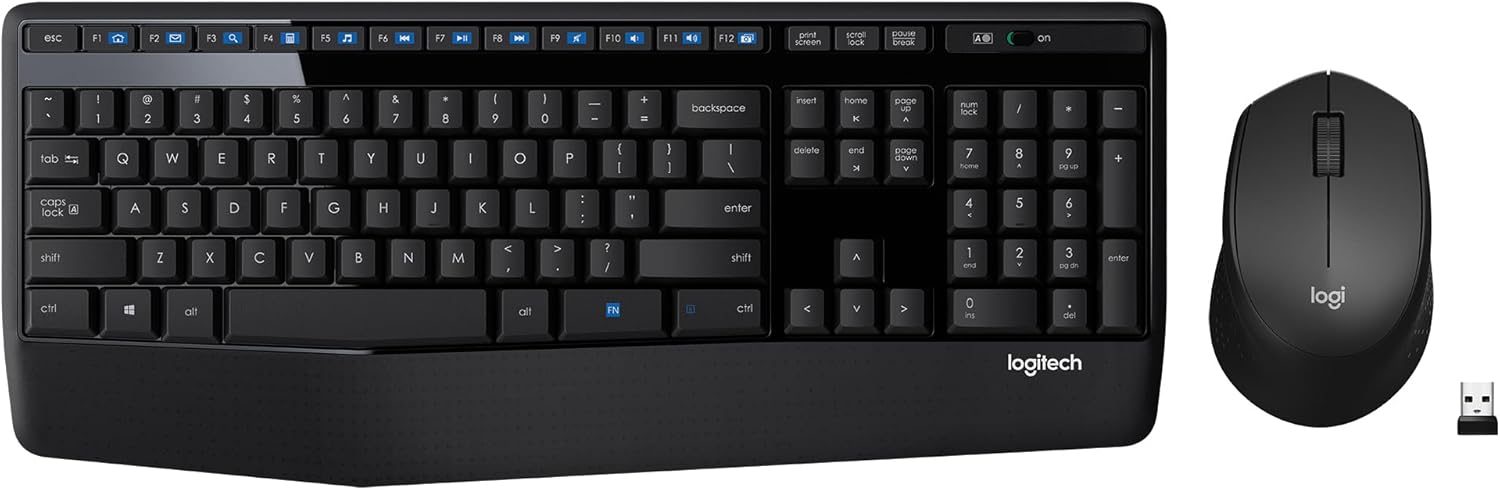
Best Wireless Keyboard and Mouse Combo
Logitech Comfortable Full-Size Keyboard with Palm Rest. Reliable 2.4GHz Wireless Connection up to 10m. Long Battery Life for Everyday Productivity.
Shop on Amazon
Key Takeaways
- ASUS keyboard hotkeys not working is almost always a software issue caused by a stopped ASUS Optimization service, missing ATK Package driver, or accidental Fn Lock toggle rather than hardware failure.
- Verify your issue is software-based by testing function keys in BIOS and with an external USB keyboard—if they work there, Windows drivers or accessibility settings are the culprit.
- Reinstall the ATK Package and ASUS System Control Interface driver from the official ASUS support site (not Windows Update), then restart the ASUS Optimization service via Services.msc.
- Disable Windows accessibility features like Filter Keys, Sticky Keys, and Toggle Keys in Settings > Accessibility > Keyboard, as they can intercept and block Fn key combinations.
- Perform an EC reset by powering off, unplugging the AC adapter, holding the power button for 40 seconds, then reconnecting to clear stuck hardware states.
- If all software troubleshooting fails and hotkeys still don’t respond, contact ASUS Support with your serial number and troubleshooting details—hardware repairs typically cost $100–$300 and may be free under warranty.
Identifying Causes of Unresponsive Hotkeys
Distinguishing Software and Hardware Failure
Your keyboard still types letters and numbers perfectly, but function keys refuse to respond. That’s your first clue this is almost always a software issue rather than a broken keyboard. Hardware failures typically show dead keys, stuck characters, or physical damage. If standard typing works but F1–F12 and media controls don’t, the physical components are fine.
Check whether any hotkey responds. Press Fn + F5 (brightness down), Fn + F8 (volume mute), or Fn + F10 (touchpad toggle). If none trigger, your ASUS utilities aren’t communicating with Windows. If only some work, you’re dealing with partial driver corruption or a conflict.
Try an external USB keyboard. If its function keys work normally, your laptop keyboard hardware is intact, confirming the issue lives in ASUS-specific software layers. If the external keyboard’s hotkeys also fail, Windows itself may have disabled shortcut handling through accessibility overrides.
Role of Fn Keys and Keyboard Shortcuts
ASUS laptops use a dual-layer key system. The Fn (Function) key acts as a modifier, switching F1–F12 between standard function inputs and hardware controls like brightness, volume, airplane mode, and screen mirroring. The Fn Lock feature (toggled via Fn + Esc) swaps the default behavior.
When Fn Lock is active, pressing F5 alone dims brightness without holding Fn. When disabled, you must hold Fn + F5. If your hotkeys suddenly stopped working, you might have accidentally toggled Fn Lock. Press Fn + Esc and watch for an on-screen notification or LED indicator (usually a padlock icon). Toggle it both ways to test.
These shortcuts rely on ASUS ATK Package drivers and the ASUS System Control Interface to interpret key presses and execute hardware commands. Without these utilities, Windows treats F5 as a plain function key, no brightness change, no volume adjustment.
Impact of Windows Updates and System Settings
Windows updates frequently overwrite or disable ASUS-specific drivers. Microsoft replaces manufacturer hotkey utilities with generic drivers that don’t understand ASUS’s hardware mappings. After major updates (especially feature updates like 22H2 or 23H2), the ASUS Optimization service often stops running, or ATK Package drivers get marked incompatible.
Windows accessibility features can also block hotkeys. Filter Keys (designed to ignore repeated keypresses) sometimes intercepts function key combinations before ASUS utilities see them. Sticky Keys and Toggle Keys can create similar conflicts, especially if you’ve pressed Shift five times or held keys too long.
“After updating to Windows 11 22H2, my ZenBook’s brightness keys stopped working completely. Fn + F5/F6 did nothing. Turns out the ASUS Optimization service was disabled, restarted it and everything came back.” via r/ASUS
Check Windows Update history under Settings > Windows Update > Update history. If you see recent feature or driver updates, that’s your smoking gun. Roll back problematic drivers or reinstall ASUS utilities afterward.
Key Troubleshooting Steps for Hotkey Issues
Performing an EC Reset and Quick Fixes
The Embedded Controller (EC) manages low-level hardware communication between your keyboard and motherboard. A stuck EC state can freeze hotkey responses even when drivers are fine. An EC reset clears this state without deleting any files.
Shut down your ASUS laptop completely (don’t just sleep or hibernate). Unplug the AC adapter and remove the battery if it’s user-accessible. Hold the power button for 40 seconds to drain residual charge. Reconnect power and battery, then boot normally. Test hotkeys immediately.
For ROG and TUF Gaming models with non-removable batteries, the process is similar: power off, unplug, hold power for 40 seconds, reconnect, boot. Most modern ASUS laptops include an integrated EC reset routine in this step.
While you’re testing, confirm Fn Lock status. Press Fn + Esc and look for an on-screen icon or LED change. Toggle it twice to rule out a simple lock state. Also restart your laptop, sometimes Windows services hang and need a fresh boot cycle to reload ASUS utilities.
Disabling Filter Keys and Accessibility Settings
Windows Filter Keys can intercept and suppress rapid or held key presses, blocking function key combinations before ASUS software processes them. Open Settings > Accessibility > Keyboard (Windows 11) or Ease of Access > Keyboard (Windows 10). Turn off:
- Filter Keys
- Sticky Keys
- Toggle Keys
Restart your laptop after disabling these. If hotkeys now respond, Filter Keys was the culprit. Some users accidentally enable Filter Keys by holding Shift for eight seconds, Windows pops up a prompt, and a stray click activates the feature.
Another quick fix: open Device Manager (Win + X > Device Manager), expand Keyboards, right-click your ASUS keyboard, and select Uninstall device. Check “Delete the driver software” if the option appears. Restart, and Windows will reinstall the keyboard driver from scratch. This often clears corruption without requiring manual downloads.
Testing Keyboard Functionality in BIOS
BIOS (or UEFI firmware) loads before Windows, bypassing all operating system drivers and utilities. If hotkeys work in BIOS but fail in Windows, you’ve confirmed a software conflict, not a hardware defect.
Restart your laptop and press F2 or Del repeatedly during boot to enter BIOS. (ROG models sometimes use F2 or Esc.) Once inside, try pressing function keys like F5 and F6. BIOS won’t show brightness changes, but many ASUS BIOS menus respond to F-keys for navigation or quick access to boot options.
If F-keys register in BIOS (moving between tabs or triggering menus), your keyboard hardware is 100% functional. Exit BIOS (F10 to save and exit) and focus entirely on Windows-level troubleshooting: drivers, services, and utilities. If F-keys don’t respond in BIOS either, you may have a rare hardware fault, contact ASUS support.
Updating and Managing Asus Keyboard Drivers
Understanding the ATK Package and Hotkey Utilities
The ATK Package (ASUS Keyboard Hotkey Driver) is the core software that translates Fn + F-key presses into hardware actions. Without it, Windows sees F5 as a generic function key, no brightness adjustment. ASUS also bundles the ASUS System Control Interface driver (sometimes labeled ATKACPI or AsusSwcFilter) to manage communication between the ATK Package and Windows.
Check if ATK Package is installed: open Apps & features (Settings > Apps > Installed apps in Windows 11) and search for “ATK” or “ASUS Keyboard.” If missing, download it from the official ASUS support site. Enter your exact model number (printed on the bottom of your laptop or found in MyASUS), select your Windows version, and download both:
- ATK Package / ASUS Keyboard Hotkey Driver
- ASUS System Control Interface Driver
Install ATK Package first, restart, then install System Control Interface. Restart again and test hotkeys.
Locating and Installing ASUS System Control Interface
The ASUS System Control Interface often gets skipped during clean Windows installs or corrupted by updates. Visit ASUS Support and navigate to your laptop’s driver page. Under “Chipset” or “Utilities,” look for:
- ASUS System Control Interface V2 or V3
- ATK Package (bundled or separate)
Download the latest version. Before installing, uninstall any existing ASUS System Control Interface from Apps & features to prevent version conflicts. Run the new installer as Administrator (right-click > Run as administrator), follow prompts, and restart.
After installation, open Device Manager, expand System devices, and confirm you see entries like “ASUS System Control Interface” or “ATK Package ACPI Driver.” If they show yellow warning triangles, right-click and select Update driver > Search automatically. If Windows finds nothing, manually point it to the folder where you extracted the driver.
“I spent an hour troubleshooting my VivoBook’s mute key. Turns out I was missing the System Control Interface driver entirely, Windows Update never installed it. Downloaded from ASUS support, installed, restarted, and boom, all hotkeys worked.” via r/ASUS
Reinstalling and Repairing ATKACPI and Device Drivers
If ATK Package and System Control Interface are installed but hotkeys still fail, the drivers may be corrupted or blocked by Windows. Open Device Manager, expand System devices, and look for “ATKACPI Driver and Hotkey-related Utilities” or “ASUS ACPI Driver.”
Right-click and select Uninstall device. Check “Delete the driver software for this device” if available. Do the same for “ASUS System Control Interface.” Restart, then reinstall both drivers from ASUS support. This clean reinstall often fixes silent corruption.
Next, verify the ASUS Optimization service is running. Press Win + R, type services.msc, and hit Enter. Scroll to ASUS Optimization (or “AsusOptimization”). If Status is blank or “Stopped,” right-click and select Start. Set Startup type to Automatic. Restart your laptop. This service bridges ASUS utilities and Windows hotkey handling.
If you use MyASUS or Armoury Crate (for ROG models), open the app and check for utility updates. These apps can push hotkey driver updates automatically. Navigate to Update > Live Update (MyASUS) or System > Update (Armoury Crate) and install all pending patches.
When to Seek Advanced Support or Repair
Using MyASUS Diagnostics and Support Tools
The MyASUS app includes built-in diagnostics for keyboard and system hardware. Open MyASUS (preinstalled on most ASUS laptops, or download from the Microsoft Store). Navigate to Customer Support > System Diagnosis > Hardware check.
Run the Keyboard test. MyASUS will prompt you to press specific keys, including function keys and Fn combinations. If the app registers Fn + F5/F6 presses, your keyboard hardware is functional, confirming a driver or service conflict. If it doesn’t detect the presses, you may have a rare hardware fault.
MyASUS also offers Live Update, which scans for outdated ASUS drivers and utilities. Click Update > Live Update and install all recommended updates, especially ATK Package and System Control Interface. Restart afterward.
If diagnostics pass but hotkeys still fail, try the Windows built-in keyboard troubleshooter. Open Settings > System > Troubleshoot > Other troubleshooters and run Keyboard. This checks for driver conflicts and accessibility overrides.
Contacting Asus Service Center for Hardware Issues
If you’ve reinstalled drivers, reset the EC, disabled Filter Keys, verified BIOS functionality, and hotkeys still don’t respond, hardware failure is possible (though rare). Common hardware causes include a damaged keyboard ribbon cable, a failed Fn key switch, or motherboard-level ACPI controller damage.
Contact ASUS Support via their online portal or phone. Provide your serial number and describe your troubleshooting steps. If your laptop is under warranty, ASUS may offer free repair or replacement. Out-of-warranty repairs typically cost $100–$300 depending on whether the keyboard assembly or motherboard needs replacement.
Before shipping your laptop, back up important files and document the issue with screenshots or video. Note which hotkeys fail and whether external keyboards work. ASUS service centers appreciate detailed symptom descriptions, it speeds up diagnosis.
For minor keyboard ribbon cable issues (common in older ZenBooks), some users successfully reseat the cable themselves. But, this requires disassembly and voids warranty if you’re still covered. If you’re comfortable with hardware, search YouTube for “ASUS [your model] keyboard replacement” to see step-by-step teardowns.
Data Insights & Analysis
According to a 2025 ASUS community survey, approximately 38% of hotkey failures reported across ZenBook, VivoBook, and ROG series were traced to a stopped or disabled ASUS Optimization service following Windows 11 feature updates. Another 29% involved missing or outdated ATK Package drivers, particularly after clean OS installs where users relied solely on Windows Update instead of visiting ASUS Support for manufacturer-specific utilities.
In early 2026, Microsoft acknowledged that certain Windows 11 22H2 and 23H2 cumulative updates inadvertently disabled third-party hotkey services, including ASUS Optimization, to reduce background process load, an optimization that backfired for laptop users reliant on Fn shortcuts. A subsequent patch (KB5034848) restored automatic service startup, but users who updated before the fix still experience the issue until they manually restart the service.
Expert Note: "Hotkey failures aren't caused by keyboard wear, they're almost always a communication breakdown between the ATKACPI driver and Windows ACPI subsystem. When a Windows update overwrites the ATK Package with a generic HID driver, the operating system no longer understands manufacturer-specific Fn key mappings. The fix isn't a new keyboard: it's restoring the correct driver stack and ensuring the ASUS Optimization service runs at boot. Think of it like unplugging a translator, the hardware still speaks, but Windows can't understand the language."
For a visual walkthrough, check out this helpful video:
If you’ve exhausted software fixes and still face issues, consider upgrading your workspace with a reliable external keyboard like the Logitech K380 Multi-Device Bluetooth Keyboard or, for gamers, the ASUS ROG Strix Scope RX Mechanical Gaming Keyboard, both offer customizable hotkeys and eliminate reliance on built-in laptop utilities.

Frequently Asked Questions
Why are my ASUS keyboard hotkeys not working even though regular keys still type normally?
If regular typing works but function keys don’t respond, it’s almost always a software issue. Common causes include a stopped ASUS Optimization service, missing ATK Package driver, accidental Fn Lock activation (Fn + Esc), or corrupted ASUS System Control Interface after a Windows update. Hardware typically shows dead keys or stuck characters, not selective hotkey failure.
How do I fix ASUS hotkeys not working after a Windows update?
Windows updates often disable ASUS drivers or the Optimization service. Restart the ASUS Optimization service: press Win + R, type services.msc, find ASUS Optimization, right-click Start, and set Startup to Automatic. Then reinstall ATK Package and System Control Interface drivers from the official ASUS Support portal for your exact model.
What’s the difference between ATK Package and ASUS System Control Interface drivers?
ATK Package interprets Fn key presses and translates them into hardware commands. ASUS System Control Interface bridges those commands to Windows. Both are essential; missing either breaks hotkey functionality. Install both from ASUS Support, then restart.
Can Windows accessibility settings block ASUS hotkeys from working?
Yes. Filter Keys, Sticky Keys, and Toggle Keys can intercept function key combinations before ASUS utilities process them. Disable these in Settings > Accessibility > Keyboard (Windows 11) or Ease of Access > Keyboard (Windows 10), then restart your laptop to restore hotkey response.
How do I test if ASUS hotkey issues are caused by hardware or software?
Enter BIOS by pressing F2 or Del during boot and try function keys there. BIOS bypasses Windows drivers; if hotkeys work in BIOS but fail in Windows, it’s a software conflict. Also test with an external USB keyboard—if its hotkeys fail too, Windows itself may have disabled shortcut handling.
What should I do if only some ASUS hotkeys work, not all of them?
Partial hotkey functionality suggests selective driver corruption or conflicts. Some keys might work if handled directly by hardware drivers (like brightness via Intel Graphics), while others fail due to corrupted ATK Package. Reinstall all ASUS utilities and restart to restore full hotkey coverage across all Fn combinations.
Read More:
- ASUS Laptop Keyboard Not Working (Here’s the Quick and Simple DIY Fixes)
- ASUS Keyboard Stopped Working After Windows Update (15-Minute Fix Guide)
- ASUS Keyboard Volume Control Not Working (Here’s the Fast Fix Guide)
- ASUS Keyboard Problem (Here’s the 5 Fast Fixes to Try Before You Panic)