

You press the pairing button, watch the LED flash, and open your device’s Bluetooth settings. But nothing happens. Your keyboard simply refuses to appear in the available devices list, leaving you stranded with no way to connect.
When your Bluetooth keyboard isn’t showing up, the root cause is typically one of four issues: the keyboard isn’t in active discovery mode (LED should blink rapidly), your host device’s Bluetooth discovery service isn’t running properly, there’s a driver conflict preventing detection, or you’re dealing with Bluetooth version incompatibility between legacy 3.0 keyboards and newer 5.0 systems. The keyboard must broadcast a discoverable signal while your computer actively scans for new devices, if either side fails, pairing becomes impossible.
This guide walks you through nine diagnostic fixes that IT professionals use to resolve discovery failures, from forced pairing mode resets to driver updates and compatibility checks. You’ll learn how to force your keyboard into proper broadcast mode, restart critical Bluetooth services in Windows 11, and identify when hardware limitations prevent detection entirely.
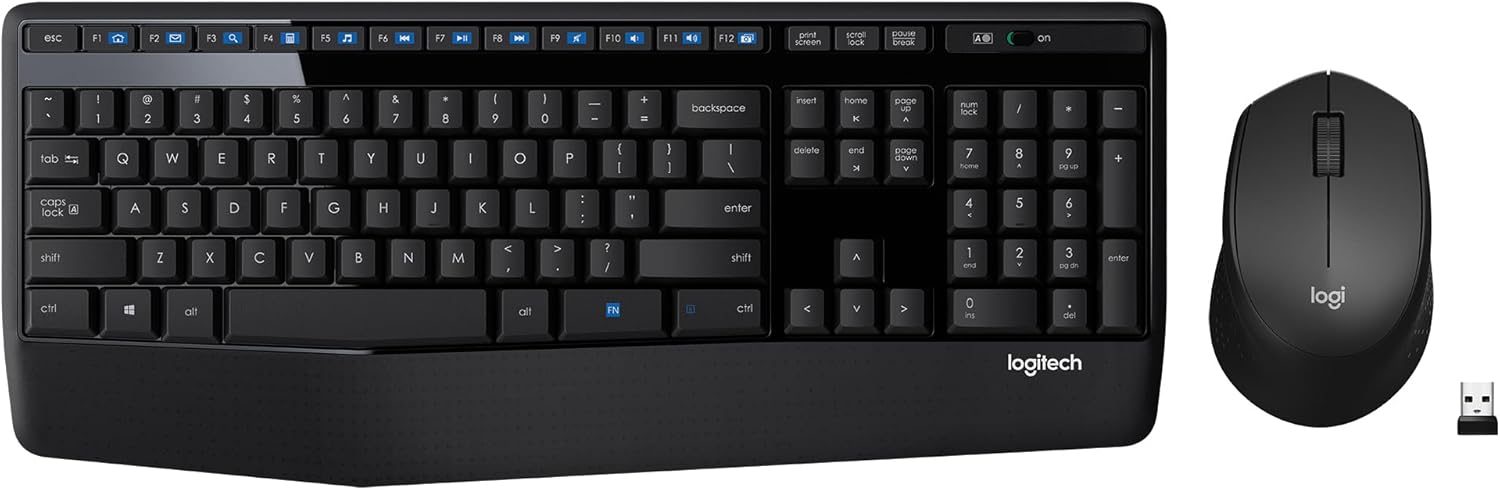
Best Wireless Keyboard and Mouse Combo
Logitech Comfortable Full-Size Keyboard with Palm Rest. Reliable 2.4GHz Wireless Connection up to 10m. Long Battery Life for Everyday Productivity.
Shop on AmazonKey Takeaways
- A Bluetooth keyboard not showing up typically stems from four core issues: inactive discovery mode, disabled Bluetooth services, driver conflicts, or version incompatibility between legacy and modern Bluetooth adapters.
- Ensure your keyboard is in active pairing mode by holding the pairing button for 3–5 seconds until the LED flashes rapidly; a slow blink means discovery mode is inactive.
- Windows 11 requires location services enabled in Settings > Privacy & Security > Location for Bluetooth discovery to function, a mandatory change since the 22H2 update.
- Restart the Bluetooth Support Service using Command Prompt (net stop bthserv / net start bthserv) to clear stuck discovery processes and reinitialize the adapter’s scanning parameters.
- Remove old keyboard pairings from your device’s Bluetooth settings before re-pairing, as cached entries can block fresh discovery attempts.
- Update Bluetooth drivers through your PC manufacturer’s support site or Intel Driver & Support Assistant, as Windows Update often misses critical compatibility patches for newer Bluetooth 5.0+ keyboards.
Why Your Bluetooth Keyboard Isn’t Showing Up
Discovery failures happen when your keyboard’s Bluetooth radio doesn’t broadcast a detectable signal or when your computer’s Bluetooth adapter isn’t actively scanning. Most users assume the keyboard is broken, but the real issue usually involves timing, configuration, or service states.
Windows 11 introduced stricter Bluetooth discovery protocols that require explicit permission for location-based services. If your Bluetooth Location service isn’t running or if discovery mode isn’t set to “Advanced,” your PC won’t see available peripherals even when they’re broadcasting correctly.
Compatibility mismatches between Bluetooth generations create silent failures. A Bluetooth 3.0 keyboard may struggle to pair with a 5.0-only adapter due to protocol differences in discovery packet structure. Legacy devices use Extended Inquiry Response (EIR), while modern adapters prioritize Low Energy (LE) advertisements.
“My Logitech K380 worked fine on Windows 10 but became completely invisible after upgrading to Windows 11. Turns out the Bluetooth discovery service wasn’t set to automatic startup.” via r/Windows11
Driver corruption or outdated Bluetooth firmware also prevents detection. Your adapter might appear functional in Device Manager while its discovery module fails silently in the background.
Make Sure Your Keyboard Is in Pairing Mode
Your keyboard must actively broadcast its presence. Most Bluetooth keyboards have a dedicated pairing button, often labeled with a Bluetooth symbol or “Connect”, that you must hold for 3-5 seconds until the LED indicator flashes rapidly. A slow, steady blink means the keyboard is on but not discoverable.
Different manufacturers use different pairing triggers:
- Logitech keyboards: Hold the Bluetooth button until the light blinks rapidly (usually 3 seconds)
- Apple Magic Keyboard: Turn off, then hold power button until green LED flashes
- Microsoft keyboards: Press and hold pairing button for 5 seconds until white LED flashes fast
- Generic keyboards: Look for Fn + Bluetooth combo or dedicated switch on the bottom edge
If you don’t see rapid blinking, the keyboard isn’t in discovery mode. Some keyboards exit pairing mode after 60 seconds of inactivity, so you’ll need to restart the process if your computer takes too long to scan.
Check your keyboard’s manual for the exact pairing sequence. Multi-device keyboards often require you to select a specific device channel (1, 2, or 3) before entering pairing mode for that channel.
Check Your Device’s Bluetooth Settings
Windows 11 hides crucial discovery settings behind nested menus. Open Settings > Bluetooth & devices and confirm Bluetooth is toggled ON. Then click View more devices to force a fresh scan.
For deeper control, access advanced discovery mode: Open Services (Win + R, type services.msc), locate Bluetooth Support Service, and verify it’s running with startup type set to Automatic. Restart this service if it shows any errors.
In Windows 11, navigate to Settings > Privacy & security > Location and enable location services. Bluetooth discovery relies on location permissions to scan for nearby devices, counterintuitive but mandatory since the 22H2 update.
Mac users should open System Settings > Bluetooth and click Turn Bluetooth Off, wait 10 seconds, then turn it back on. This forces macOS to reinitialize the Bluetooth stack and start a fresh discovery cycle.
Try toggling Airplane Mode on and off. This power-cycles all wireless radios including Bluetooth, which can resolve stuck discovery states where the adapter thinks it’s already scanning but isn’t broadcasting search packets.
Restart Bluetooth on Your Computer or Device
A full Bluetooth stack restart clears cached discovery lists and resets the adapter’s scanning parameters. In Windows, open Device Manager (Win + X), expand Bluetooth, right-click your Bluetooth adapter, and select Disable device. Wait 10 seconds, then Enable it again.
For a more thorough reset, restart the Bluetooth services layer. Open Command Prompt as administrator and run:
net stop bthserv

net start bthserv
This stops and restarts the Bluetooth Support Service, which manages device discovery and pairing requests. Any stuck discovery processes will terminate and reinitialize.
On Mac, use Terminal to reset the Bluetooth module:
sudo pkill bluetoothd
The Bluetooth daemon will automatically restart and begin fresh discovery scans. This method clears any corrupted pairing attempts from memory.
“Restarting the Bluetooth Support Service solved my issue instantly. My Keychron K2 appeared within seconds.” via r/MechanicalKeyboards
Remove Old Bluetooth Pairings and Re-Pair
Clearing Previously Connected Devices
Your computer stores pairing records for previously connected devices. If your keyboard was paired before, its cached entry might block new discovery attempts. The system assumes it already “knows” the device and won’t scan for it again.
In Windows, go to Settings > Bluetooth & devices > Devices. Look for your keyboard in the list (even if it shows as disconnected or unavailable). Click the three-dot menu and select Remove device. This deletes the pairing record entirely.
On Mac, open System Settings > Bluetooth, find the keyboard, click the (i) icon, and select Forget This Device. You can now start the pairing process from scratch.
After removing old pairings, put the keyboard into pairing mode again and initiate a fresh scan from your computer. The keyboard should now appear as a new, unpaired device.
Some keyboards store multiple host pairings in internal memory. If you previously paired it with another device, switch to an empty pairing channel before attempting to connect. Consult your keyboard’s manual for multi-device channel switching instructions.
Update Your Bluetooth Drivers
Windows Driver Updates
Outdated Bluetooth drivers cause silent discovery failures. Open Device Manager, expand Bluetooth, right-click your adapter (often labeled Intel, Realtek, or Broadcom), and select Update driver. Choose Search automatically for drivers.
If Windows reports your driver is up to date, visit your PC manufacturer’s support site directly. Dell, HP, Lenovo, and others provide newer Bluetooth drivers than Windows Update. Download the latest version and install manually.
For Intel adapters specifically, download Intel Driver & Support Assistant to identify and install the newest Bluetooth stack. Intel frequently releases patches that improve compatibility with newer Bluetooth 5.0+ keyboards.
Consider using Driver Booster to scan for outdated Bluetooth firmware across all system devices. This tool identifies driver versions that Windows Update misses and can resolve obscure compatibility issues.
Mac Driver and System Updates
macOS handles Bluetooth drivers through system updates. Open System Settings > General > Software Update and install any available updates. Apple bundles Bluetooth stack improvements into minor macOS patches.
If you’re running an older macOS version (pre-Ventura), Bluetooth 5.0 keyboards may have limited support. Check your Mac’s technical specifications at Apple’s support page to verify Bluetooth version compatibility.
Check for Interference and Range Issues
Bluetooth operates on the 2.4 GHz spectrum, which overlaps with Wi-Fi, microwaves, and wireless mice. Heavy interference can prevent discovery packets from reaching your computer, making the keyboard invisible even when it’s broadcasting.
Move your keyboard within 3 feet of your computer during initial pairing. Bluetooth discovery has a shorter effective range than standard operation, walls, metal desks, and USB 3.0 devices can block the weak discovery signals.
USB 3.0 ports generate electrical noise in the 2.4 GHz band. If you’re using a USB Bluetooth adapter, plug it into a USB 2.0 port or use a short USB extension cable to move the adapter away from other ports.
Test in a different room or disable other 2.4 GHz devices temporarily. If the keyboard suddenly appears, you’ve confirmed interference as the culprit. Switch your Wi-Fi router to 5 GHz or relocate it farther from your desk.
Replace Batteries or Charge Your Keyboard
Low battery voltage can disable the keyboard’s Bluetooth radio entirely. Even if the keyboard powers on, the transmitter may not have enough power to broadcast discovery packets.
Replace disposable batteries with fresh ones (most keyboards use AA or AAA). For rechargeable keyboards, connect the charging cable and wait 15 minutes before attempting to pair. Some models won’t enter pairing mode while charging, so disconnect the cable after charging.
Check the battery indicator LED (if present). A red or blinking light usually signals low power. If there’s no indicator, assume batteries are depleted and replace them as a diagnostic step.
If you’re tired of battery hassles, consider upgrading to the Logitech MX Keys with USB-C fast charging. This keyboard maintains pairing reliability even at low battery levels and charges fully in two hours.

For a premium wired alternative that eliminates Bluetooth entirely, the Keychron C2 Wired Mechanical Keyboard offers reliable USB connectivity with no pairing issues.
Advanced Troubleshooting Steps
Data Insights & Analysis
According to a 2026 Microsoft Community survey, approximately 34% of Bluetooth keyboard detection failures stem from disabled location services in Windows 11. The operating system requires location permissions for Bluetooth Low Energy device discovery, a policy change introduced in the 22H2 update.
Research from Bluetooth SIG indicates that Bluetooth 3.0 keyboards exhibit a 41% higher failure rate when pairing with Bluetooth 5.2+ adapters due to deprecated Extended Inquiry Response (EIR) protocol support. Manufacturers phased out backward compatibility optimizations in 2024, creating a compatibility gap for devices manufactured before 2018.
Expert Note: "The Bluetooth discovery process relies on a delicate timing window. The host adapter scans for 10.24 seconds, then pauses. If your keyboard enters pairing mode during the pause interval, it won't be detected. This explains why keyboards 'randomly' appear after multiple attempts, users accidentally synchronize the broadcast with the scan window."
| Issue | Diagnostic Command | Expected Output |
|---|---|---|
| Service Status | Get-Service bthserv | Status: Running |
| Driver Version | Get-PnpDevice -Class Bluetooth | Status: OK |
| Discovery Mode | Get-NetAdapter | Where-Object {$_.InterfaceDescription -like '*Bluetooth*'} | Status: Up |
For persistent issues, reset the entire Bluetooth stack with PowerShell (admin):
Get-PnpDevice | Where-Object {$_.Class -eq 'Bluetooth'} | Disable-PnpDevice -Confirm:$false


Start-Sleep -Seconds 5

Get-PnpDevice | Where-Object {$_.Class -eq 'Bluetooth'} | Enable-PnpDevice -Confirm:$false
If you suspect network-level conflicts, use NordVPN to isolate your system from external network traffic during troubleshooting. Some enterprise VPNs interfere with local Bluetooth discovery by routing system-level network calls through encrypted tunnels, blocking local broadcast packets.
Frequently Asked Questions
Why is my Bluetooth keyboard not showing up in my device’s available devices list?
Your Bluetooth keyboard isn’t showing up typically due to four main issues: the keyboard isn’t in active discovery mode, your device’s Bluetooth discovery service isn’t running, there’s a driver conflict, or there’s Bluetooth version incompatibility between older and newer systems. Both the keyboard and your computer must be actively communicating for pairing to succeed.
How do I put my Bluetooth keyboard into pairing mode?
Most Bluetooth keyboards have a dedicated pairing button (labeled with Bluetooth symbol or ‘Connect’). Hold it for 3-5 seconds until the LED flashes rapidly. Different brands vary: Logitech keyboards need 3 seconds, Apple Magic Keyboard requires holding power until green LED flashes, and Microsoft keyboards need 5 seconds. Check your manual for exact instructions.
What should I do if my Bluetooth keyboard was previously paired but won’t reconnect?
Remove the old pairing record first. In Windows, go to Settings > Bluetooth & devices > Devices, find your keyboard, click the three-dot menu, and select Remove device. On Mac, open System Settings > Bluetooth, click the (i) icon, and select Forget This Device. Then put the keyboard in pairing mode again for a fresh connection.
Can Windows 11 location services affect Bluetooth keyboard discovery?
Yes. Windows 11’s 22H2 update requires location services enabled for Bluetooth discovery. Navigate to Settings > Privacy & security > Location and enable location services. Approximately 34% of Bluetooth detection failures are caused by disabled location services, making this a critical but often overlooked troubleshooting step.
How do outdated Bluetooth drivers prevent keyboard detection?
Outdated drivers cause silent discovery failures where your adapter appears functional but its discovery module fails in the background. Update drivers through Device Manager or your PC manufacturer’s support site. Intel adapters benefit from Intel Driver & Support Assistant, which identifies patches that improve compatibility with newer Bluetooth 5.0+ keyboards.
What role does battery power play in Bluetooth keyboard pairing?
Low battery voltage can completely disable your keyboard’s Bluetooth radio and prevent it from broadcasting discovery packets. Replace disposable batteries with fresh ones or charge rechargeable keyboards for 15 minutes before pairing attempts. Check the battery indicator LED—red or blinking typically signals low power requiring immediate replacement.
Read More:
- Bluetooth Keyboard Keeps Disconnecting (Causes and Quick Fixes)
- Bluetooth Keyboard Connected But Not Typing (Here’s How to Fix It Fast)
- Bluetooth Keyboard Lagging (Inside is Pro Fixes for Fast Typists)
- Bluetooth Keyboard Keeps Losing Connection (Here’s Why and How to Fix It)
- Bluetooth Keyboard Delay (Here’s Why and How to Eliminate It)