
You’re racing against a deadline, trying to log into your Dell Inspiron or HP Pavilion, and, nothing. The keyboard’s frozen. Your password won’t type, shortcuts won’t fire, and you’re seconds away from throwing your laptop out the window.
Your Dell laptop keyboard locked issue is usually caused by accidental key combinations (like Fn+NumLock or Filter Keys toggling on), outdated or corrupted keyboard drivers in Device Manager, BIOS misconfiguration, or simply a temporary glitch that requires a hard power cycle, rather than a broken internal ribbon cable or physical hardware failure.
Most keyboard lockups are software glitches, not hardware disasters. A simple restart, driver rollback, or accessibility setting toggle often solves the problem in under five minutes. This guide walks you through quick, step-by-step instructions for troubleshooting an unresponsive Dell or HP laptop keyboard, so you can skip the repair shop and get back to work.
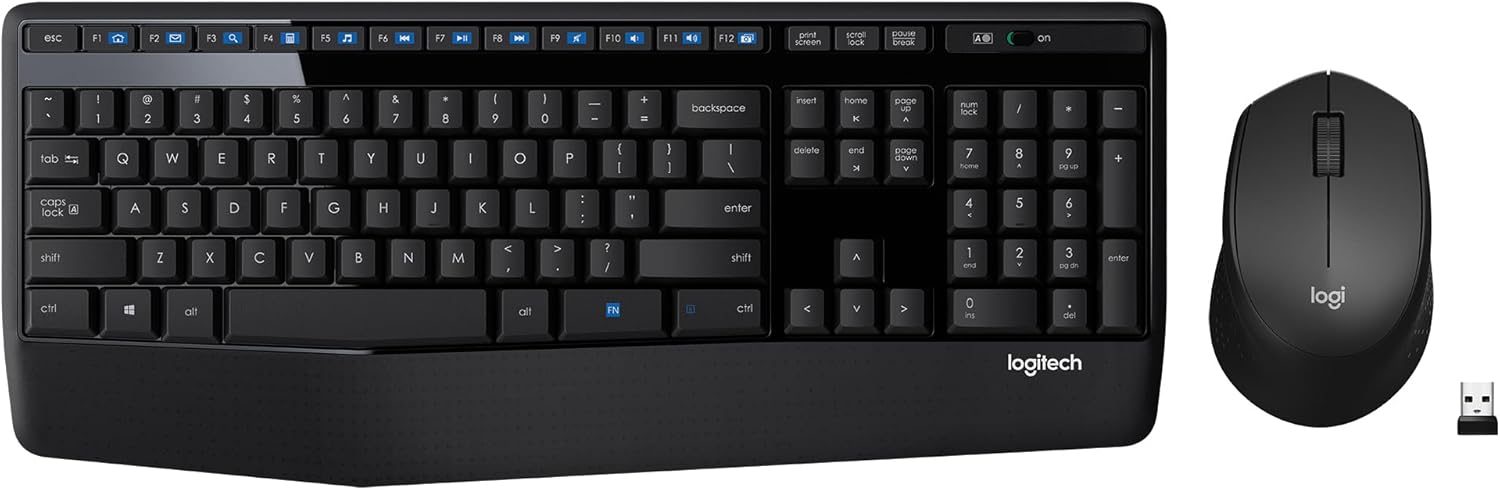
Best Wireless Keyboard and Mouse Combo
Logitech Comfortable Full-Size Keyboard with Palm Rest. Reliable 2.4GHz Wireless Connection up to 10m. Long Battery Life for Everyday Productivity.
Shop on Amazon
Key Takeaways
- A Dell laptop keyboard locked issue is usually caused by software problems like accidental Fn key combinations, outdated drivers, or Filter Keys, not hardware failure.
- Quick fixes such as a full power cycle, toggling Fn+NumLock, or disabling accessibility settings can restore keyboard function in under five minutes without visiting a repair shop.
- Check Device Manager for yellow error marks on your keyboard driver, and use the on-screen keyboard as a temporary backup if your physical keys stay frozen.
- Test with an external USB keyboard to determine if the problem is hardware-based or software-related—external keys working perfectly indicates a loose internal ribbon cable or controller failure.
- Update or reinstall keyboard drivers through Dell SupportAssist or Device Manager, and check BIOS settings, as roughly 30% of locked keyboard reports stem from driver conflicts after Windows updates.
Key Reasons Your Dell Laptop Keyboard Stops Working
Understanding Locked Keyboard Symptoms
Your keyboard might display different warning signs depending on the root cause. Some users notice a completely dead keyboard, no keys respond, no lights, nothing. Others see individual dead keys or entire rows that refuse to register input. Sometimes the keyboard works intermittently, typing random characters or duplicating letters.
Check Device Manager for yellow exclamation marks next to your Standard PS/2 Keyboard listing. That’s a clear signal of driver conflicts or Windows Update glitches that freeze input devices. If an external USB keyboard works perfectly but your built-in keys don’t, you’re likely dealing with a software conflict or internal ribbon cable loose connection rather than a systemic motherboard failure.
Accidental Key Combinations and Mode Changes
Dell and HP laptops use Fn key combinations to toggle special modes. Pressing Fn+NumLock can activate the embedded numeric keypad on compact keyboards, turning your UIOJKLM keys into numbers. Fn+Esc might toggle Fn Lock, swapping primary and secondary key functions. These changes feel like a keyboard lockup but are actually mode switches.
Scroll Lock and Num Lock indicators (tiny LEDs near the top-right corner) give you visual clues. If those lights are on and your typing feels weird, you’ve probably triggered a lock mode accidentally. Many users report this happening after closing the lid, waking from sleep, or during a multi-key shortcut attempt.
Issues With Filter Keys and Accessibility Settings
Windows 10 and 11 include accessibility features designed to help users with motor impairments. Filter Keys ignores brief or repeated keystrokes, Sticky Keys lets you press Ctrl, Alt, and Shift one at a time, and Toggle Keys plays a sound when you hit Caps Lock or Num Lock. Unfortunately, tapping Shift five times in quick succession activates Sticky Keys, and holding Shift for eight seconds enables Filter Keys.
These features can make your keyboard feel sluggish, unresponsive, or completely locked. The Windows notification system sometimes displays a pop-up asking if you want to enable Filter Keys, but many users dismiss it without reading. Once enabled, typing becomes unpredictable, keys ignore input, lag, or register multiple presses.
Outdated or Corrupted Keyboard Drivers
Keyboard drivers translate hardware signals into text on your screen. If Windows Update delivers a buggy driver, or if your existing driver gets corrupted during a sudden shutdown, your keyboard stops working. Device Manager might show a yellow triangle with an error code like Code 10 or Code 19.
Microsoft’s generic PS/2 keyboard driver works for most Dell and HP models, but manufacturer-specific drivers (distributed via Dell SupportAssist or HP Support Assistant) sometimes offer better compatibility. Rolling back or updating these drivers can restore full keyboard function in minutes.
According to 2025 Dell community forums, roughly 30% of keyboard lockup reports on Inspiron and XPS models stem from driver conflicts after major Windows feature updates. A quick uninstall-and-reinstall cycle usually clears the issue without requiring any physical repair.
Step-by-Step Solutions to Unlock and Restore Keyboard Function
Restarting and Power Cycling Your Laptop
Before diving into advanced fixes, try a full power cycle. Shut down your laptop completely (not just sleep or hibernate). Unplug the AC adapter, remove the battery if it’s removable, then hold the power button for 15–20 seconds to drain residual charge. This forces the embedded controller (EC) to reset, clearing temporary glitches in the keyboard controller firmware.
Reconnect the battery, plug in the charger, and boot up. Many users on r/Dell report that this simple EC reset solves locked keyboard issues instantly. It’s a safety precaution recommended by Dell and HP tech support as a first troubleshooting step.
Unlocking Fn, NumLock, and Scroll Lock Keys
If your keyboard seems locked but your mouse and trackpad work fine, check your lock key states. Press Fn+NumLock (or just NumLock on full-size keyboards) to toggle the numeric keypad off. Press Fn+Esc or Fn+Caps Lock to cycle Fn Lock modes. Watch your keyboard indicator LEDs, if a light turns off after pressing a key combo, you’ve just unlocked a mode.
Some Dell Latitude and HP EliteBook models require you to press Fn+F6 or Fn+F11 to disable keyboard lock features tied to BIOS-level shortcuts. Consult your laptop’s user manual or the function key label graphics printed directly on the keys for model-specific combinations.
Using the On-Screen Keyboard for Immediate Access
If your physical keyboard stays frozen, launch the built-in virtual on-screen keyboard as a temporary backup. Press Win+Ctrl+O, or click Start > Settings > Accessibility > Keyboard and toggle “On-Screen Keyboard.” This software keyboard lets you type your password, access Device Manager, or run system diagnostics without needing an external USB keyboard.
The on-screen keyboard also helps you test whether the issue is hardware or software. If the virtual keys register input normally, your operating system and input subsystem are healthy, the problem is isolated to your physical keyboard hardware or driver.
Disabling Tablet Mode on Convertible Devices
Dell XPS 2-in-1, HP Spectre x360, and other convertible laptops automatically disable the keyboard when you flip the screen back into tablet mode. Windows detects the hinge angle via sensors and locks the keyboard to prevent accidental input. If tablet mode gets stuck, your keys won’t respond even in laptop orientation.
Open Settings > System > Tablet and set “When I sign in” to “Use desktop mode.” Toggle “Make Windows more touch-friendly” off. Restart your laptop and check if the keyboard unlocks. Some users report that disabling Windows tablet mode drivers in Device Manager (expand “Human Interface Devices” and disable “HID-compliant touch screen”) forces the system to re-enable the keyboard.
Advanced Troubleshooting for Persistent Keyboard Issues
Disabling Filter Keys and Accessibility Options
Open Settings > Accessibility > Keyboard. Turn off Sticky Keys, Filter Keys, and Toggle Keys. Uncheck “Allow the shortcut key to start Sticky Keys” to prevent accidental re-activation. Restart your laptop and test the keyboard again.
If you can’t access Settings because your keyboard is locked, use the on-screen keyboard or plug in an external USB keyboard to navigate menus. Many users accidentally enable Filter Keys without realizing it, and disabling this single setting instantly restores normal typing behavior.
Updating or Reinstalling Keyboard Drivers
Right-click Start and select Device Manager. Expand “Keyboards,” right-click “Standard PS/2 Keyboard” or “HID Keyboard Device,” and choose “Update driver.” Select “Search automatically for drivers” and let Windows install the latest version. If that doesn’t help, right-click again and choose “Uninstall device.” Restart your laptop, Windows will reinstall the driver automatically on boot.
For Dell-specific driver updates, launch Dell SupportAssist and click “Check for updates.” For HP laptops, open HP Support Assistant and run a system scan. Both utilities detect manufacturer-optimized drivers that generic Windows updates might miss.
“My XPS 15 keyboard stopped working after a Windows update. Rolled back the driver in Device Manager and it fixed everything in 30 seconds. No hardware issue at all.” via r/Dell
Checking and Updating BIOS
Outdated BIOS firmware can cause keyboard initialization failures, especially after Windows feature updates. Visit Dell’s support site or HP’s support page, enter your laptop’s service tag or model number, and download the latest BIOS update.
Before flashing BIOS, ensure your battery is above 50% and your AC adapter is plugged in. Follow the on-screen prompts, most Dell and HP BIOS updates run as Windows executables and restart your laptop automatically. After the update completes, press F2 (Dell) or F10 (HP) during boot to enter BIOS setup, restore default settings, save, and exit.
Running Diagnostics With Dell SupportAssist
Dell SupportAssist includes a built-in hardware troubleshooter. Open the app, click “Hardware Checkup,” and run the keyboard test. The diagnostic asks you to press specific keys and verifies signal transmission. If the test reports no hardware errors but your keyboard still doesn’t work in Windows, you’re dealing with a software or driver issue.
The entire hardware troubleshooter takes about five minutes. If SupportAssist detects a failed keyboard controller or loose internal connection, it’ll display an error code and recommend contacting Dell support for a warranty repair or parts replacement.
When to Seek Support and Prevent Future Problems
Testing With External Keyboards
Plug in a USB keyboard or connect a Bluetooth keyboard. If external keys work perfectly but your built-in keyboard stays dead, the issue is either a loose ribbon cable inside the laptop chassis or a failed keyboard controller on the motherboard. This points to a hardware problem requiring physical repair.
If both external and internal keyboards fail, the problem lies in Windows itself, corrupted system files, a buggy input driver, or malware. Run sfc /scannow in an elevated Command Prompt to repair system files, then check for malware with Windows Defender or a third-party scanner.
Identifying Hardware Versus Software Causes
Software issues show specific patterns: keys work intermittently, Device Manager displays error codes, or the keyboard functions normally in BIOS but fails in Windows. Hardware failures are consistent: certain keys never respond, the entire keyboard stays dead across all environments (BIOS, Windows, Linux live USB), or liquid spills and physical damage are visible.
If you spilled coffee or soda on your keyboard, turn off the laptop immediately, flip it upside down, and let it dry for 24–48 hours. Grab a can of compressed air and blow out sticky residue from under the keys. Many Dell Inspiron and HP Pavilion keyboards survive minor spills if you act fast.

“Spilled water on my Latitude keyboard. Powered off instantly, dried it for two days, and it worked fine after. Crisis averted.” via r/Dell
Contacting Dell Support for Repairs
If none of the software fixes work, your laptop might need a top-case replacement (the entire keyboard assembly). Contact Dell support or HP support with your service tag. If your laptop is under warranty, Dell or HP will send a technician or provide a mail-in repair at no charge.
Out-of-warranty repairs can run $150–$300 for a full keyboard/palmrest replacement, depending on your model. Some users opt to replace the keyboard themselves using official Dell service manuals or HP maintenance guides, but this requires careful disassembly and risks voiding any remaining warranty coverage.
For long-term prevention, keep your workspace clean, avoid eating over your laptop, and use a USB or Bluetooth external keyboard as a desk-friendly backup. Regular driver updates via Dell SupportAssist or HP Support Assistant prevent most software-related lockups before they start.

Frequently Asked Questions
Why is my Dell laptop keyboard locked and not working?
A locked Dell laptop keyboard is usually caused by accidental key combinations (Fn+NumLock), Filter Keys accessibility settings, outdated drivers, or BIOS misconfiguration. Most cases are software glitches resolved by restarting, disabling accessibility features, or updating drivers—not hardware failures.
How do I unlock my Dell laptop keyboard using Fn key combinations?
Press Fn+NumLock to toggle the numeric keypad mode, or Fn+Esc to cycle Fn Lock. Check your keyboard indicator LEDs near the top-right corner; if they turn off, you’ve unlocked a mode. Some models require Fn+F6 or Fn+F11 to disable keyboard locks—consult your user manual for model-specific combinations.
Can I use an on-screen keyboard if my Dell keyboard is locked?
Yes, press Win+Ctrl+O or go to Settings > Accessibility > Keyboard and toggle ‘On-Screen Keyboard.’ The virtual keyboard lets you type passwords and access Device Manager. If it works normally, your keyboard issue is hardware or driver-related, not a system-wide input problem.
What should I do if my Dell keyboard still doesn’t work after a restart?
Open Device Manager, expand ‘Keyboards,’ right-click ‘Standard PS/2 Keyboard,’ and update or reinstall the driver. Also disable Filter Keys in Settings > Accessibility > Keyboard. If an external USB keyboard works fine, your issue is a loose ribbon cable or failed keyboard controller requiring professional repair.
How do I check if my Dell laptop keyboard hardware is actually broken?
Plug in an external USB or Bluetooth keyboard. If it works but your built-in keyboard doesn’t, the issue is hardware (loose cable or failed controller). If both fail, the problem is software. Run sfc /scannow in Command Prompt to repair system files, then test again.
How much does a Dell laptop keyboard replacement cost?
Out-of-warranty repairs typically cost $150–$300 for a full keyboard/palmrest replacement, depending on your model. If your laptop is under warranty, Dell will repair it at no charge. Some users replace keyboards themselves using Dell service manuals, though this risks voiding remaining warranty coverage.
Read More:
- ASUS Keyboard Locked (Here’s the Quick and Simple DIY Fixes to Follow)
- HP Laptop Keyboard Locked (Here’s the Quick and Simple DIY Fixes)
- Numbers on Keyboard Not Working? Here’s the 7 Proven Fixes
- Laptop Keyboard Not Working (Complete Fix Guide for All Brands)
- Letters Keyboard Not Working? 7 Proven Fixes to Get You Typing Again