
Your MacBook keyboard suddenly stopped responding. You’re typing frantically, but nothing appears on screen, or worse, each keystroke produces a strange clicking sound without any letters showing up. This isn’t a hardware failure: it’s likely a software lock you triggered accidentally.
Most MacBook keyboard locks stem from accessibility shortcuts you activated by mistake, specifically Mouse Keys, Slow Keys, or Sticky Keys, or from system-level freezes that temporarily disable input. A simple settings adjustment or keyboard shortcut can unlock your keyboard in seconds without restarting your Mac.
Before you panic or schedule a repair, walk through these proven unlock procedures. You’ll learn how to disable the accessibility features that steal your letter keys, exit locked states, and restore full keyboard function without any technical expertise required.
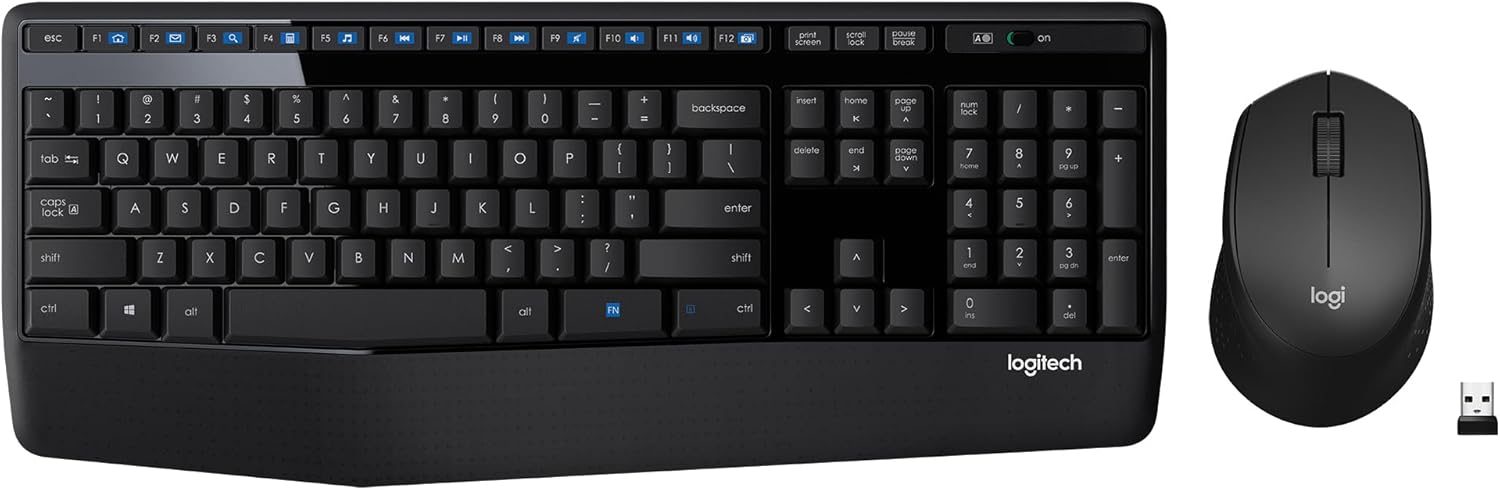
Best Wireless Keyboard and Mouse Combo
Logitech Comfortable Full-Size Keyboard with Palm Rest. Reliable 2.4GHz Wireless Connection up to 10m. Long Battery Life for Everyday Productivity.
Shop on Amazon
Key Takeaways
- A MacBook keyboard locked state is usually caused by accidentally activated accessibility features like Mouse Keys, Slow Keys, or Sticky Keys—not a hardware failure requiring repair.
- Disable accessibility features through System Settings > Accessibility by turning off Mouse Keys, Slow Keys, and Sticky Keys, and uncheck the shortcut toggles to prevent accidental reactivation.
- Perform a controlled restart, reset the SMC (System Management Controller), or reset NVRAM to clear software locks and restore normal keyboard function without technical expertise.
- Clean your keyboard with compressed air and a lint-free cloth to remove debris or sticky residue that may prevent proper key contact and registration.
- If software fixes fail and specific keys never register or feel mushy, hardware damage may require Apple’s Keyboard Service Program or an external keyboard replacement.
- Update macOS through System Settings > Software Update and run Apple Diagnostics (restart while holding D) to rule out driver corruption or hardware issues before scheduling professional repair.
Why Your MacBook Keyboard Suddenly Stops Working
Software Glitches and System Freezes
MacOS occasionally experiences input-handling bugs that temporarily freeze your keyboard. Applications running in full-screen mode, especially video players, browsers, or presentation software, can monopolize system resources and prevent keyboard signals from reaching the operating system. If you recently updated macOS or installed new software, driver conflicts might interrupt communication between your keyboard hardware and the system.
Another common culprit is login screen lockouts. If you entered your password incorrectly multiple times, macOS might briefly disable input. Similarly, kiosk mode or parental control software can lock your keyboard until you enter an administrator password. Cat owners often discover their keyboard locked after their pet walked across the keys, triggering hidden accessibility shortcuts.
Accessibility Features That Lock Your Keyboard
MacOS includes powerful accessibility tools, but they can lock your keyboard if activated by accident. Mouse Keys is the most notorious offender. When enabled, it converts your letter keys (U, I, O, J, K, L, 7, 8, 9) into mouse cursor controls, making typing impossible. You’ll press letters but see no text, just cursor movement or clicking sounds.
Slow Keys forces macOS to ignore brief keypresses, requiring you to hold each key for a set duration before it registers. If you accidentally enabled it, rapid typing produces zero output. Sticky Keys locks modifier keys (Command, Shift, Option) in the “on” position, causing unintended shortcuts and preventing normal typing. These features activate via five rapid Option-key presses or Command-key taps, and many users trigger them unknowingly during gaming or cleaning their keyboard.
“My MacBook keyboard started clicking instead of typing. Turns out I enabled Mouse Keys by mashing Option during a Zoom call. Disabling it in Accessibility fixed everything instantly.” via r/mac
Quick Fixes You Should Try First
Restart Your MacBook the Right Way
A controlled restart clears temporary software locks and resets input drivers. If your keyboard is completely unresponsive, force-restart by holding the power button for 10 seconds until your MacBook shuts down, then press it again to boot. For Touch ID models, press and hold the Touch ID button (top-right corner) until the screen goes black.
If you still have trackpad or mouse access, click the Apple menu, select Restart, and confirm. This method preserves open files and allows macOS to reload keyboard drivers cleanly. After reboot, test your keyboard immediately, many software-based locks disappear after a fresh start.
Check for Physical Obstructions and Clean Your Keyboard
Debris under your keys can prevent proper contact. Turn off your MacBook, tilt it at a 75-degree angle, and use compressed air to blow out dust, crumbs, or pet hair. Spray in short bursts from left to right, then rotate and repeat. Avoid shaking the can or spraying upside down, which releases liquid propellant.
Inspect each key for visible blockages. Sticky residue from spills requires a slightly damp, lint-free cloth (not dripping wet). Gently wipe the keycap surfaces and the gaps around each key. For stubborn grime, consider the Keyboard Cleaner Kit, which includes precision brushes and gel for reaching under keys without damaging the butterfly or scissor mechanism.

Disable Mouse Keys and Other Accessibility Settings
Navigate to System Settings (macOS Ventura/Sonoma) or System Preferences (older versions), then click Accessibility. In the left sidebar, select Pointer Control (or Mouse & Trackpad on older macOS). Look for the Enable Mouse Keys toggle and turn it off. Your letter keys should immediately resume normal typing.
Next, check Keyboard under Accessibility. Disable Slow Keys and Sticky Keys. If Sticky Keys is active, you’ll see a small icon in your menu bar showing locked modifier keys, click it and choose “Turn Off Sticky Keys.” Also disable Enable Key Repeats if it’s preventing rapid typing.
To prevent accidental reactivation, scroll down and uncheck “Use Option key five times to toggle Mouse Keys” and “Press Shift key five times to toggle Sticky Keys.” These shortcuts are helpful for accessibility users but frustrating if triggered accidentally. Your settings should now look like this:
| Accessibility Feature | Recommended Setting | Why |
|---|---|---|
| Mouse Keys | Off | Prevents letter keys from controlling cursor |
| Slow Keys | Off | Eliminates delay before keypress registers |
| Sticky Keys | Off | Stops modifier keys from locking |
| Shortcut Toggles | Disabled | Prevents accidental activation |
Reset the SMC (System Management Controller)
The System Management Controller manages low-level hardware functions, including keyboard input. Resetting it can resolve persistent input locks. The procedure varies by MacBook model:
For MacBooks with T2 chip or Apple Silicon (M1/M2/M3):
- Shut down your MacBook completely
- Press and hold the power button for 10 seconds
- Release, wait 5 seconds, then press power again to boot
For Intel MacBooks without removable battery:
- Shut down your MacBook
- Press and hold Shift + Control + Option (left side) + Power button for 10 seconds
- Release all keys simultaneously, then press Power to start
After the SMC reset, your keyboard should respond normally. Test by opening TextEdit and typing a full sentence. If letters appear correctly and accessibility features remain off, the lock is resolved. This reset also fixes issues like non-responsive trackpads, USB port failures, and battery charging anomalies.
“SMC reset fixed my 2019 MacBook Pro keyboard after it stopped working mid-presentation. Literally saved my demo.” via Apple Support Communities
Reset the NVRAM/PRAM to Clear Keyboard Settings
NVRAM (non-volatile random-access memory) stores keyboard layout preferences, modifier key mappings, and accessibility settings. Corrupted NVRAM can lock your keyboard into an unresponsive state.
Intel MacBooks only (Apple Silicon Macs reset NVRAM automatically):
- Shut down your MacBook
- Press Power, then immediately press and hold Option + Command + P + R
- Keep holding for about 20 seconds (you’ll hear two startup chimes or see the Apple logo appear twice)
- Release the keys and let your MacBook boot normally
After the reset, macOS loads default keyboard settings. You may need to reconfigure display resolution, sound volume, and time zone, but your keyboard should function without accessibility locks. Open System Settings and verify that Mouse Keys, Slow Keys, and Sticky Keys remain disabled.
This reset also clears custom keyboard layouts. If you use a non-English input method, reselect it in System Settings > Keyboard > Input Sources.
Update or Reinstall Your Keyboard Drivers in macOS
MacOS manages keyboard drivers automatically, but outdated system files can cause input failures. Check for updates by opening System Settings > General > Software Update. Install any pending macOS updates, then restart your MacBook.
If updates don’t resolve the issue, the keyboard driver may be corrupted. Unlike Windows, macOS doesn’t let you manually reinstall individual drivers, but you can force the system to reload input drivers:
- Open Terminal (Applications > Utilities)
- Type
sudo pkill -9 SystemUIServerand press Enter - Enter your administrator password when prompted
- The menu bar will flicker as the UI server restarts, reloading input handlers
When to Consider Hardware Repair or Replacement
If software fixes fail, hardware damage might be the culprit. MacBook keyboards, especially 2016–2019 butterfly models, are prone to mechanical failure. Signs of hardware issues include:
- Specific keys never register, even after all software resets
- Keys physically stick or feel mushy
- Liquid damage indicators (red or pink marks visible inside ports)
- Keyboard works in Safe Mode but fails in normal boot (rare, but indicates kernel extension conflict)
Apple’s Keyboard Service Program covers eligible MacBook and MacBook Pro models with butterfly keyboards. Check if your serial number qualifies for free repair at an Apple Store or authorized service provider.
For older MacBooks outside warranty, a third-party external keyboard offers an immediate workaround. The Logitech MX Keys for Mac provides a superior typing experience with backlit keys, multi-device pairing, and USB-C charging. It’s the ultimate desk upgrade if your built-in keyboard requires professional repair.

Before scheduling service, boot into Apple Diagnostics (restart while holding D) to run hardware tests. If diagnostics report keyboard errors (codes starting with “VFK” or “VFF”), hardware replacement is necessary. Contact Apple Support or visit an Apple Store Genius Bar for evaluation.
Frequently Asked Questions
Why is my MacBook keyboard locked and not typing?
Your MacBook keyboard is likely locked due to accidentally activated accessibility features like Mouse Keys, Slow Keys, or Sticky Keys. These can be triggered by rapid key presses during gaming or accidental key combinations. Software glitches, system freezes, or full-screen applications monopolizing resources can also lock keyboard input temporarily.
How do I unlock my MacBook keyboard quickly?
Navigate to System Settings > Accessibility > Pointer Control and disable Mouse Keys. Then check Keyboard settings to turn off Slow Keys and Sticky Keys. If locked, click the modifier key icon in your menu bar to disable Sticky Keys instantly. For persistent locks, try restarting your MacBook or resetting the SMC.
What is Mouse Keys and why does it lock my keyboard?
Mouse Keys converts letter keys (U, I, O, J, K, L, 7, 8, 9) into mouse cursor controls when enabled. Accidental activation during typing, gaming, or keyboard cleaning prevents normal text input. Disabling it in System Settings > Accessibility > Pointer Control immediately restores keyboard function.
Can resetting the SMC fix a locked MacBook keyboard?
Yes, resetting the System Management Controller can resolve persistent keyboard locks. For Apple Silicon Macs, hold the power button for 10 seconds, release, wait 5 seconds, then power on. For Intel Macs, press Shift + Control + Option + Power for 10 seconds. This resets low-level hardware functions managing keyboard input.
Is my MacBook keyboard damage permanent or just software-locked?
Most keyboard locks are temporary software issues resolved by disabling accessibility features or restarting. However, if specific keys never register after all fixes, feel mushy, or stick physically, hardware damage may require repair. Run Apple Diagnostics (restart holding D) to confirm hardware failure or check Apple’s Keyboard Service Program eligibility.
How do I prevent accidental activation of keyboard-locking shortcuts?
In System Settings > Accessibility, uncheck ‘Use Option key five times to toggle Mouse Keys’ and ‘Press Shift key five times to toggle Sticky Keys.’ This prevents these features from activating accidentally during gaming, Zoom calls, or keyboard cleaning while maintaining normal accessibility for those who need it.
Read More:
- MacBook Keyboard Not Working (Here’s Why and Proven Solutions)
- MacBook Keyboard Not Responding (Causes and Fast Fixes That Work)
- MacBook Keyboard Keys Not Working (Here’s the Expert Repair Guide)