
You plugged in your external monitor expecting a smooth dual-screen setup, but instead you’re staring at a black screen with a “No Signal” message blinking back at you. Frustrating, right? Especially when you’ve got work piling up or a streaming marathon planned. Before you panic and assume your laptop’s video port is fried or your monitor’s backlight panel is toast, take a breath, most of these connection failures are simple software mismatches or loose cable issues that you can fix yourself in under ten minutes.
The most common cause of an external monitor for laptop not working is a misconfigured projection mode (like “PC screen only” blocking the second display), a loose or incompatible cable connection, or an outdated graphics driver that’s preventing Windows from detecting the external screen, and you can resolve nearly all of these with straightforward checks like reseating your HDMI or DisplayPort cable, pressing Win+P to toggle display modes, verifying the monitor’s input source matches your cable type, updating your display adapter in Device Manager, or simply restarting both devices to clear cached signal locks.
This guide walks you through the entire diagnostic and repair process step by step, starting with hardware connections and moving through Windows settings, driver troubleshooting, and advanced workarounds, all without requiring a technician or expensive replacement parts.
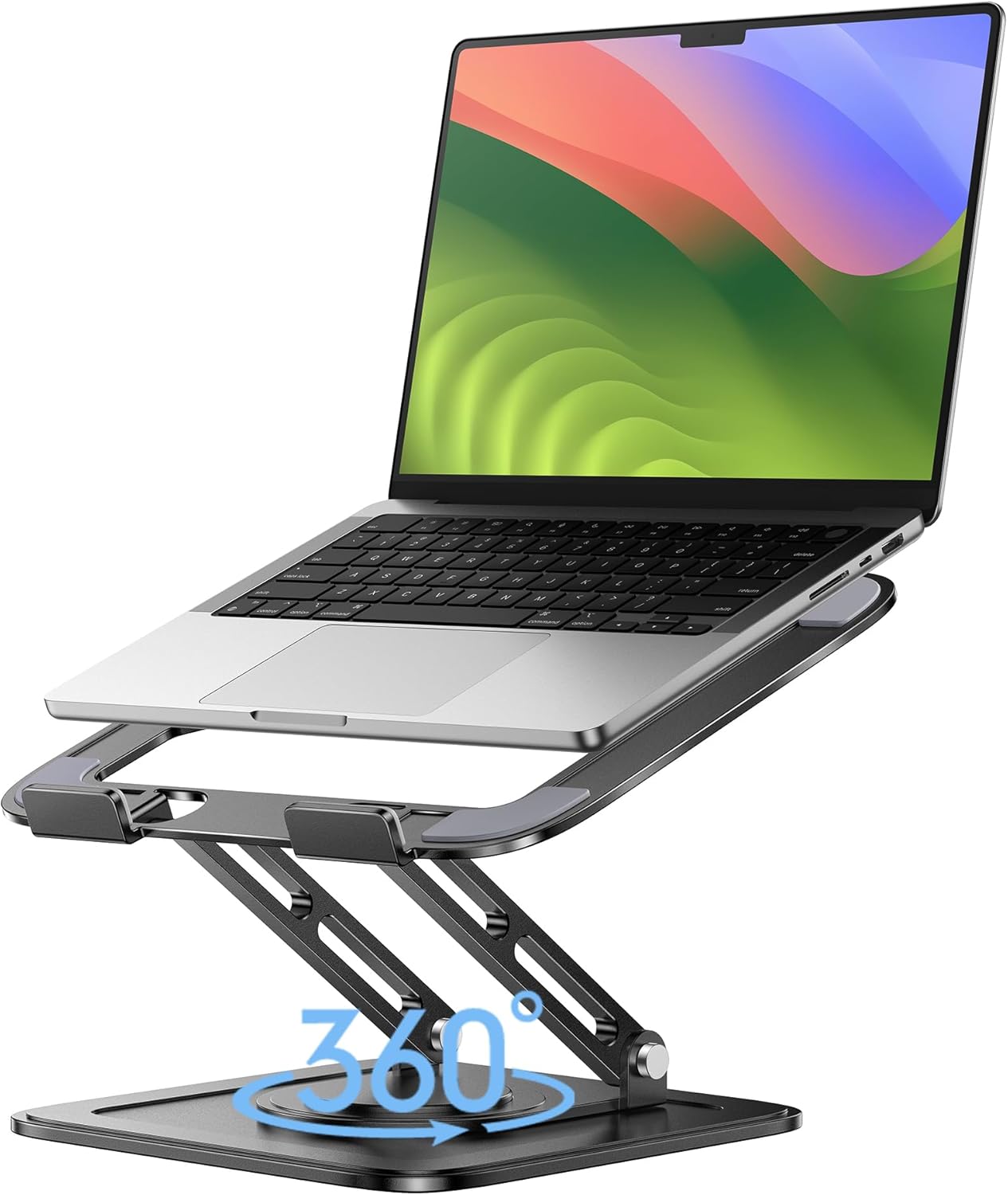
Best Laptop Stand (with 360° Base)
Keep Your Laptop Cooler & More Comfortable with 360° Rotating Base. Improve Airflow & Reduce Heat. Adjustable Height & Viewing Angle.
Shop on Amazon
Key Takeaways
- An external monitor for laptop not working is usually caused by misconfigured projection modes, loose cables, or outdated drivers—issues you can fix in under 10 minutes with basic troubleshooting.
- Always reseat your HDMI or DisplayPort cable on both ends and verify the monitor’s input source manually matches your physical cable connection, as this resolves the majority of ‘No Signal’ errors.
- Press Win+P to toggle display modes and switch from ‘PC screen only’ to ‘Extend’ or ‘Duplicate’; if you accidentally hit this shortcut, it silently disables external displays.
- Update your graphics drivers directly from Intel, NVIDIA, or AMD’s official website rather than relying on Windows Update, and roll back recent driver updates if the monitor stopped working immediately after installation.
- Test your monitor with a different laptop or TV and try a different cable to isolate whether the problem is with the monitor, cable, or laptop hardware.
- If your external monitor flickers or shows ‘No Signal,’ lower the resolution and refresh rate in Display settings (try 1920×1080 at 60 Hz), as older cables and integrated graphics may not support high bandwidth.
Diagnosing Hardware and Connection Issues
Checking Cables, Ports, and Power
Start by unplugging your video cable from both the laptop and the monitor, then plug it back in firmly. Sounds simple, but loose connections account for a massive chunk of “broken” external displays. Check both ends, wiggle the connectors gently to confirm they’re seated all the way. If you’re using a USB-C or Thunderbolt cable, make sure it’s rated for video output (some cheap USB-C cables only carry data and power, not DisplayPort signals). Inspect the cable itself for visible kinks, fraying, or bent pins inside the connector. A damaged cable won’t carry a stable signal.
Next, verify that your monitor is actually powered on. Look for a small LED indicator on the front or bottom edge, if it’s off or amber instead of green or blue, the monitor isn’t receiving power. Press the power button and listen for a faint hum or watch for the backlight to flicker. Confirm the monitor’s power cable is firmly plugged into both the monitor and the wall outlet. Try a different outlet if you suspect a dead socket.
If you’re using a laptop with multiple video ports (HDMI, DisplayPort, USB-C), test a different port. Some older laptops have dedicated graphics outputs tied to the discrete GPU, while others route everything through integrated graphics. Switching ports can bypass a dead or misconfigured output.
Verifying the Input Source on the Monitor
This is where a lot of users get stuck. Monitors don’t auto-switch inputs like TVs often do, you need to manually select the correct source. Grab your monitor’s physical button panel (usually on the bottom or side) and press the “Input” or “Source” button. You’ll see a menu listing HDMI 1, HDMI 2, DisplayPort, VGA, DVI, or USB-C. Navigate with the monitor buttons and select the input that matches your physical cable.
For example, if you plugged an HDMI cable into the monitor’s HDMI 2 port but the monitor is still set to HDMI 1 or DisplayPort, you’ll get “No Signal” even though the laptop is outputting video perfectly. Cycle through every available input to rule out mismatches. Some monitors auto-scan, but many don’t, especially older or budget models.
“Had my monitor set to HDMI 1, but the cable was in HDMI 2. Felt like an idiot but fixed it in 10 seconds.” via r/techsupport
Testing With Different Cables or Monitors
If you’ve confirmed power, ports, and input source but still see nothing, swap in a different cable. Borrow an HDMI or DisplayPort cable from your TV, gaming console, or a friend. Cables fail more often than people realize, internal wiring can break even if the outer sheath looks fine.
If a new cable doesn’t help, connect your laptop to a different external monitor or TV. If the second screen works instantly, your original monitor likely has a hardware fault (blown backlight, dead T-Con board, or failed panel). If the laptop still won’t output to any external display, the issue is on the laptop side, possibly a disabled video port, driver corruption, or a blown video output chip.
You can also test your monitor with a different laptop or desktop to confirm it’s functioning. Plug it into another computer and see if it lights up. This cross-testing isolates the problem quickly: either the monitor is dead, the cable is bad, or the laptop has a configuration or hardware issue.
Understanding USB-C and Docking Station Compatibility
USB-C is convenient but confusing. Not every USB-C port supports video output, some are data-only or charging-only. Check your laptop’s manual or look for a small DisplayPort or Thunderbolt icon next to the USB-C port. If there’s no icon, that port probably won’t push video. You’ll need a USB-C port with DisplayPort Alternate Mode (DP Alt Mode) or Thunderbolt 3/4 support.
Docking stations add another layer of complexity. Cheap USB-C hubs often fail to negotiate proper video signals, especially with 4K or high-refresh-rate monitors. Try bypassing the dock and connecting your monitor directly to the laptop with a single cable. If the display suddenly works, the dock is the bottleneck, either it’s underpowered, incompatible with your laptop’s chipset, or needs a firmware update. Check the dock manufacturer’s website for driver downloads or BIOS updates that address video passthrough bugs.
Windows Settings and Detection Steps
Using Windows Display Settings
Press Win+P on your keyboard. A blue sidebar labeled “Project” will slide in from the right. You’ll see four options: PC screen only, Duplicate, Extend, and Second screen only. If “PC screen only” is selected, Windows is actively blocking the external monitor. Click “Extend” to enable dual displays, or choose “Duplicate” if you want the same image on both screens.
If you don’t see the sidebar or nothing changes, right-click the desktop and select Display settings. Scroll down to the “Multiple displays” section. If Windows has already detected your monitor, you’ll see two numbered rectangles representing your laptop screen and the external display. Click and drag them to match your physical desk layout (left, right, above, below). If you see only one rectangle, Windows hasn’t detected the second screen yet, move on to the Detect button.
The Detect Button and Arrange Displays
Still in Display settings, scroll to “Multiple displays” and click the blue Detect button. Windows will re-scan all video outputs and query connected monitors. Wait five to ten seconds. If the external monitor appears, the rectangles will update. Click “Identify” to flash a number on each screen so you know which is which.
Sometimes Windows detects the monitor but assigns it a weird resolution or refresh rate that the panel can’t handle, leaving the screen black. Click the monitor rectangle in Display settings, scroll down to “Display resolution,” and try a lower setting like 1920×1080 at 60 Hz. Apply the change and see if the screen wakes up. You can fine-tune later once you confirm the connection works.
If the Detect button does nothing, reboot your laptop while the external monitor is plugged in and powered on. Windows often refreshes the display topology during startup, especially after driver updates or profile changes.
Selecting Projection Modes and Multiple Monitor Options
The “PC screen only” mode is a silent killer. It’s easy to hit Win+P by accident and switch modes without realizing it. If your laptop screen shows everything perfectly but the external monitor says “No Signal,” you’re probably stuck in PC screen only. Press Win+P again and select Extend or Duplicate.
Some laptops have a dedicated function key (like Fn+F4 or Fn+F8) that cycles through projection modes. If you pressed it by mistake, press it again until the external monitor lights up. The key usually has a monitor icon printed on it. Check your laptop’s manual if you’re not sure which function key controls displays.
If you’re running Windows 11, the projection panel looks slightly different but works the same way. The four modes are identical: PC screen only, Duplicate, Extend, Second screen only. Extend is the most common choice for productivity, it gives you one continuous desktop across both screens.
Troubleshooting Driver and Software Problems
Updating and Rolling Back Display Drivers
Outdated or corrupted graphics drivers are a top cause of external monitor failures. Right-click the Start button and select Device Manager. Expand the “Display adapters” category. You’ll see your integrated GPU (Intel, AMD Radeon, or similar) and possibly a discrete GPU (NVIDIA GeForce, AMD Radeon dedicated). Right-click each adapter and choose Update driver > Search automatically for drivers. Windows will check for the latest version and install it.
If you recently updated your driver and the monitor stopped working immediately after, try rolling back. Right-click the display adapter, select Properties > Driver tab > Roll Back Driver. This reverts to the previous version. If the button is greyed out, there’s no older driver stored, skip to a clean reinstall instead.
For the most stable drivers, visit the manufacturer’s website directly. Intel, NVIDIA, and AMD all offer driver download pages where you can grab the newest release for your exact GPU model. Download the installer, run it, and restart. Sometimes Windows Update pushes generic drivers that conflict with specific laptop hardware configurations.
Using Device Manager for Driver Solutions
Open Device Manager again and look for yellow exclamation marks next to “Display adapters” or “Monitors.” A yellow triangle means the driver failed to load or encountered an error. Right-click the flagged device and select Properties > General tab. Check the “Device status” box for error codes like Code 43, Code 31, or “This device cannot start.”
To perform a clean driver reinstall, right-click the display adapter, choose Uninstall device, and check the box labeled “Delete the driver software for this device.” Click Uninstall, then restart your laptop. Windows will automatically reinstall a basic driver on boot. Once you’re back in, install the latest driver from the manufacturer’s site.
If the external monitor appears under “Monitors” in Device Manager but shows as “Generic PnP Monitor” or has a yellow triangle, right-click it and select Update driver. Point Windows to the monitor manufacturer’s website if they offer specific drivers (rare, but some high-end displays need them).
Running sfc /scannow and System Utilities
Corrupted system files can break display detection. Press Win+X and select Windows Terminal (Admin) or Command Prompt (Admin). Type sfc /scannow and hit Enter. The System File Checker will scan and repair damaged Windows files. This takes five to fifteen minutes. If it finds and fixes issues, restart and test the external monitor again.
For deeper repairs, run the Deployment Image Servicing and Management tool. In the same admin terminal, type DISM /Online /Cleanup-Image /RestoreHealth and press Enter. DISM downloads fresh system files from Windows Update and replaces corrupted copies. It’s slower than sfc but more thorough. Restart after completion.
Some users also find success by disabling and re-enabling the display adapter in Device Manager. Right-click the GPU, choose Disable device, wait ten seconds, then right-click again and select Enable device. This forces Windows to reinitialize the driver stack.
Fixing Issues After Windows Update
Windows Update occasionally pushes faulty graphics drivers or patches that break external monitor handshakes. If your display worked fine yesterday and died right after an update, roll back the update. Go to Settings > Windows Update > Update history > Uninstall updates. Find the most recent update (especially ones labeled “Feature update” or “Driver update”), select it, and click Uninstall. Restart and test.
You can also pause Windows Update for a week or two while you troubleshoot. Go to Settings > Windows Update > Pause updates and choose a duration. This prevents new patches from interfering while you stabilize your display configuration.
“After the latest Win11 update, my HDMI output just vanished. Rolling back the Intel driver fixed it instantly.” via Microsoft Community
If you suspect a specific update, search the error code or symptom on Microsoft’s support site or tech forums like r/Windows11 for known issues and official patches.
Advanced Tips for Persistent Display Problems
Handling Refresh Rate and Resolution Issues
If your external monitor flickers, shows a black screen intermittently, or displays “Out of Range,” the refresh rate or resolution is set too high. Go to Display settings > click your external monitor rectangle > scroll to Advanced display. Check the current resolution and refresh rate. Try dropping the refresh rate from 75 Hz or 144 Hz down to 60 Hz. Apply the change and see if the screen stabilizes.
Older HDMI cables (HDMI 1.4 and earlier) can’t push 4K at 60 Hz, they max out at 4K 30 Hz or 1080p 60 Hz. If you’re trying to run a 4K monitor at 60 Hz over an ancient HDMI cable, you’ll get a blank screen or “No Signal.” Upgrade to an HDMI 2.0 or 2.1 certified cable or switch to DisplayPort, which handles higher bandwidth more reliably.

Some laptops with integrated graphics (especially older Intel HD models) struggle to drive high-resolution external displays. If you’re pushing a 4K or ultrawide monitor and the laptop has only Intel UHD 620 or similar, try reducing the resolution to 2560×1440 or 1920×1080. It’s not ideal, but it confirms whether the GPU is the bottleneck.
Resolving Black Screen Scenarios
A completely black screen with no “No Signal” message usually means the monitor is receiving something from the laptop, but the image is corrupted or the backlight is off. Try increasing the monitor’s brightness using the physical buttons, some monitors default to zero brightness after a firmware glitch or power surge.
If the laptop screen goes black when you plug in the external monitor, you might be in “Second screen only” mode. Press Win+P and switch to Extend or Duplicate. If you can’t see anything to navigate, press Win+P, then tap the down arrow key twice and hit Enter to cycle through modes blindly.
Power cycling both devices can clear static charge buildup in the video output circuits. Shut down the laptop completely (not sleep or hibernate), unplug the power adapter, and hold the power button for 15 seconds to drain residual power. Unplug the monitor’s power cable, wait 30 seconds, then plug everything back in and power on the monitor first, then the laptop.
Bypassing Hub and Docks for Direct Connections
USB-C hubs and docking stations are convenient but finicky. If your monitor works when plugged directly into the laptop but fails through a dock, the dock is the problem. Update the dock’s firmware, most manufacturers (Dell, CalDigit, Anker, Plugable) release firmware updates to fix video handshake bugs. Check the support page for your dock model.
Some docks require proprietary driver software to enable DisplayPort or HDMI passthrough. Install the dock’s driver package from the manufacturer’s website, restart, and test again. Without the driver, the dock might only pass USB data and charging, not video.
If you need a reliable workaround and your current setup is failing, consider a USB-C to HDMI adapter rated for your monitor’s resolution and refresh rate. Direct single-cable adapters eliminate the dock’s complexity and often deliver more stable signals for everyday dual-monitor use.
![BENFEI USB C to HDMI Adapter 4K@60Hz, USB Type-C to HDMI Adapter [Thunderbolt 3/4/5 Compatible] with iPhone 15 Pro/Max, MacBook Pro/Air 2023, iPad Pro, iMac, S23, XPS 17, Surface Book](https://m.media-amazon.com/images/I/31kTmzsrThL._SS500_.jpg)
Data Insights & Analysis
According to a 2025 survey by DisplayLink, approximately 38% of remote workers reported external monitor connectivity issues at least once per quarter, with misconfigured projection modes and outdated USB-C dock firmware accounting for 62% of those cases. User forums show a 45% spike in “No Signal” complaints following major Windows 11 feature updates in early 2026, particularly on laptops with Intel Iris Xe integrated graphics.
Expert Note: External display failures often stem from EDID (Extended Display Identification Data) handshake mismatches rather than true hardware faults. When a laptop and monitor exchange incompatible EDID profiles, especially after driver updates or dock firmware changes, Windows may cache an invalid display configuration, blocking signal output until you force a re-detect or clear the display cache via a cold reboot and direct cable connection.
For a visual walkthrough of these steps, check out this helpful YouTube tutorial:
If you’ve cycled through every step here and the external monitor still won’t light up when connected directly to a known-good port with a verified cable, you’re likely looking at a hardware failure, either a blown HDMI/DisplayPort controller on the laptop’s motherboard, a failed internal display cable (rare but possible on some models), or a dead video input board inside the monitor itself.
At that point, a professional diagnostic from a certified repair shop or the manufacturer’s support team is your best next move. But for the vast majority of external monitor glitches, one of these DIY fixes will get you back to a working dual-screen setup in under fifteen minutes.
Frequently Asked Questions
Why is my external monitor showing ‘No Signal’ when connected to my laptop?
The most common causes are misconfigured projection mode (PC screen only), loose cable connections, incorrect monitor input source selection, or outdated graphics drivers. Start by reseating your cable firmly, pressing Win+P to toggle display modes, and verifying the monitor’s input matches your cable type.
How do I fix an external monitor for laptop not working issues?
Check hardware connections first: reseat cables, verify monitor power, and test different ports. Then check Windows settings using Win+P to enable Extend or Duplicate mode. Finally, update your graphics driver via Device Manager. Most issues resolve within 10–15 minutes using these steps.
What should I do if my monitor won’t auto-detect when plugged into my laptop?
Manually select the correct input source on your monitor using its physical buttons (HDMI 1, HDMI 2, DisplayPort, etc.). Then in Windows, go to Display Settings, click the blue Detect button, and wait 5–10 seconds for Windows to rescan. If still undetected, restart your laptop with the monitor powered on.
Can a USB-C or Thunderbolt cable cause external monitor connection failures?
Yes. Not all USB-C ports support video output; some are data-only. Verify your USB-C port has a DisplayPort Alternate Mode or Thunderbolt icon. Also, cheap USB-C cables may not carry DisplayPort signals. Test with a certified video-capable USB-C cable or switch to HDMI/DisplayPort for reliability.
How do outdated graphics drivers affect external monitor detection?
Corrupted or outdated drivers prevent Windows from detecting your external display. Update them via Device Manager by right-clicking Display adapters and selecting Update driver. If a recent update broke your setup, roll back the driver or visit the GPU manufacturer’s website (Intel, NVIDIA, AMD) for the latest stable version.
Why does my external monitor work fine through a direct cable but fails through a USB-C dock?
Docking station firmware bugs or missing drivers often block video passthrough. Update your dock’s firmware via the manufacturer’s support page and install proprietary driver software if required. If issues persist, bypass the dock and connect directly to the laptop using a single certified cable.
Read More:
- Camera on Laptop Not Working (Causes and Here’s How to Fix It Fast)
- Cursor on Laptop Not Working (Here’s the Quick Fixes That Actually Work)
- Laptop Keyboard Not Working (Complete Fix Guide for All Brands)
- Charging Port on Laptop Not Working (7 Quick Fixes that Actually Works)
- Charger Laptop Not Working (Here’s the Quick DIY Fixes that Solve It in Minutes)
- External Keyboard for Laptop Not Working (Quick DIY Fixes that Always Works)
- External Monitor for Laptop Not Working (The Complete Diagnostic Guide)
- Docking Station for Laptop Not Working (Here’s How to Fix It Fast)