
Choosing between Samsung and Sony TVs often depends on what matters most to you in a television. Both brands lead the market with advanced technology, but they excel in different areas.
If you prioritize precise color accuracy and OLED display quality, Sony tends to have the edge. For brighter screens and smart features, Samsung often comes out ahead.
Your decision should consider the type of content you watch and your home setup. Samsung’s QLED TVs offer vivid colors and strong contrast, making them ideal for bright rooms.
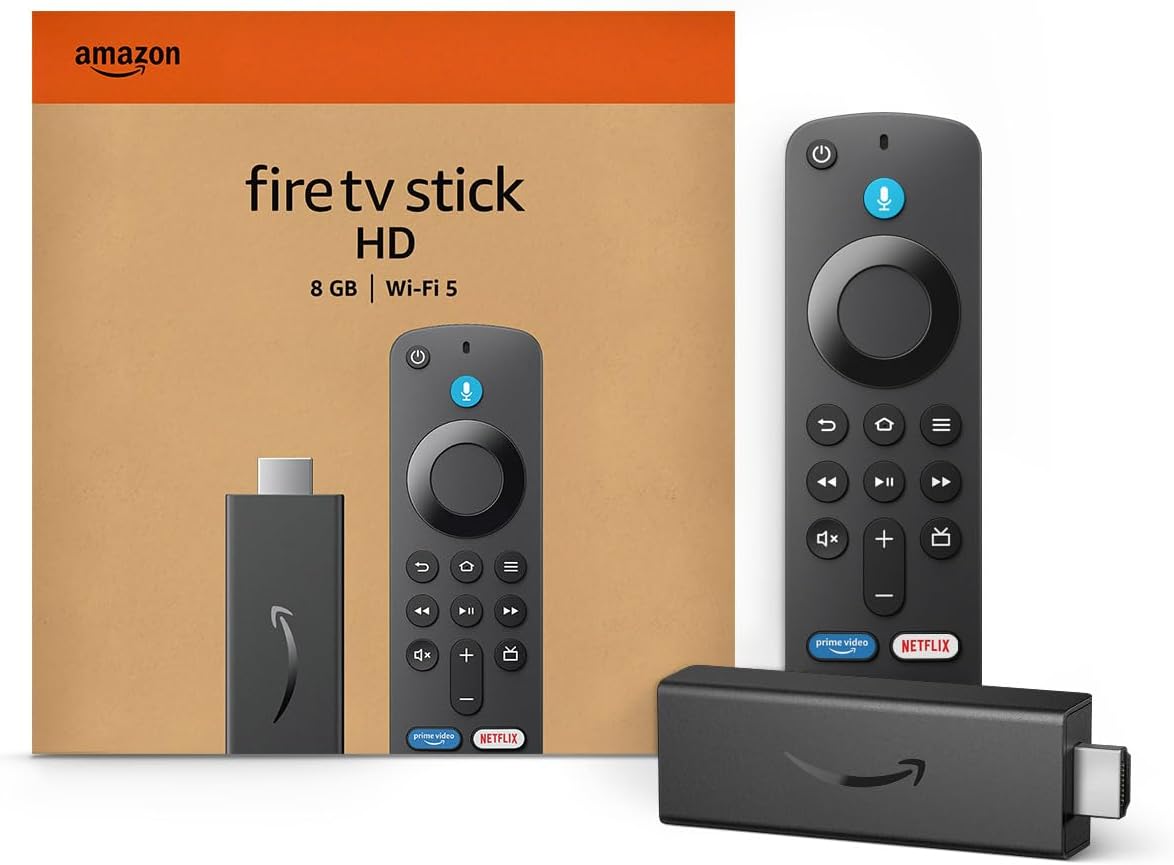
Amazon Fire TV Stick HD
Turn Any TV to a Smart TV. Stream Netflix, Prime Video & More. Alexa Voice Remote Included. Easy Plug & Play Setup.
Shop on AmazonMeanwhile, Sony’s OLED models provide deeper blacks and better viewing angles, which can enhance cinematic experiences in darker environments. Both Samsung and Sony offer reliable smart TV platforms with access to popular streaming services and voice control options.
Read more about the differences between Samsung and Sony TVs.

Comparing Display Technologies and Picture Quality
When evaluating Samsung and Sony TVs, you’ll notice the core display technologies differ, which directly affects your viewing experience. Factors like brightness, color accuracy, black levels, and available screen sizes shape how each brand delivers picture quality.
QLED vs OLED: Key Differences
Samsung predominantly uses QLED technology, which enhances traditional LED-LCD panels with Quantum Dot filters to boost brightness and color vibrancy. QLED excels in producing intense, vivid colors and higher brightness levels, especially important in well-lit rooms.
Sony primarily features OLED technology in its premium TVs, where each pixel emits its own light. This allows for perfect black levels and wide viewing angles, contributing to a more cinematic experience with accurate shadows and deep contrast.
If you want brighter HDR highlights and better color volume in bright settings, QLED is beneficial. OLED, however, offers superior pixel-level control for flawless dark scenes and rich contrast, key for movie enthusiasts.
You can read more about this difference at Samsung TV vs Sony TV panel technologies.
Brightness and Color Accuracy
Samsung TVs generally achieve higher peak brightness due to their Quantum Dot layers, often surpassing OLEDs in luminance for HDR content. That means in bright living rooms, Samsung QLED TVs will maintain punchy highlights and vibrant colors without washing out.
Sony TVs focus heavily on picture processing, using the Cognitive Processor XR to optimize color accuracy. Sony’s approach results in more natural, film-like colors, closely matching studio intentions for 4K content.
Samsung’s Neural Quantum Processor also improves color rendering, but its images lean toward enhanced saturation and marketing appeal. If you prioritize precise colors for cinematic viewing, Sony might be the better fit.
For a detailed pros and cons comparison, check Sony vs Samsung TVs picture quality.
Black Levels and Contrast
For black levels, Sony’s OLED displays produce absolute blacks since pixels can switch off entirely, creating infinite contrast ratios. This results in highly detailed dark scenes without any blooming or halo effects.
Samsung’s QLED screens still rely on backlighting, even with the advanced Neo QLED mini-LED technology, meaning blacks may appear slightly elevated, especially in dim scenes. However, Neo QLED delivers significant improvement over older LCD panels by using smaller LEDs for more precise dimming.
If your viewing includes many dark or cinematic scenes, Sony’s OLED will provide deeper contrast. Samsung’s QLED, while excellent, may show minor blooming around bright objects on dark backgrounds.
Comparisons between the Samsung S95F OLED and Sony Bravia 8 II OLED explore these points clearly here.
Screen Sizes and Real Estate
Samsung offers a broader range of screen sizes in various resolutions, including extensive 4K and 8K QLED options, making it easier to find the perfect size for your room. Their slim designs maximize the usable screen area, creating a more immersive feel.
Sony matches this variety but generally concentrates its OLED lineup in mid to large sizes. Sony’s focus is on delivering premium picture quality over quantity of models, so you may find fewer size options but exceptional performance in each.
If you want more choices for screen size and technology combinations, Samsung’s lineup is more extensive. This can influence your decision depending on your space and budget constraints.
You can explore their full size and feature range comparisons at Sony vs Samsung TV feature analysis.
Audio Performance and Sound Technologies
Sound quality significantly affects your TV viewing experience. Key features like immersive surround sound, speaker synchronization, and integrated audio technologies can make a notable difference in how you enjoy movies, games, and shows.
Both Sony and Samsung embed unique innovations tailored to optimize audio output.
Sony’s Acoustic Surface Audio and Dolby Atmos
Sony’s Acoustic Surface Audio technology uses actuators behind the screen that vibrate to produce sound directly from the display. This approach means the audio aligns precisely with onscreen action, enhancing realism without relying on external speakers.
You get clear dialogue and natural sound placement, especially in cinematic scenes. Many Sony TVs also support Dolby Atmos, which layers sounds in a 3D space around you.
It creates height channels that contribute to a surround sound experience. Dolby Atmos on Sony TVs improves depth and spatial accuracy, making it feel like sound moves above and around you.
Samsung’s Sound Technologies and Q-Symphony
Samsung incorporates Dolby Atmos support on many models as well, delivering comparable immersive audio. Its standout feature is Q-Symphony.
This technology synchronizes the TV’s built-in speakers with compatible Samsung soundbars to produce a richer and more cohesive audio output. With Q-Symphony active, your soundbar and TV speakers work together instead of muting the TV speakers.
This synergy improves volume, clarity, and spatial effects without audio lag. You experience enhanced bass and better soundstage coverage, which enriches your home theater setup without needing separate audio equipment.
Surround Sound Experience
Both brands emphasize surround sound, but they approach it differently. Sony’s Acoustic Surface Audio combined with Dolby Atmos provides a highly integrated surround experience by making the screen itself the sound source.
You perceive audio directional cues that match visuals perfectly. Samsung’s approach leans on speaker arrays and external soundbar integration.
Their VA panel TVs usually offer strong contrast ratios that complement the rich audio from object-tracking sound features. Samsung TVs often emphasize automatic sound optimization tailored to your room acoustics, which adjusts the audio dynamically depending on content and environment.
Integrated Audio Design
Sony designs its integrated audio system to prioritize precision. The actuators behind the OLED panels ensure clean sound without extra speaker placement, making the TV sleeker and minimizing bezel thickness.
This integrated design works best for smaller to medium rooms where external speakers aren’t ideal. Samsung’s design integrates multiple speaker units around the frame and subwoofers internally in some models.
While this adds to the thickness of the TV, it enables more powerful sound output directly from the device. The adaptive sound features work in conjunction with your room’s size and ambient noise, offering a flexible audio environment without additional equipment.
For detailed tech comparisons, see this full side-by-side analysis of Sony vs Samsung TVs.
Smart TV Features and User Experience
When choosing between Samsung and Sony TVs, understanding the smart TV features is essential. The platforms they use shape your access to apps, controls, and smart home compatibility.
The overall experience depends heavily on how these systems perform and integrate with other devices in your home.
Smart TV Platforms: Google TV vs Tizen OS
Sony TVs run on Google TV, an evolution of Android TV. This platform focuses on content discovery, making it easier to find shows and movies tailored to your preferences.
Google TV supports a wide array of apps via the Google Play Store and allows seamless Chromecast built-in functionality for casting from phones or tablets directly to your TV. Samsung uses the Tizen OS, a proprietary platform designed for speed and simplicity.
Tizen excels at quick navigation and offers consistent updates that improve performance and add new features. It also supports a broad range of streaming services and integrates well with Samsung’s other smart devices.
Both platforms offer rich functionality but prioritize different user experiences, with Google TV leaning more toward app variety and Tizen focusing on responsiveness.
Streaming Apps and Voice Control
You’ll find almost all popular streaming apps like Netflix, Amazon Prime Video, Disney+, and HBO Max on both Samsung and Sony smart TVs. However, Google TV on Sony often provides quicker access to personalized recommendations because of its data-driven interface.
Samsung’s Tizen platform organizes apps neatly and includes exclusive options like Samsung’s Gaming Hub. Both brands include voice control features.
Sony uses Google Assistant, enabling natural language commands for content search, smart device control, and general queries. Samsung incorporates several voice assistant options, including Bixby, Alexa, and Google Assistant compatibility, giving you flexibility depending on your preferred ecosystem.
User-Friendly Interface and Google Assistant
Sony’s interface is praised for its smooth navigation and clean layout, largely due to its Google Assistant integration. This allows hands-free searching and control, which can feel intuitive when switching between apps or adjusting settings.
Google Assistant also supports routine commands across multiple devices, enhancing your overall control experience. Samsung’s Tizen interface focuses on easy-to-use menus and quick access menus.
It prioritizes simplicity, which can benefit users new to smart TVs. Although Samsung offers multiple voice assistants, Google Assistant on Sony TVs often delivers better contextual responses and more seamless smart home control when paired with compatible devices.
Smart Home Integration and SmartThings
If you use or plan to build a smart home, Samsung’s SmartThings ecosystem is a strong selling point. Your Samsung TV acts as a central hub for controlling lights, security cameras, and appliances.
You can monitor and manage these devices right from your TV screen, which makes Tizen OS ideal for users invested in Samsung’s smart ecosystem. Sony’s Google TV also supports smart home integration but relies more on Google Home-compatible devices.
You can control lights, thermostats, and more through Google Assistant voice commands, but it lacks a dedicated smart home hub like SmartThings. This makes Sony TVs a better fit if your smart home is based around Google’s ecosystem, while Samsung excels if you prefer an all-in-one Samsung solution.
For a full comparison of the smart platform differences, see this detailed Sony vs Samsung smart TV platform guide.
Value, Reliability, and Brand Considerations
When selecting between Samsung and Sony TVs, you’ll want to weigh the cost against what you get, the durability of the set, and the strength of each company’s support. Both brands compete strongly in these areas, but their approaches and offerings can vary, influencing your choice significantly.
Pricing and Value for Money
Samsung generally offers a wider range of televisions that cover more price points, including affordable models with solid features. You can find Samsung TVs with up-to-date smart platforms and good picture quality without overspending.
Sony, on the other hand, tends to focus more on mid-to-high-end options, which you might pay a premium for. In terms of value for money, Samsung’s QLED models often include advanced features like higher refresh rates and superior gaming integrations at competitive prices.
Sony’s pricing matches its OLED technology and refined processing, which deliver excellent image fidelity but often come with higher costs. For budget-conscious buyers, Samsung tends to give you more features per dollar, especially under $500, while Sony may offer better image quality at higher price tiers.
Build Quality and Premium Features
Sony TVs are known for robust build quality and premium materials. You’ll notice sturdier stands and slimmer bezels that contribute to a more polished look.
Sony’s OLED models are industry-leading, featuring advanced processing through the Cognitive Processor XR. This processor enhances color accuracy and motion handling.
Samsung focuses on cutting-edge smart features and innovative designs like their QLED lineup. These support brighter screens and adaptive picture modes.
Samsung’s TVs often come with comprehensive connectivity options. They also feature impressive upscaling technology via the Neural Quantum Processor.
Samsung integrates gaming-specific features like VRR and a dedicated Gaming Hub. These additions enhance your experience if you use your TV for gaming.
| Feature Aspect | Sony | Samsung |
|---|---|---|
| Build Quality | Sturdy, premium materials | Sleek, innovative design |
| Screen Tech | OLED focus, excellent color | QLED with high brightness |
| Smart Features | Android OS, smooth interface | Tizen OS, Gaming Hub |
| Audio Tech | Acoustic Surface Audio | Object Tracking Sound |
Reliability and Customer Support
Both Sony and Samsung have solid reputations for producing reliable TVs that can last well over 10 years with typical use. Sony tends to rank slightly higher in durability for OLED models.
Samsung is praised for its consistent performance in QLEDs and LED ranges. When it comes to customer support, experiences vary by region, but both companies maintain strong global service networks.
Sony often receives commendation for thorough assistance and responsive warranty service. Samsung’s support is widespread and accessible, though some users report longer wait times.
Brand Reputation in Consumer Electronics
Sony and Samsung are both well-established leaders in consumer electronics, but they occupy slightly different positions culturally.
Sony’s brand is often linked to innovation in display technology and premium home theater systems, especially within the OLED market.
It has a longstanding global reputation for high-quality picture and sound.
Samsung, meanwhile, is a dominant force in smart technology integration and affordable, feature-packed TVs.
The brand is recognized for pushing the boundaries of brightness, color accuracy in QLEDs, and smart home compatibility.
If brand heritage influences your decision, Sony’s reputation leans toward luxurious image quality, whereas Samsung is associated with cutting-edge smart features and competitive pricing.
For more detailed product and performance analysis, see the comprehensive Sony vs Samsung TV comparison.