
Last updated on December 25th, 2025 at 01:03 am
If your Microsoft Surface HDMI connection isn’t working, the problem often lies in connection issues, driver updates, or incorrect display settings. The quickest way to resolve this is by checking your HDMI cable and port, updating your graphics driver, and confirming your external display input settings.
These steps usually restore the connection without needing advanced troubleshooting. Your Surface may also have issues detecting the monitor if the adapter or cable is faulty, or if the device requires a power reset.
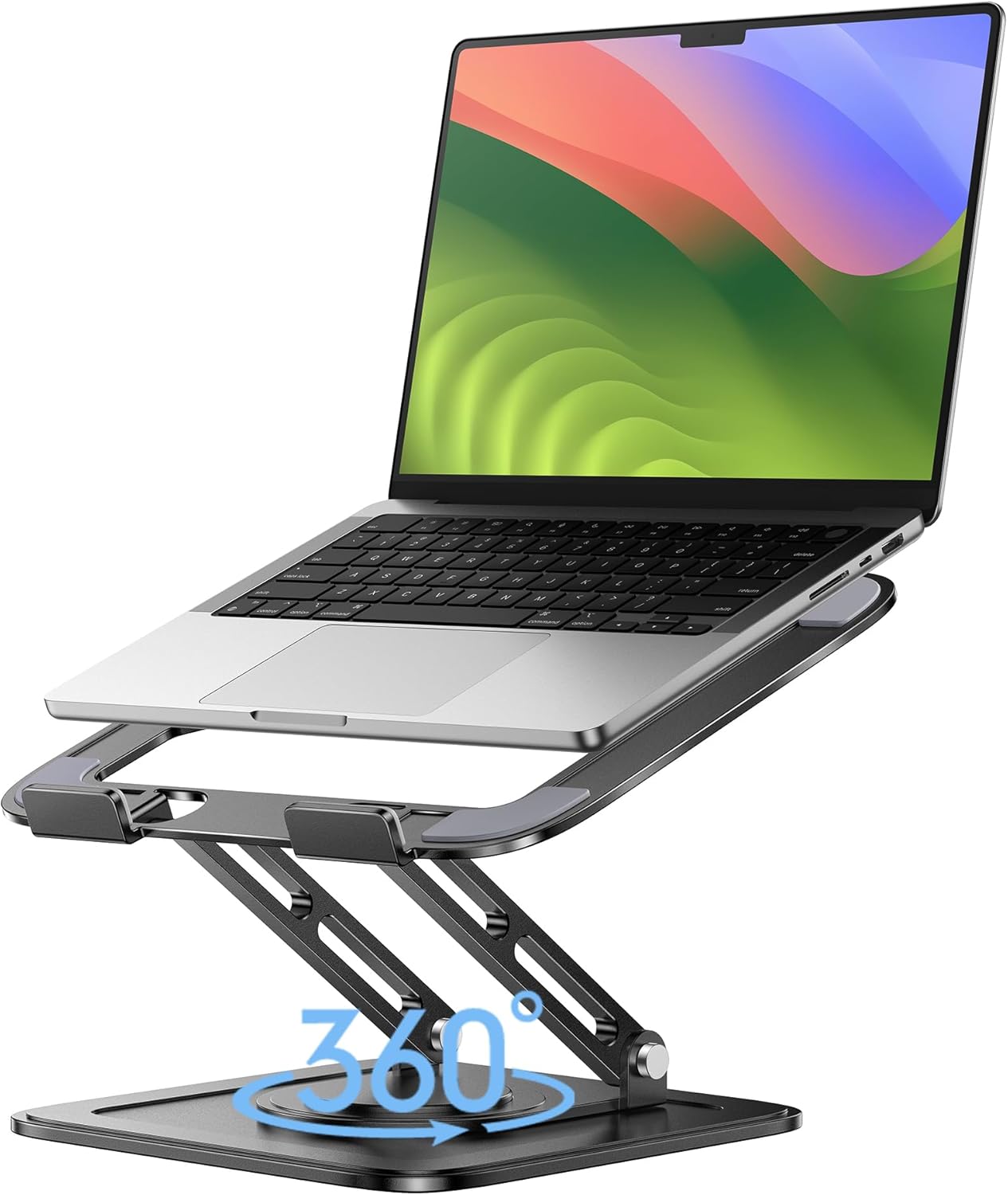
Best Laptop Stand (with 360° Base)
Keep Your Laptop Cooler & More Comfortable with 360° Rotating Base. Improve Airflow & Reduce Heat. Adjustable Height & Viewing Angle.
Shop on AmazonYou might need to disconnect and reconnect the HDMI cable firmly or try a different cable or monitor to isolate the problem. Additionally, ensuring your Surface system and drivers are fully updated can fix compatibility problems with external displays.
Adjusting the display mode with the Windows key + P shortcut can also help you select the correct projection option for your setup.

Identify Causes of Microsoft Surface HDMI Not Working
When your Microsoft Surface is unable to output video through HDMI, several specific factors often play a role. These involve both hardware and software components, each affecting the connection and display functionality differently.
Understanding these elements helps pinpoint the cause and guides you to an effective fix.
Connection and Cable Issues
A loose or faulty HDMI cable is a common cause of video not displaying on your external monitor. Check that the HDMI cable is securely connected to both your Surface device and the external monitor or TV.
Damaged or low-quality cables can result in no signal transmission. Try swapping the cable with a known good one to rule this out.
You should also confirm that your HDMI port on the Surface or the external display is free of dust or debris. Ports can sometimes become damaged through repeated plug-ins, which disrupts the connection.
If you’re using a docking station or a USB-C to HDMI adapter, ensure these are firmly connected. Adapters or display adapters must be compatible with your Surface model.
Poor connections or incompatible adapters will prevent your device from outputting video properly.
Incorrect Input or Source Selection
Your external display must be configured to the correct input source to receive the HDMI signal. Many monitors and TVs have multiple input options such as HDMI 1, HDMI 2, USB-C, or DisplayPort.
If the input is not set to the HDMI port connected to your Surface, the screen will remain blank. Use your monitor’s on-screen menu or remote control to select the HDMI input that matches your connection.
On Windows, pressing Windows key + P lets you toggle display modes like Duplicate, Extend, or Second screen only. Selecting the wrong mode may also result in no display.
Always confirm the external display’s input matches your connection type exactly, especially if you have multiple HDMI ports or share cables between devices.
Incompatible Adapters or Devices
Surface devices commonly need adapters to connect HDMI displays, particularly if you’re using USB-C or Mini DisplayPort outputs. Using unofficial or non-certified USB-C to HDMI adapters can cause the HDMI output to fail.
Adapters must support the HDMI specification required by your monitor, such as HDMI 1.4 or 2.0 for 4K resolution. Some older or cheaper adapters lack these features and won’t work.
If using a daisy chain setup with multiple monitors and DisplayPort, your device and monitors must support Multi-Stream Transport (MST). Lacking MST support or incorrect adapter types here will disrupt your external display connection.
Test adapters with another external display to verify the adapter’s functionality before troubleshooting further.
Software, Firmware, and Driver Problems
Your Surface’s graphics drivers and firmware play a crucial role in managing external displays. Outdated or corrupt graphics drivers can prevent HDMI signals from being sent properly to the monitor.
Use the Surface app or Windows Update to check for the latest driver and firmware updates for your device. Sometimes, a Windows update may also reset your display settings, causing conflicts.
Corrupt display cache or improper settings can block your HDMI output. Performing a power reset or clearing the display cache on your Surface may resolve the issue.
Always keep your Surface’s Windows system updated because these updates often include important patches for driver compatibility and external display support.
For detailed fixes and updates, refer to troubleshooting guides like troubleshoot connecting Surface to an external display.
Essential Troubleshooting Steps for Surface HDMI Issues
When your Microsoft Surface HDMI connection fails, focus on checking physical connections, ensuring correct input selections, testing cables and adapters, and adjusting display settings. These steps help pinpoint where the problem lies and guide you to restore video output.
Verify Physical Connections and HDMI Ports
Start by examining your HDMI cable for visible damage or loose connections. Make sure the cable is firmly plugged into both your Surface’s HDMI port or adapter and the external display’s HDMI input.
If you are using a USB-C to HDMI or USB-C to DisplayPort adapter, confirm it is securely connected to your Surface and the correct port, as loose connections are common causes of no signal. If your monitor or TV has multiple HDMI ports, try switching ports to rule out a faulty input.
For setups with multiple monitors, check if you’re using the correct cables, such as Mini DisplayPort to DisplayPort or standard HDMI 2.0 cables. Avoid damaged or low-quality video cables that might degrade the signal.
Power reset both your Surface device and external display by unplugging and replugging power cables to clear any temporary glitches.
Select the Right Video Input Source
Your external display likely supports multiple video inputs like HDMI, DisplayPort, DVI, or VGA. Verify that the display’s input source matches the type of cable and port you are using.
For example, if your Surface is connected via HDMI, set the TV or monitor’s video input to HDMI manually through the display’s on-screen menu. Many monitors have input settings labeled as USB-C, HDMI, DisplayPort, or Source.
Selecting the wrong input will prevent any video signal from reaching the screen. If the display menu provides multiple HDMI ports, select the one where your cable is plugged in.
If unsure, cycling through input options or consulting the display manual can clarify the correct source.
Test with Alternate Cables, Adapters, and Displays
Try swapping your HDMI cable with another high-quality cable designed for video transmission to verify if the cable is the issue. Also, test different adapters if you use USB-C to HDMI, USB-C to VGA, or USB-C to DisplayPort adapters, as faulty adapters often cause connection failures.
If possible, connect your Surface to a different external display such as another monitor, TV, or projector. This helps determine whether the problem is with the original display or your Surface’s port and settings.
Testing with different cable types and displays isolates hardware faults. When using multiple monitors or daisy-chaining via DisplayPort 1.2, ensure all devices support the feature and cables used are compatible.
Check Projection and Display Settings
Use the Windows Action Center or press Windows + P to review projection settings. Choose between options like “PC screen only,” “Duplicate,” “Extend,” or “Second screen only” to control how your desktop appears on the external display.
Incorrect projection mode might result in no visible output on your secondary screen. Open Display Settings by right-clicking the desktop and selecting “Display settings.”
Make sure your external display is detected and properly arranged. Confirm resolution and refresh rate settings comply with your monitor’s specifications to prevent compatibility issues.
If the Surface fails to detect the external screen, try disconnecting and reconnecting cables or using the “Detect” option in Display Settings.
Advanced Solutions and Adapter Configuration
Resolving HDMI issues often requires a multi-step approach involving updates, resets, and proper configuration of adapters and docks. Ensuring your Surface device and peripherals are up-to-date, correctly set up, and properly connected can restore reliable external display functionality.
Update Graphics Drivers and Windows
Start by checking for the latest graphics driver updates in Device Manager. Expand the “Display adapters” section, right-click your graphics device, and select “Update driver.”
Windows 10’s Update & Security settings can also automatically install important hardware patches. Running the hardware and devices troubleshooter helps identify conflicts or missing drivers that cause HDMI failures.
Keeping your Surface firmware updated via the Surface app is critical. The update process not only strengthens compatibility but can fix bugs in video output.
If you use adapters like Surface USB-C to DisplayPort, updating their drivers ensures smooth connection. Regular updates prevent display issues caused by outdated software or drivers.
Clear Display Cache and Reset Video Settings
Sometimes, display settings or cached data become corrupted and interfere with HDMI output. You can clear the display cache by downloading and running the Surface Dock registry file.
This step removes outdated configuration stored in your device registry that might block video output on connected monitors. After clearing cache, restart your Surface and reconnect your external monitor or docking station.
Confirm Windows + P projection settings align with your setup, whether you want to duplicate or extend your display. Resetting video settings and clearing cache often resolves stubborn connection delays or black screens without hardware replacement.
Configure Surface Dock and Docking Station Setups
If you connect your display through a Surface Dock or Surface Dock 2, ensure the dock firmware is current. Outdated dock firmware limits support for higher resolutions and multiple monitors.
You can find updates in the Surface app or through Windows Update. For multiple monitor setups, use Multi-Stream Transport (MST) if supported.
This involves daisy-chaining displays via DisplayPort from the dock using specific cables. Confirm that each monitor’s input is set to DisplayPort 1.2 or MST mode through their on-screen menus.
Ensure your adapters are Designed for Surface Accessories to avoid compatibility issues. Check that all cables and adapters are securely connected.
Sometimes, disconnecting and reinserting a USB-C to HDMI or DisplayPort adapter restores communication between your Surface and display.
Wireless Options and Miracast Connections
If wired HDMI connections fail or are inconvenient, consider using Miracast, Windows 10’s wireless display technology. You can project your Surface screen wirelessly to compatible monitors or TVs that support Miracast without cables or docks.
To set this up, open the Connect app on your Surface and select your wireless display. Ensure both devices are on the same Wi-Fi network and that your Surface supports Windows 10 wireless display features.
This eliminates reliance on HDMI ports and adapters but requires a stable wireless environment for smooth performance. Wireless options offer flexibility but can introduce latency or quality variation compared to wired HDMI setups.
They are a practical alternative when configuring complex desk setups or avoiding cable clutter.
Optimizing Display Compatibility and Performance
Ensuring your Surface device outputs correctly to an external display depends on matching the right settings and hardware capabilities. Adjusting resolution and refresh rate, verifying compatibility, and configuring multiple displays properly are critical steps for a smooth experience.
Resolution, Refresh Rate, and Cable Specifications
Your external display should be set to a resolution supported by both the Surface device and the monitor. Most Surface models, like the Surface Pro and Surface Book, support high resolutions, but the external display must be configured to match.
Typically, using resolutions such as 1080p or 1440p at 60Hz provides reliable performance. Refresh rate matters for smooth visuals.
Some monitors support higher refresh rates like 120Hz or 144Hz, but your Surface and cable must support those speeds. For example, DisplayPort 1.2 and USB4 cables can handle higher bandwidth required for elevated refresh rates.
Avoid long or low-quality cables as they can degrade video quality or cause connection issues. Use quality cables, ideally those Designed for Surface Accessories or certified USB-C or DisplayPort cables.
Check that your monitor’s video input matches your cable type—HDMI, DisplayPort, USB-C, etc.—to avoid signal mismatch or poor performance.
Surface Device and Monitor Compatibility Considerations
Not every external monitor will work seamlessly with your Surface Pro, Surface Pro 2, or Surface Book. Microsoft devices require compatible cables and adapters, such as a mini DisplayPort adapter or a certified USB-C to HDMI adapter, to ensure a stable connection.
Monitor settings like video input selection and firmware can affect detection. Ensure your display is set to the correct input source—HDMI, DisplayPort, or USB-C.
Some monitors have adjustable port version settings; setting these to DisplayPort 1.2 may improve connectivity and enable features like daisy chaining. Keep your Surface’s drivers and firmware updated via the Surface app or Windows Update.
Outdated drivers often cause detection failures or reduced video quality. If you use third-party adapters or cables, verify their compatibility with Surface devices to avoid black screens or “No Signal” errors.
Best Practices for Multiple Display Configurations
When connecting multiple monitors, configuration must be precise for proper functionality. Surface devices supporting daisy chain setups usually require DisplayPort 1.2 MST (Multi-Stream Transport) capable monitors.
Connect your Surface’s Mini DisplayPort or USB-C port to the first monitor. Then use the first monitor’s DisplayPort output to link to the next one.
Set each monitor to accept DisplayPort 1.2 MST signals using the onboard menu. Keep your cabling short and use high-quality adapters labeled for Surface.
Manage display projection modes on your Surface with Windows key + P to extend or duplicate displays as needed. Always refer to your display manufacturer’s instructions for firmware and multi-monitor support.